

When sourcing components for industrial automation or mechanical assemblies, a bearing part number can look like a complex puzzle. However, these numbers follow a highly structured international system. Understanding how to read them ensures you get the exact fit, load capacity, and sealing protection your application demands.
Let’s pull back the curtain on bearing nomenclature using one of the most common miniature bearings in the industry—the 608ZZ—and break down how the wider system works.
A standard bearing part number is generally divided into two core parts: the Base Number (type and size) and the Suffix (seals, shields, or clearances).
 6   0   8   ZZ
 |   |   |   |
 |   |   |   +-- Suffix: Metal shields on both sides
 |   |   +------ Bore Size: 8mm inner diameter
 |   +---------- Dimension Series: Extra-light / slim profile
 +-------------- Bearing Type: Deep groove ball bearing
6)The first digit tells you the fundamental design. A 6 indicates a Single-Row Deep Groove Ball Bearing. This is the workhorse of industrial machinery, engineered to handle radial loads efficiently while offering low rotational friction.
0)The second digit dictates the robustness—specifically the width and outer diameter relative to the shaft hole. A 0 represents an Extra-Light series. It offers a slim, space-saving footprint for tight design envelopes.
8)For miniature and small-bore bearings (under 10mm), the third digit directly states the inner diameter in millimeters. In this case, 8 means an 8mm bore.
ZZ)Letters at the end reveal how the internal rolling elements are protected. ZZ indicates non-contact metal shields on both sides. These keep out coarse dust and retain factory grease without introducing rotational drag.
For standard metric bearings with a bore size of 10mm or larger, the part number expands slightly, but follows a predictable matrix:
6 = Deep groove ball bearings (Most common)
7 = Angular contact ball bearings (For combined radial and axial thrust loads)
3 = Tapered roller bearings (Heavy-duty axial/radial combinations)
N / NU = Cylindrical roller bearings (High radial load capacity)
This digit scales the thickness of the rings and the size of the internal balls/rollers to match your load requirements:
1 or 8 = Extra thin/light section
2 = Light duty (Standard industrial applications)
3 = Medium duty (Heavy machinery, higher load ratings)
For standard sizes 10mm and up, the final two digits use a specific numbering logic:
00 = 10mm | 01 = 12mm | 02 = 15mm | 03 = 17mm
The ''Multiply by 5'' Rule: For codes 04 and above, simply multiply the last two digits by 5 to find the exact bore size in millimeters.
Example:A 6204 bearing ends in 04. 4 x 5 = 20mm bore.
Example:A 6309 bearing ends in 09. 9 x 5 = 45mm bore.
Beyond sizing, selecting the right suffix configuration is critical to the lifespan of your component, particularly in challenging operational environments:
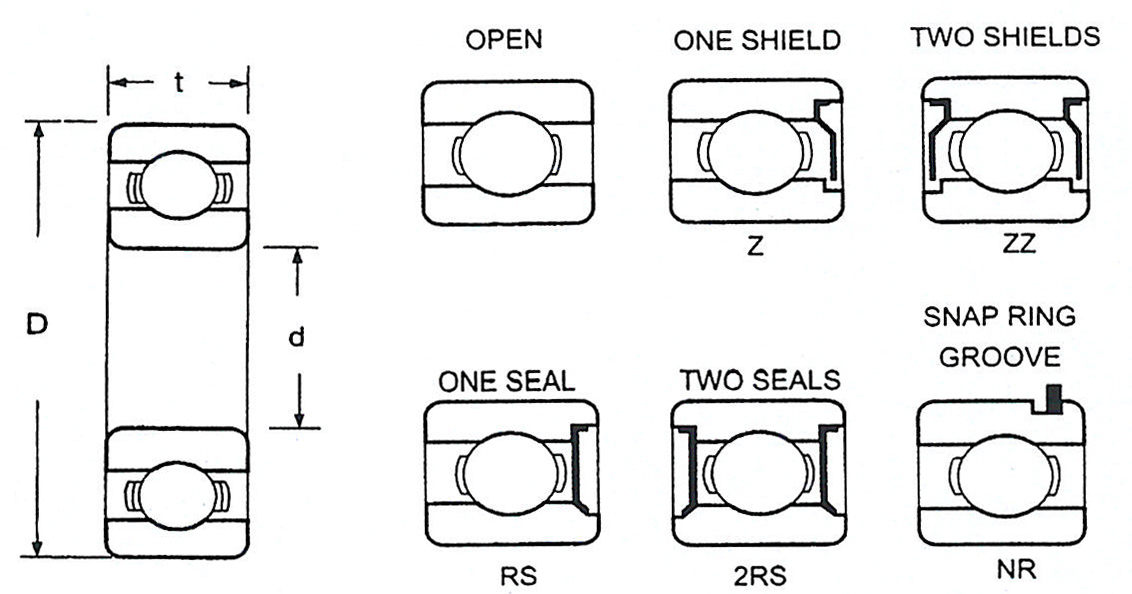
| Suffix | Type | Best For | Characteristics |
| Z / ZZ | Metal Shield(s) | High-speed, clean environments | Low friction, excellent speed limits, prevents coarse dust entry. |
|
RS / 2RS (or DDU / LLU) |
Rubber Seal(s) | Dusty, high-moisture, or wet environments | Contact seal offers superior protection against fine contaminants and liquid splash, with a slight trade-off in friction. |
| C3 / C4 | Internal Clearance | High-temperature or high-RPM setups | Indicates extra internal room between components to absorb thermal expansion without binding. |
Getting the exact specification right prevents premature wear and keeps your production lines running smoothly. Whether you are cross-referencing a manufacturer part number or optimizing a new machinery design, our engineering support team is here to help you select the ideal component.
Contact Wheeler Mectrade Today to speak with a technical representative.
WHEELER MECTRADE is a company in every sense of the word specializing in factory automation components & accessories. We are built on simple, solid values that have stood the test of time.
Posted by WHEELER MECTRADE (S) PTE LTD on 18 Jun 26

 Singapore