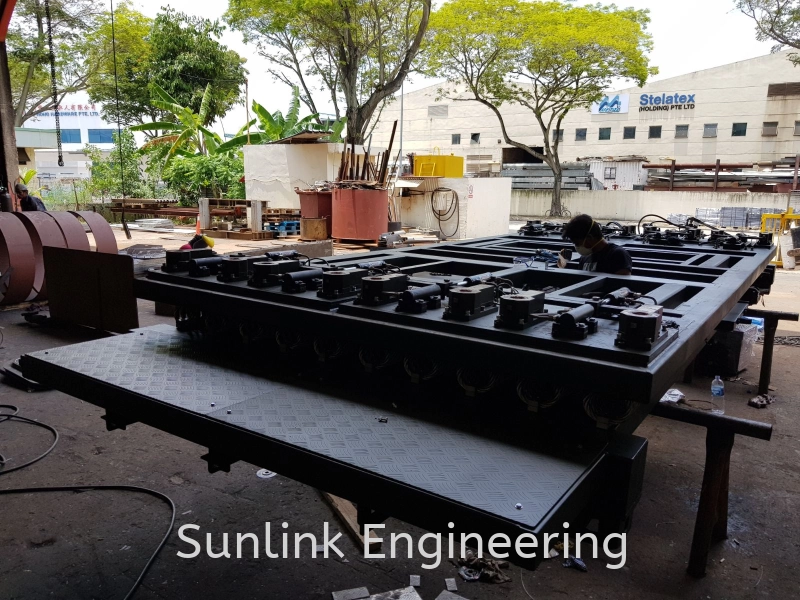
Generator skid fabrication plays a critical role in the performance, safety, and lifespan of power generation systems. A generator skid is more than just a steel base — it is the structural foundation that supports, aligns, transports, and protects the entire power package.
For engineers, careful planning during the design and fabrication stage prevents costly alignment issues, vibration problems, and structural failures later on. Below are the key considerations engineers must evaluate when specifying generator skid fabrication.
The first step is understanding total system weight, including:
Generator unit
Engine and alternator
Fuel tanks
Control panels
Radiators and exhaust systems
The skid must support both static loads and dynamic loads during operation and transport. Engineers should account for:
Equipment weight distribution
Operational vibration forces
Lifting loads during crane handling
Transport stresses during shipping
Proper beam sizing, stiffeners, and reinforcement plates are essential to prevent deflection and fatigue over time.
Generators produce continuous vibration during operation. Poor skid design can result in:
Misalignment of rotating components
Excessive wear
Increased noise
Structural cracking
Key considerations include:
Flat and level mounting surfaces
Accurate bolt hole positioning
Integration with vibration isolators or anti-vibration pads
Reinforced mounting zones
Precision fabrication ensures reliable long-term generator performance.
Generator skids are often relocated during installation or maintenance. Engineers must incorporate:
Properly rated lifting lugs
Forklift pockets
Tie-down points
Reinforced lifting zones
Improper lifting design can distort the skid frame and compromise alignment.
Generator skids are frequently installed outdoors. Material and finishing selection should match environmental conditions:
Indoor use → Painted mild steel
Outdoor exposure → Hot-dip galvanised steel
Coastal or marine environments → Galvanised or stainless steel components
Surface protection significantly affects durability and maintenance cost over the equipment lifecycle.
Many generator skids are paired with acoustic or weatherproof enclosures. Engineers must ensure:
Proper mounting interfaces
Adequate ventilation openings
Space for cable and piping routing
Clearance for maintenance access
Poor integration can lead to airflow restriction or installation complications.
Certain industries require:
Weld procedure specifications (WPS)
Material traceability
Load certifications
Quality inspection records
Early coordination with the fabricator ensures compliance requirements are incorporated into the fabrication process.
Before finalising the design, engineers should evaluate:
Transport dimensions
Site access limitations
Lifting crane capacity
Installation sequencing
Designing without logistical consideration can cause costly modifications at site.
Generator skid fabrication requires careful attention to structural integrity, vibration control, lifting safety, environmental protection, and compliance requirements. A well-designed skid ensures stable generator performance, easier installation, and reduced long-term maintenance issues.
Engineers who collaborate early with experienced fabricators can optimise both cost and performance — delivering generator systems that operate reliably under real-world conditions.
Sunlink Engineering Pte Ltd
Sunlink Engineering Sdn Bhd
📧 [email protected]
📞 +65 9387 5463 (Call or WhatsApp) – Singapore
📞 +60 17 2140 411 (Call or WhatsApp) – Malaysia (JB)
🌐 https://www.sunlinkmetal.com/contactus/

 Singapore