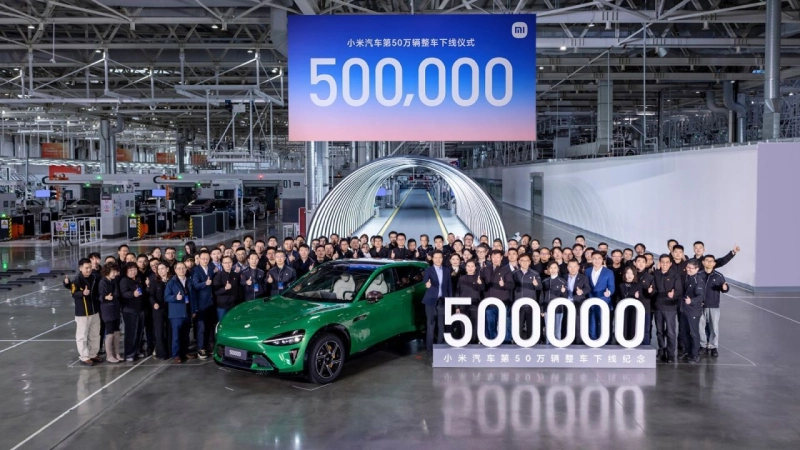
Xiaomi EV has produced its 500,000th vehicle in just one year and seven months after its first car rolled off the line.
The pace is not an isolated phenomenon but part of a new industrial playbook. Here’s the data:
• 🔋
BYD (Atto 3): ~19 months for a single model to hit 500,000 units
• ⚡️
Xiaomi Technology: ~20 months to 500,000 cars (across multiple models)
• 🚗
Tesla: ~8 years from the Model S launch to its 500,000th car
The contrast between the pioneer and the new giants is stark. This isn't just about being "faster." It's a masterclass in how modern supply chains and tech company DNA are disrupting century-old industrial timelines.
Why was Xiaomi able to achieve this "impossible" speed?
1) Xiaomi didn't start from zero. They leveraged decades of experience in managing complex, high-volume consumer electronics supply chains. Their factories were built for speed, operating on double shifts to hit a 60k+/month capacity.
2) They treated the car launch like a flagship smartphone. This generates immense hype, amplifies its strong brand, and benefits from a direct-to-consumer sales model.
3) They didn't try to be everything to everyone. The SU7 sedan competes directly with the Tesla Model 3, and the YU7 SUV targets the best-selling Model Y. Their strategic market targeting goes for the heart of the mass-market EV segment.
The parallel success of Xiaomi and BYD's Atto 3 reveals a broader trend.
The immense power of the "late-comer advantage."
New entrants can leverage China's mature EV supply chains, a rich technology ecosystem, and agile operational models to achieve in months what took pioneers years.
It's not that one company is inherently better than the other, but that the times have fundamentally changed.
时势造英雄 – the era creates the heroes. We are witnessing the rise of a new paradigm in automotive manufacturing.
#EV #ElectricVehicles #Innovation #SupplyChain #Manufacturing


 Singapore