

【Debunking Myths】Why Is the ''Grass, Powder, Blood'' Grading System Outdated? An In-Depth Analysis of Grading Confusion in the Porcupine Bezoar Market
How Did Traditional Grading Form?
Traditionally, industry experts primarily relied on appearance to distinguish porcupine bezoar grades, which fell into three main categories:
Grass Bezoar: Rough surface, containing more grass-like material, obvious texture, strong fibrous feel. Traditionally considered to have lower maturity, relatively lower quality and price.
Powder Bezoar: Smooth surface, solid texture, rich herbal aroma. When cut or crushed, a powdery substance is visible. Traditionally considered to have higher maturity, better quality, and higher value.
Blood Bezoar: The highest grade of porcupine bezoar, with a dark red or deep crimson color and solid texture. Traditionally considered the ultimate grade, rare in quantity, and highest in value.
Why Is the ''Grass, Powder, Blood'' Grading System So Deeply Rooted?
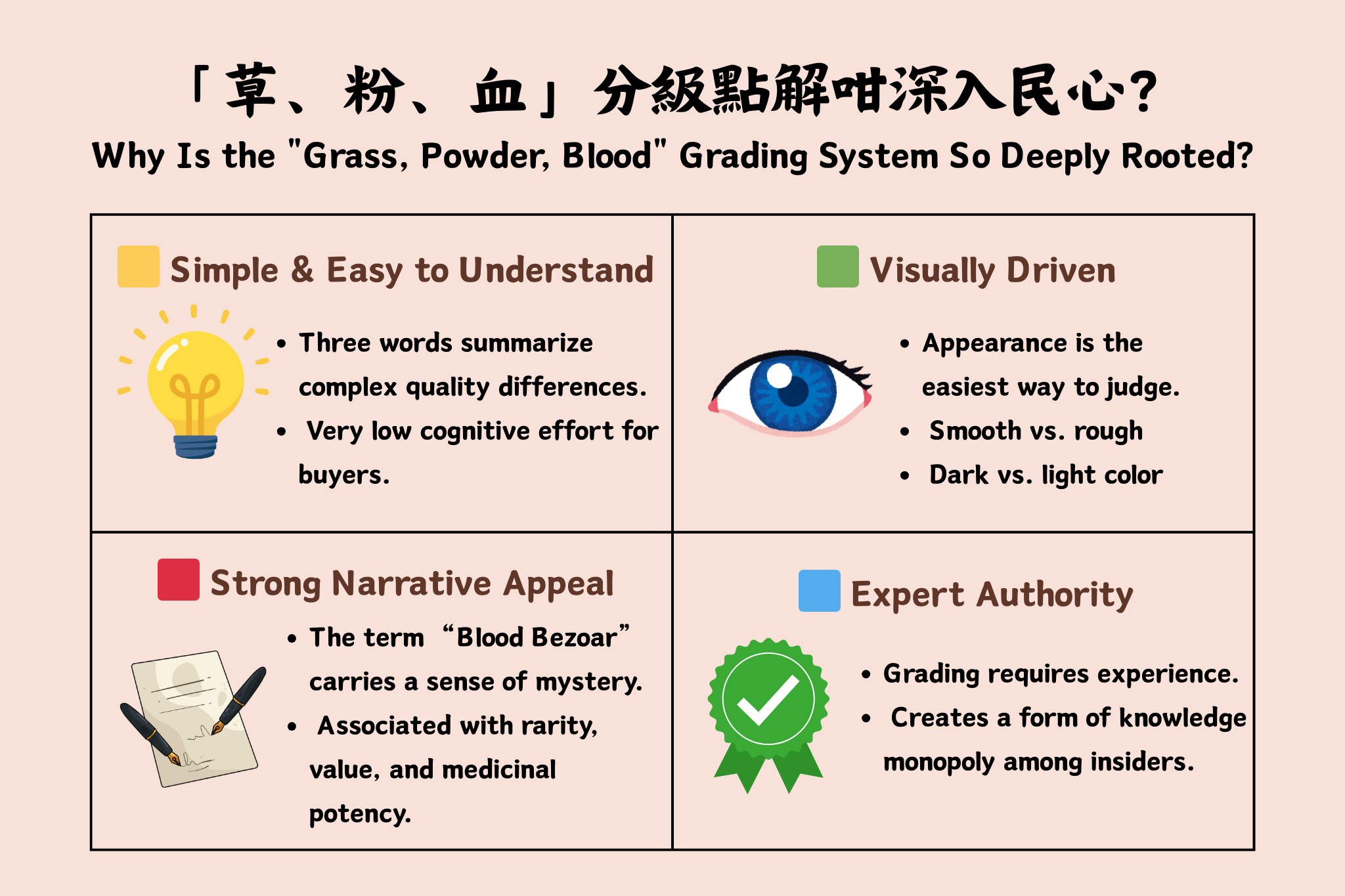
1. Simplicity and Clarity
Three words encapsulate complex quality differences, allowing buyers and sellers to communicate without extensive explanation. For buyers, ''Blood Bezoar'' sounds like a premium product, while ''Grass Bezoar'' sounds inferior—the cognitive cost is extremely low.
2. Visual Dominance
Humans naturally trust their eyes more than numbers. Visual judgment is the most direct—smooth versus rough, dark versus light—all discernible at a glance. In an era without scientific testing, ''judging by appearance'' was the most intuitive approach.
3. Strong Narrative Appeal
The term ''Blood Bezoar'' itself carries an air of mystery, evoking associations with rarity, preciousness, and medicinal efficacy. This naming approach functions as marketing, making it easier for buyers to accept the concept that ''Blood Bezoar = Premium.''
4. Expert Authority
In the past, only seasoned experts could differentiate between grass, powder, and blood grades. The ability to grade signified experience. This ''knowledge monopoly'' cemented the traditional grading system's market position.
Grading ≠ Authentication Conclusion
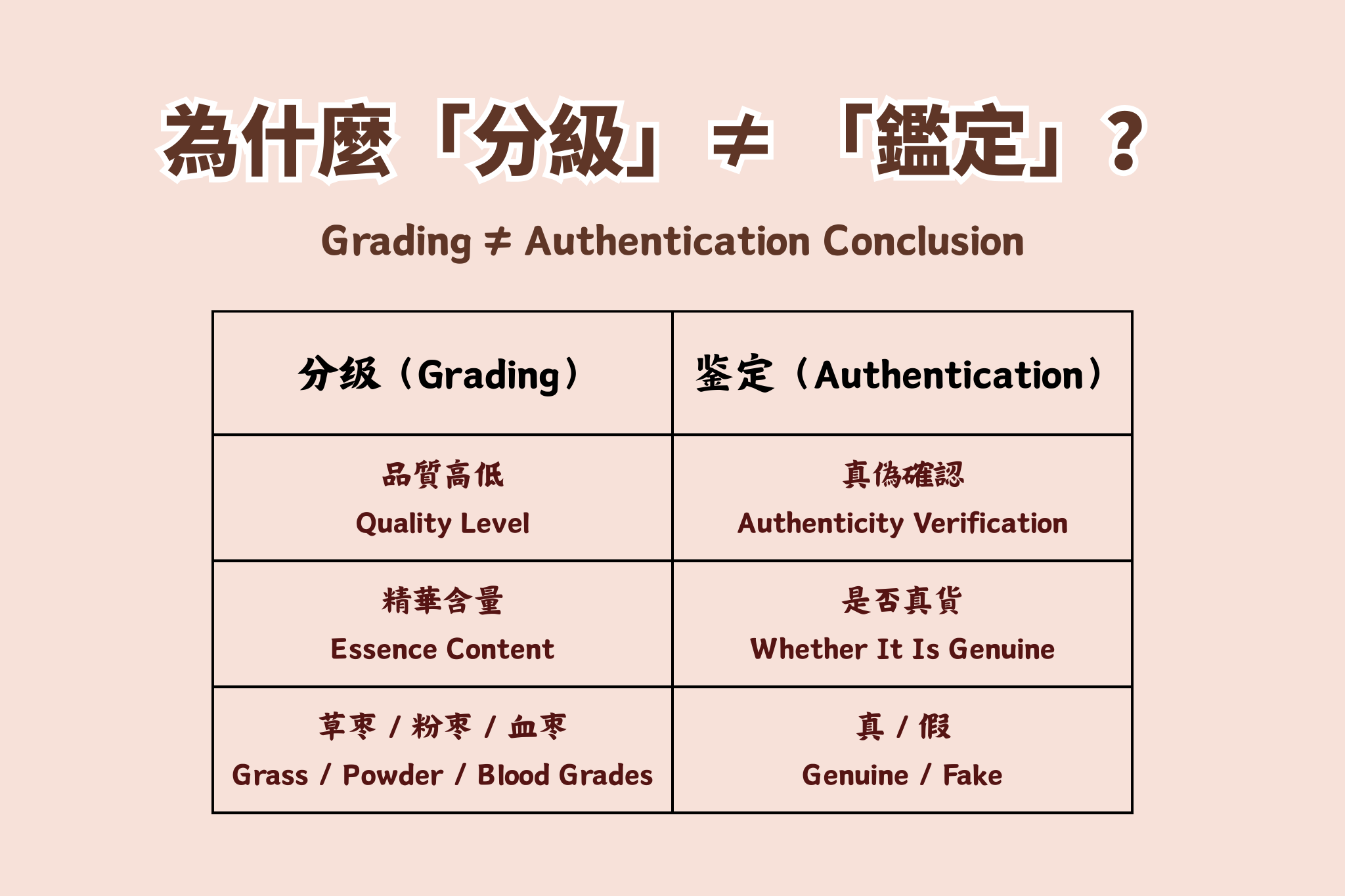
Grading refers to ''quality level'' (i.e., essence content)
Authentication refers to ''authenticity confirmation'' (i.e., whether it's genuine)
A porcupine bezoar can be genuine but have low essence content (low grade); conversely, it might look impressive like a Blood Bezoar but actually be counterfeit, processed, or have mediocre essence content.
Some counterfeiters specifically target the ''Blood Bezoar'' designation, dyeing fake bezoars to pass them off as Blood Bezoars, even mimicking the color and texture patterns of genuine ones.
❓ Frequently Asked Questions (FAQ)
A: Mostly due to cost and risk. Detailed testing for antioxidants and heavy metals is expensive. Furthermore, if a ''Blood Bezoar'' fails a potency test, the seller can no longer justify a premium price. Many prefer to keep info vague to maintain their ''word-of-mouth'' pricing power.
A: No. The market is fragmented between different standards in Hong Kong and Southeast Asia. Because visual grading is subjective, Third-Party Lab Reports and DNA Barcoding are now the only ''gold standards'' for smart buyers.
A: Not necessarily. Potency depends on active compounds, not color.
The Reality: A top-tier Powder Date can be more effective than a low-quality or ''stale'' Blood Date.
The Risk: Blood Dates are the most faked. Many use artificial dyes to mimic the red color, which offers zero medicinal value and may even be harmful.
A: Hong Kong has no ''official'' government grading department. To stay safe:
Ask for a COA: Only buy from vendors who provide a third-party Certificate of Analysis.
Look for Science: Choose suppliers who work with TCM research centers or biotech firms.
Ignore ''Talk'': Never rely on a seller's verbal promise. Demand DNA or chemical proof.
Further Reading
👉Porcupine Bezoar Authentication: Limits of Visual Inspection and Verification Methods

 Philippines