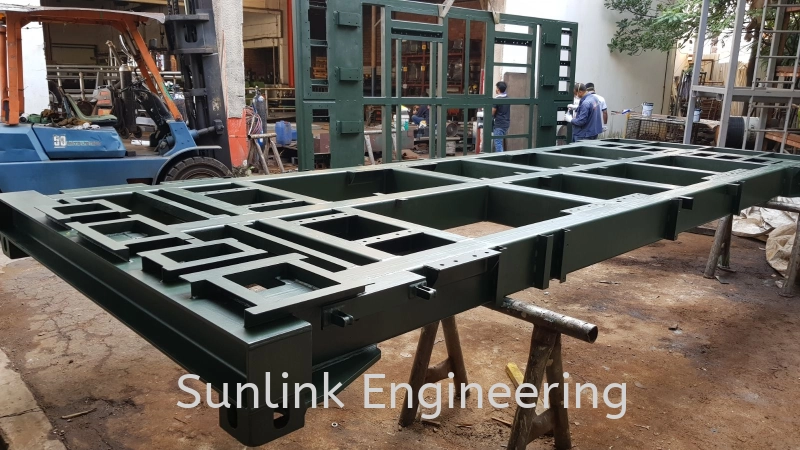
Selecting the right structural steel grade is a critical decision in industrial projects. The steel grade chosen directly affects strength, durability, fabrication method, safety, and overall project cost. Understanding how different structural steel grades perform helps engineers, project managers, and fabricators make informed decisions that balance performance and budget.
At Sunlink Engineering, structural steel selection is always aligned with application requirements, loading conditions, fabrication practicality, and long-term service performance.
Structural steel grades define the mechanical properties and chemical composition of steel, such as yield strength, tensile strength, ductility, and weldability. These properties determine how steel behaves under load and how suitable it is for different fabrication and installation environments.
Grades are typically specified according to standards such as:
ASTM (American Society for Testing and Materials)
EN (European Standards)
JIS (Japanese Industrial Standards)
Mild steel is widely used due to its good strength, excellent weldability, and cost efficiency.
Common examples include:
ASTM A36
EN S275
EN S355
Best used for:
Structural frames and platforms
Equipment skids and base frames
Industrial buildings and supports
These grades are easy to fabricate and suitable for most non-extreme industrial environments.
High-strength steels offer increased load-bearing capacity while allowing lighter or slimmer structural designs.
Common examples include:
EN S355 (higher strength category)
ASTM A572
Best used for:
Heavy-duty structures
Long-span beams
Load-critical industrial frameworks
These grades reduce material usage but require controlled fabrication and welding procedures.
In outdoor or aggressive environments, corrosion resistance becomes a key factor.
Options include:
Galvanised structural steel
Weathering steel (e.g. ASTM A588)
Stainless steel structural grades (SS304 / SS316)
Best used for:
Outdoor platforms and walkways
Coastal or marine environments
Structures with limited maintenance access
Different steel grades behave differently during fabrication:
Higher-strength steels may require preheating and controlled welding
Thicker or stronger grades need appropriate cutting and forming methods
Material choice influences rolling, bending, and machining accuracy
Selecting a grade without considering fabrication impact can increase cost and lead time.
Choosing the strongest steel is not always the best option. The ideal grade balances:
Required load capacity
Environmental exposure
Fabrication complexity
Lifecycle maintenance cost
In many cases, a well-chosen mild steel grade with proper surface protection provides the most cost-effective solution.
An experienced fabricator helps:
Recommend suitable steel grades based on real-world usage
Optimise designs for fabrication efficiency
Prevent over-specification that inflates costs
Ensure compliance with safety and quality standards
Early collaboration reduces risk and improves project outcomes.
Structural steel grades should be selected strategically, not generically. The right choice improves structural performance, fabrication efficiency, safety, and cost control throughout the project lifecycle.
Understanding steel grades and their applications ensures industrial projects are built on a foundation of reliability and long-term value.
Sunlink Engineering Pte Ltd
Sunlink Engineering Sdn Bhd
📧 [email protected]
📞 +65 9387 5463 (Call or WhatsApp) – Singapore
📞 +60 17 2140 411 (Call or WhatsApp) – Malaysia (JB)
🌐 https://www.sunlinkmetal.com/contactus/

 Philippines