Success Technic Industries is a leading manufacturer and supplier of homogenizing and mixing machinery in Malaysia. Our product range includes high-speed stirrers, powder mixers, emulsifying machines, and custom industrial mixer solutions for various industries.
Committed to customer satisfaction, we provide high-quality, cost-effective machinery while continuously improving our products and services. Partner with us for reliable industrial mixing solutions and achieve a win-win cooperation.
Competitive Advantage: WE specializes in innovative powder wetting and dispersion systems, such as the Total Dispersion Solid and Liquid System, which induct powder into the liquid under vacuum, even at floor level. Their jetstream mixing technology ensures homogeneous macro-mixing of the entire vessel contents without the need for additional baffles, reducing process times and energy consumption significantly compared to traditional agitators.
Winning Point: The ability to achieve agglomerate-free powder dispersion with high concentrations (up to 99%) in a single pass at high speeds, virtually eliminating dust and aeration issues.
Competitive Advantage: We offers a range of high-performance mixing and homogenizing solutions, including directed jet mixers and inline homogenizers. Their
Dyna Success Inline homogenizer
ensures a defined, reproducible, and scalable application of shear forces with a gentle treatment of shear-sensitive products. The technology eliminates the vortex and prevents air entrainment.
Winning Point:Consistent and reproducible product quality through a single-pass inline process, drastically reducing overall production time and energy use while protecting product integrity.
Competitive Advantage: We are the world leader in high-shear mixing technology with over 35 years of experience, known for robust, versatile machines with easily interchangeable rotor/stator workheads. Their mixers can perform multiple duties (emulsifying, homogenizing, disintegrating, dissolving) and are highly scalable from lab to production size, reducing mixing times by up to 99%.
Winning Point:Extreme versatility and reliable scalability from lab to production, allowing a single machine with different workheads to handle a wide range of applications and ensuring seamless consistency in product quality across all scales.
Competitive Advantage: We provides cost-effective, durable industrial mixing and processing equipment with state-of-the-art technology, leveraging a global manufacturing setup. Their high shear homogenizers are designed for continuous, 24/7 performance and offer a balance between high throughput shear pumps and ultra-fine inline homogenizers.
Winning Point:Highly durable and cost-effective high-shear solutions that offer flexibility and custom engineering options for a wide range of challenging mixing applications, particularly in the pharmaceutical, food, and chemical industries.
Competitive Advantage: We specializes in vacuum processing units and inline homogenizers, focusing on sensitive and high-viscosity products such as creams, ointments, mayonnaise, and ketchup. Their equipment is designed for high performance, exceptional hygiene levels (no dead zones), and produces stable, air-free, homogeneous products with precise droplet size control.
Winning Point:Superior product quality and stability for highly sensitive or viscous cosmetic and food emulsions, achieved through advanced vacuum processing and hygienic, multi-chamber rotor/stator systems.
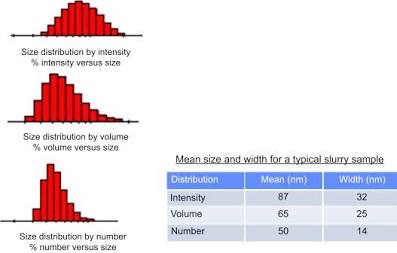
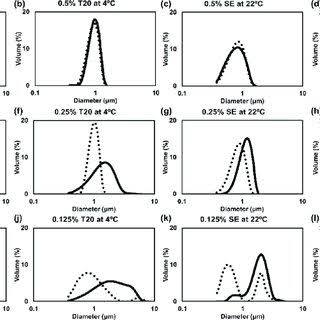
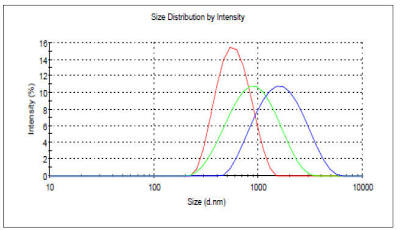
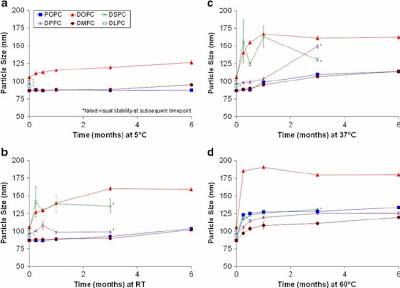
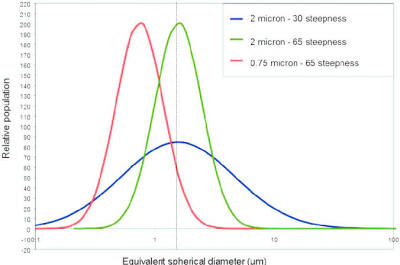
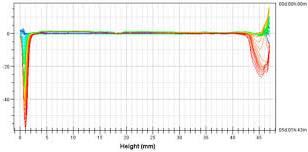
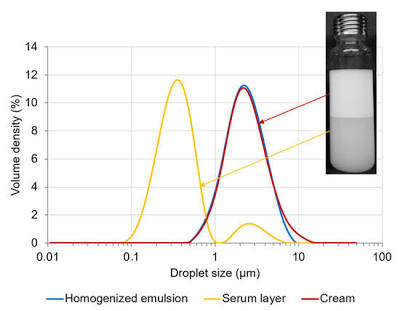
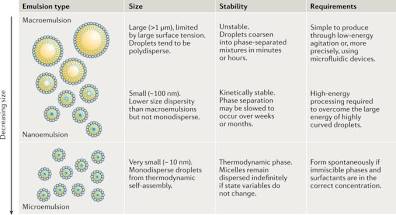
To achieve ultra-stable emulsions and suspensions that resist separation over extended periods, the primary technical goal is to consistently achieve a sub-micron particle or droplet size range (typically 10 nm to 500 nm) and a narrow size distribution. This ensures strong electrostatic repulsion and physical barriers that prevent coalescence or gravitational separation (creaming/sedimentation).
The following specifications and selling points leverage the strengths of leading brands to meet these demands:
Technical Specifications for Ultra-Stable Emulsions and Suspensions
I. Key Performance Specifications
Parameter
Specification for High Stability
Why It Matters
Target Droplet/Particle Size
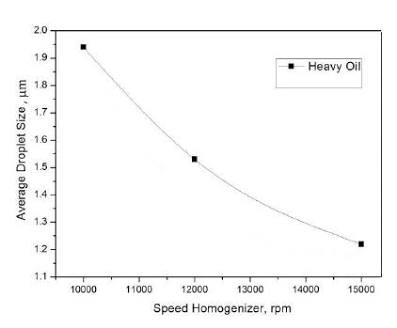
< 1.0 micron (sub-micron range); ideal for nanoemulsions (20-500 nm)
Smaller droplets exhibit less movement due to gravity (Stoke's Law), drastically slowing down creaming or sedimentation and preventing long-term separation.
Particle Size Distribution (PSD)
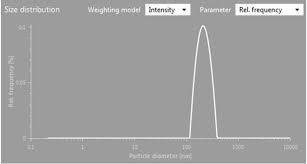
Narrow and Monomodal
A uniform size distribution prevents larger particles from promoting the flocculation of smaller ones, ensuring the entire batch remains homogeneous.
Energy/Shear Input
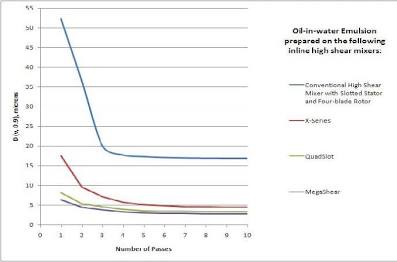
High-intensity mechanical stress (high pressure homogenization, high-shear rotor/stator, or ultrasonication)
High energy input is necessary to overcome interfacial tension and break down droplets/particles to the required sub-micron size range.
Zeta Potential (Surface Charge)
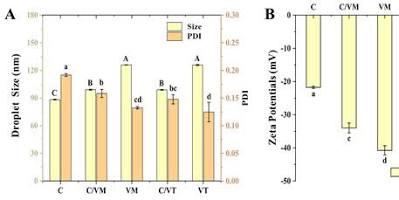
High Magnitude (>
30mV
Rheology (Viscosity)
Ability to produce a high-viscosity continuous phase (shear-thinning behavior is common)
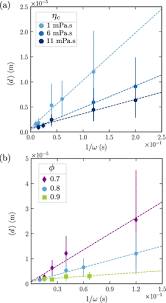
Increased viscosity physically slows down droplet movement, further enhancing stability during storage.
II. Chemicals Suspensions and Food Mouthfeel
These applications directly benefit from sub-micron processing:
Chemical Suspensions: Achieving a stable suspension means solid particles (usually >1 micron) are uniformly distributed and resist sedimentation. The same high-shear/high-pressure technology ensures every particle is thoroughly wetted and dispersed, critical for consistent reaction efficacy, color strength, and preventing hard packing in the vessel.
Better Food Mouthfeel: Mouthfeel is intrinsically linked to particle and droplet size. Smaller, nano-sized fat droplets create a smoother, richer, and more luxurious texture in products like creams, mayonnaise, and beverages, often allowing formulators to achieve desired textures with less fat or fewer additives ("clean label" advantage). This micro-structure control is a major selling point.





 Malaysia

