
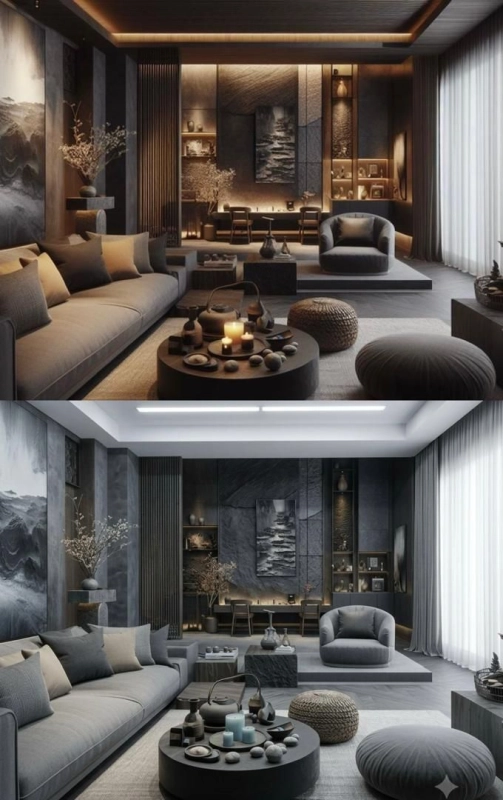
Many homeowners spend hundreds of thousands or even millions on home renovations. They invest in premium marble, designer furniture, custom carpentry, and high-end appliances.
Yet after moving in, something still feels missing.
The home looks beautiful in photos, but it doesn't feel as comfortable, welcoming, or luxurious as expected.
Surprisingly, the problem is often not the furniture, architecture, or interior design.
It's the lighting.
Lighting affects how we experience a space more than most people realize.
It influences:
- Comfort
- Mood
- Productivity
- Relaxation
- Sleep quality
- Perceived luxury
A beautifully designed living room can feel cold and uncomfortable under poor lighting.
Meanwhile, a well-designed lighting system can make an ordinary space feel elegant and inviting.
This is why luxury hotels, premium restaurants, and high-end residences place so much emphasis on lighting design.
Common Mistake 1: Too Many Downlights
One of the most common mistakes in residential projects is relying heavily on downlights.
Many homeowners assume that more lights mean a brighter and better space.
In reality, excessive downlights can create:
- Harsh shadows
- Glare
- Visual fatigue
- A flat and uninteresting environment
The result is a home that feels more like an office than a luxury residence.
Luxury spaces use a combination of lighting layers rather than a ceiling full of spotlights.
Most homes operate with only two options:
Lights ON or Lights OFF.
However, our lighting needs to change throughout the day.
The brightness suitable for cleaning the house is very different from the brightness needed for watching a movie or enjoying dinner with family.
Without adjustable lighting levels, spaces often feel either too bright or too dim.
A luxury home should be able to adapt to different activities effortlessly.
Modern luxury homes are increasingly designed around experiences rather than individual switches.
Instead of controlling lights one by one, homeowners can activate pre-programmed scenes with a single touch.
For example:
As you arrive home:
- Entrance lights turn on
- Living room lighting adjusts to a comfortable level
- Motorized curtains close automatically
The house immediately feels warm and welcoming.
Dining Scene
For family meals or entertaining guests:
- Dining lights dim slightly
- Decorative lighting becomes more prominent
- The atmosphere feels intimate and elegant
With one touch:
- Main lights dim
- Accent lighting remains softly illuminated
- Glare is reduced for a better viewing experience
When hosting friends and family:
- Multiple lighting zones activate
- Feature lighting highlights architectural details
- The entire home feels vibrant and luxurious
Late at night:
- Bright lights are avoided
- Warm, low-level lighting guides movement
- The environment becomes calm and relaxing
These experiences are difficult to achieve with traditional switch-based systems.
Today’s luxury designers focus on layered lighting strategies.
Instead of depending on a single light source, they combine:
- Ambient lighting
- Accent lighting
- Task lighting
- Decorative lighting
Each layer serves a specific purpose and contributes to the overall atmosphere.
The result is a home that feels comfortable, sophisticated, and timeless throughout the day.
Many high-end residences are also adopting intelligent lighting control systems that automatically adjust brightness, colour temperature, and lighting scenes based on time, occupancy, and lifestyle preferences.
True luxury is not measured by how expensive a material is.
It is measured by how a space makes you feel.
When lighting is thoughtfully designed and intelligently controlled, every room becomes more comfortable, functional, and inviting.
The difference is often invisible at first glance—but impossible to ignore once experienced.
Good lighting makes a house look beautiful.
Great lighting makes a house feel luxurious.
#lutron #smartelegant #luxuryresidence #lightingautomation #lightingcontrol #goldclassbungalow #homeautomation #smarthome #TACgroup #bespoke
 Malaysia