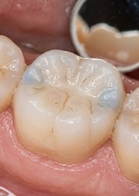
Fissure sealants are a preventive dental treatment widely used for children and adolescents to protect their molars (back teeth) from developing cavities. They may also be applied to primary (baby) molars in children who have a higher risk of tooth decay. Sealants are usually placed soon after the permanent molars erupt, typically between the ages of 6 and 12.
The sealant acts as a thin protective coating that prevents food particles and bacteria from becoming trapped in the natural grooves and fissures of the teeth. It is commonly applied to the chewing surfaces of premolars and molars. By covering these areas, fissure sealants reduce the buildup of debris and bacteria, thereby lowering the risk of tooth decay.
Fissure Sealant Procedure
The procedure is typically simple and efficient, taking only a few minutes per tooth.
Cleaning: The dentist first cleans and dries the tooth thoroughly to prepare it for the sealant. Etching: A gentle acidic solution is applied to the chewing surface to create a slightly rough texture, allowing the sealant to bond more effectively. Application: The sealant, a thin liquid resin, is then applied to the grooves and fissures of the tooth. It flows easily into these areas and hardens quickly when exposed to a curing light. Curing: A curing light is used to set the sealant, ensuring it bonds firmly to the tooth surface. Checking and Adjusting: Lastly, the dentist examines the sealant and makes any necessary adjustments to ensure it properly covers and protects the chewing surface.
Advantages:
Cavity Prevention: Fissure sealants create a protective layer that stops food particles, plaque, and bacteria from collecting in the deep grooves of molars, thereby lowering the risk of tooth decay. Painless: The procedure is completely painless and usually does not require any anaesthesia. Cost-Effective: Fissure sealants are an economical preventive option when compared to the cost of treating cavities and other dental issues
How long do fissure sealants lasts?
Fissure sealants can last for several years but may eventually wear down or chip off with time. They should be checked by a dentist during regular check-ups and reapplied as needed.
Before After
Maintenance
Maintaining good oral hygiene, such as regular brushing and flossing, remains essential even after fissure sealants are applied. Routine dental check-ups and professional cleanings are important to assess the condition of the sealants and to support the child’s overall oral health. Fissure sealants offer a non-invasive and cost-effective method of protecting teeth by preventing cavities in areas that are more prone to decay. However, regular dental visits are still necessary to ensure the sealants remain intact and continue to be effective over time.


.png)

 Malaysia