

From a single porcupine bezoar passed down for a century in Southeast Asia, to centre stage at China's largest health industry expo — what Miracle Medicine brought along was not just a product, but a path of "traditional resource meets standardised research".
In May 2026, the Malaysian porcupine bezoar brand Miracle Medicine (Miracle Medicine Sdn Bhd) was invited to the Guangzhou International Health Industry Expo and received the Technology Innovation Enterprise Award. The award recognises Miracle Medicine's long-term work — alongside Guangdong Pharmaceutical University — to advance the standardised study of porcupine bezoar and bring this traditional Southeast Asian resource into the modern era. Their joint research was published in April 2026 in the peer-reviewed journal Pharmaceuticals (MDPI, indexed in PubMed). Reference paper: DOI 10.3390/ph19040563 →
In May 2026, Miracle Medicine was invited to take part in the Guangzhou International Health Industry Expo. For a porcupine bezoar brand from Malaysia, this was more than an exhibition — it was a chance to formally introduce Southeast Asia's porcupine bezoar culture to China's health industry stage.
Across those few days, the conversations at the booth, the dialogue at the summit, and finally the trophy handed out on stage all pointed to the same idea: a traditional resource can be presented to more people in a careful, scientific and well-regulated way.
.jpeg)
On day one, a line had already formed in front of the booth.
What slightly surprised the team was this — while porcupine bezoar is a household name in Malaysia and Singapore, awareness in China is still limited. Many visitors were seeing the words "porcupine bezoar" for the first time. Their first question was usually "what exactly is this?", followed by "where does it come from?" and "why is it precious?".
So there's this much care behind a single porcupine bezoar — it is sourced from wild porcupines in Indonesia with no killing involved, and its quality is judged by internal fibre-particle density, not by external colour. That was the reaction many guests had after hearing the story.
The Miracle Medicine team explained it step by step: each porcupine bezoar is obtained by a team of nearly 300 people through wild capture, X-ray screening, veterinary surgery, post-operative recovery and release. This humane, regulated sourcing system left a strong impression on many first-time visitors.
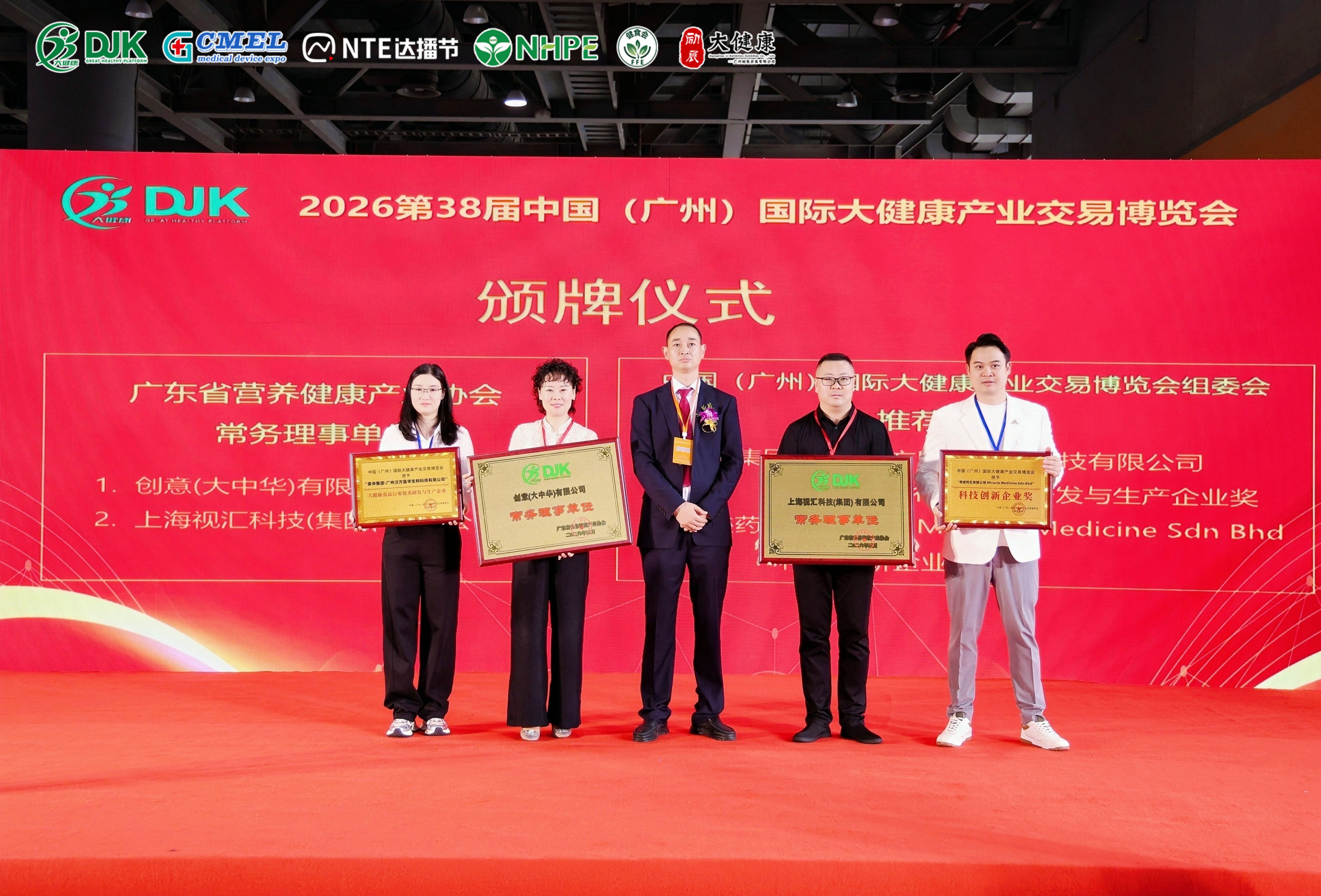
For a brand built on a traditional natural resource, the words "technology innovation" are not easy to earn.
Over these years, Miracle Medicine has been doing one consistent thing: re-telling the story of porcupine bezoar through modern research. The brand signed a formal research collaboration agreement with Guangdong Pharmaceutical University to study porcupine bezoar systematically. In April 2026, the joint research was published in the peer-reviewed international journal Pharmaceuticals (MDPI, indexed in PubMed), with Miracle Medicine as the second affiliated research institution and Dr. Kien-Seng Lim as a co-author.
Recipient: Miracle Medicine Sdn Bhd
Date & venue: May 2026 · Guangzhou International Health Industry Expo
Basis: a complete traceability system, seven certifications, and an ongoing research collaboration with Guangdong Pharmaceutical University
Research backing: Pharmaceuticals (MDPI, indexed in PubMed) DOI: 10.3390/ph19040563
It is precisely this "traditional resource + standardised research" path that led the organiser to present the Technology Innovation Enterprise Award to Miracle Medicine. For the team, the award is not a finish line — it reads more like a quiet confirmation: "the direction is right, keep going."
Beyond hosting visitors at the booth, Miracle Medicine also exchanged ideas with guests from different regions. The conversations centred on three things:
The message the team hoped to convey was always two sides of one idea: something traditional can also be presented in a way that is scientific and well-regulated.
.jpg)
During the expo, Miracle Medicine was also invited to the "2026 New E-Commerce Future Summit for Health" — a showcase of new products, channels and models — joining industry experts, entrepreneurs and brand representatives from across China to discuss where the sector is heading.
The direction echoed by the summit aligns with China's "Healthy China 2030" framework: a shift from "treating illness at the centre" towards "people's health at the centre", with greater emphasis on prevention, management and whole-of-life health support. This is exactly what Miracle Medicine has been working on — steadily building out its source base, research collaboration, patent applications and international studies around porcupine bezoar.
"Prevention outweighs cure; wellness matters more than treatment. Going forward, Miracle Medicine will continue to build on research collaboration and quality standards to steadily bring porcupine bezoar — a traditional Southeast Asian resource — into the modern and international arena."
— Dr. Kien-Seng Lim, Miracle Medicine Sdn BhdMiracle Medicine was not the first brand to work with porcupine bezoar, but the road it has chosen is one few are willing to take — placing a traditional resource squarely within the framework of research collaboration and peer-reviewed journals. The Technology Innovation Enterprise Award is an external acknowledgement of that road.
Thank you to the organiser for the invitation, and to every guest who stopped by the booth to hear the story of porcupine bezoar. Presenting a good traditional resource to more people through research has always been the direction Miracle Medicine works towards.
This article records the Guangzhou experience and what the award means. If you would rather know what the international study actually found and how it relates to recovery after chemotherapy, see the two dedicated articles below:
Not sure whether porcupine bezoar suits your or your family's current situation? The team answers questions like this every day — free of charge and no pressure.
Free WhatsApp Consultation About Porcupine BezoarThe answers below are based on the 2026 Guangzhou International Health Industry Expo and Miracle Medicine's 19 years of experience. For personal health concerns, please consult your treating physician.
At the Guangzhou International Health Industry Expo in May 2026, Miracle Medicine received the Technology Innovation Enterprise Award, recognising its long-term commitment to the standardised study and industrial innovation of porcupine bezoar as a traditional natural resource.
Porcupine bezoar is a natural stone-like resource formed inside the porcupine, long regarded by Southeast Asian communities as a precious tonic. Miracle Medicine's porcupine bezoar is sourced from the wild forests of Indonesia with no killing involved, and its quality is determined by internal fibre-particle density rather than external colour.
Miracle Medicine has a formal research collaboration agreement with Guangdong Pharmaceutical University to study porcupine bezoar systematically. Their joint research was published in April 2026 in the peer-reviewed international journal Pharmaceuticals (MDPI, indexed in PubMed), with Miracle Medicine as the second affiliated research institution and Dr. Kien-Seng Lim as a co-author. DOI: 10.3390/ph19040563
Miracle Medicine holds seven certifications: KKM (Ministry of Health Malaysia) · HALAL Laboratory Certification · MeSTI · HACCP · GMP · ISO 9001:2015 quality management system · ISO 22000:2018 food safety management system.
As of April 2026, more than 5,000 customers have experienced Miracle Medicine's porcupine bezoar. The product range includes Traditional Grade A, Traditional Grade B and the Essence Extracted version — we recommend contacting the Miracle Medicine team to choose based on your individual situation.
⚠️ Disclaimer: This article is for reference only and does not constitute medical advice or any therapeutic claim. Porcupine bezoar is a natural health food, not a registered medicine, and cannot replace conventional medical care. For any health concerns, please consult your treating physician.
Academic reference: Li J., Gao W., Lim K-S., Lei S., Chen Z., Sim X-Q., Long Q., Xiao X. (2026). The Immunomodulatory Effects of Porcupine Bezoar on Cyclophosphamide-Induced Immunosuppression in Rats. Pharmaceuticals, 19(4), 563. DOI: 10.3390/ph19040563

 Malaysia