

Why Venue Site Visits Matter Before Large Events
Venue site visits matter before large events because they help us confirm LED screen placement, power supply, rigging safety, installation access, AV integration, and setup timing before event day. Without a proper site inspection, organizers may face poor screen visibility, technical delays, unstable power, blocked views, or safety issues during the event.
For large corporate events, concerts, exhibitions, conferences, gala dinners, and product launches, a site visit gives the event setup team a clear understanding of the venue before LED screens, sound systems, lighting, and staging equipment are installed.
Why Venue Site Visits Are Important
A venue may look suitable from photos or floor plans, but the real setup conditions are only clear during an on-site inspection. Ceiling height, loading bay access, stage depth, power points, audience layout, and control room position can all affect event setup.
At Asia LED Screen Rental, we use venue site visits to reduce technical surprises and make sure the LED display, AV system, and installation plan match the actual event environment.
Without Site Visit vs With Site Visit
A site visit helps turn assumptions into a practical event setup plan. This is especially important when large LED screens, truss systems, lighting, sound, cameras, or livestreaming equipment are involved.
| Without Site Visit | With Site Visit |
|---|---|
| Blocked screen visibility | Optimized screen placement |
| Wrong LED screen size | Better audience viewing distance |
| Power overload risk | Planned electrical routing |
| Setup delays | Smoother installation flow |
| Unsafe cable routes | Safer audience pathways |
| Poor livestream angles | Coordinated camera positioning |
| Rigging uncertainty | Safer structure planning |
| Last-minute layout changes | Clearer technical setup plan |
This comparison shows why site visits are not just a formality. They help prevent issues that are difficult to fix once the event setup has already started.
Key Things Checked During a Venue Site Visit
1. Accurate LED Screen Placement
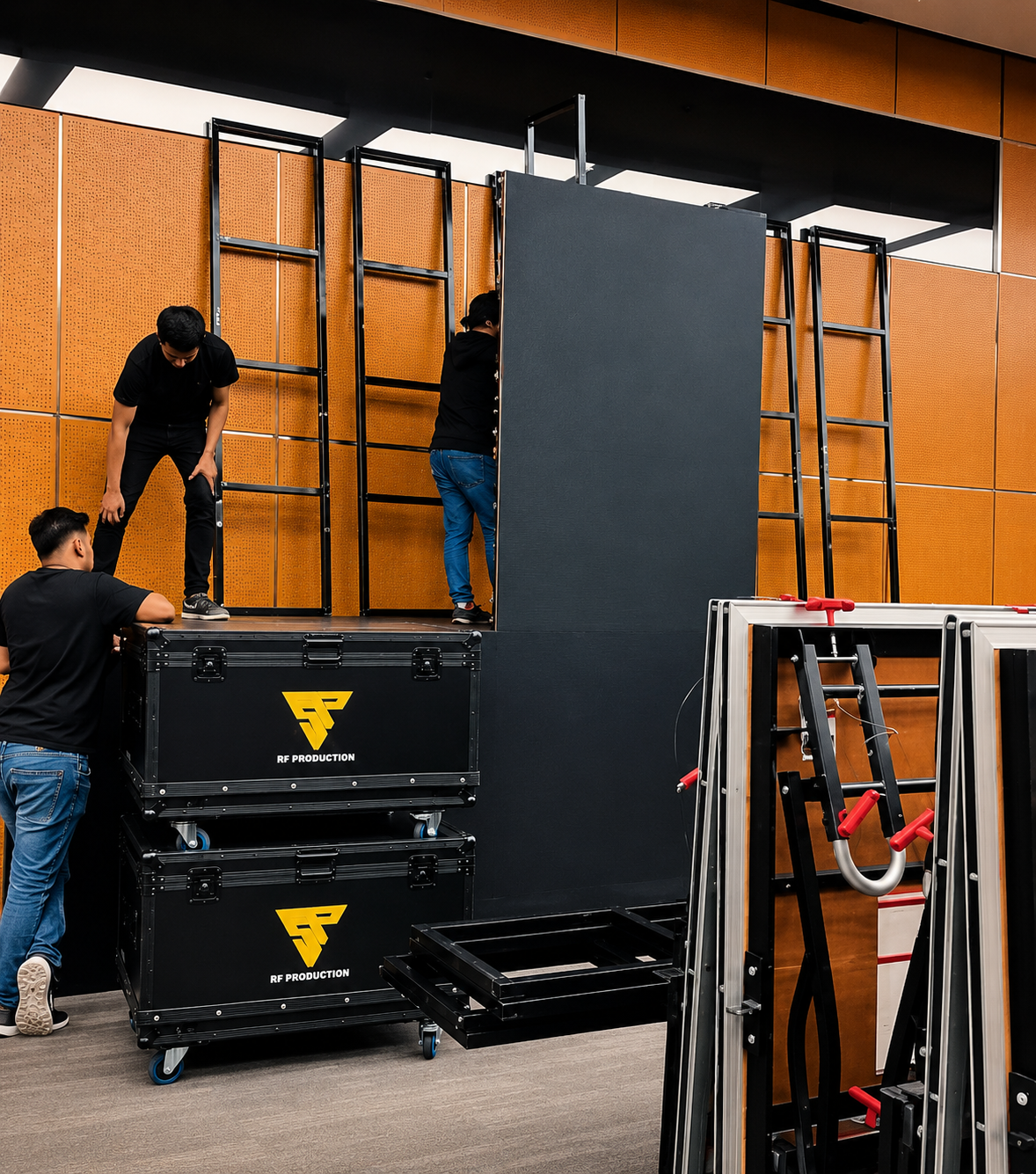
LED screen placement affects how clearly the audience can see the content. During a site visit, we check the stage size, ceiling height, viewing distance, audience layout, and possible obstructions before recommending the screen position.
A screen that is too low, too small, or placed at the wrong angle can create blocked views and poor visibility. For larger events, proper placement helps ensure slides, videos, branding, and live camera feeds are visible from the front, middle, and back of the venue.
For indoor events, choosing the right display setup is especially important. Our indoor LED screen rental in Malaysia is commonly planned around stage layout, audience distance, and event content.
2. Power Supply and Electrical Planning
Large LED walls need stable and sufficient power. During a site inspection, event technicians usually check power outlet locations, voltage capacity, backup power options, and safe cable routing paths.
This helps prevent electrical overload, unstable display performance, sudden shutdowns, or messy cabling during the event. Power planning is especially important when LED screens are used together with lighting, sound systems, cameras, and livestream equipment.
A site visit also helps us decide where cables should run without blocking walkways, guest areas, backstage paths, or emergency access routes.
3. Structural and Rigging Safety
Some large events require truss systems, hanging LED walls, rooftop structures, or custom mounting solutions. A site visit helps identify rigging points, ceiling limits, load-bearing restrictions, floor conditions, and venue safety requirements.
This step is critical for concerts, exhibitions, award ceremonies, and product launches where the screen may be elevated or integrated into a larger stage structure. Proper planning reduces the risk of unstable structures, delayed installation, or last-minute design changes.
For events that need structural support, our rooftop and truss system setup helps support safer and more stable event screen installation.
4. Logistics and Installation Access
Even a simple setup can be delayed if the equipment cannot move into the venue easily. During a walkthrough, we check loading bays, lift access, corridor width, parking areas, ballroom entry points, setup restrictions, and dismantling schedules.
For some ballroom events in Kuala Lumpur, LED panels and truss equipment may need to share freight elevators with decorators, catering teams, and stage vendors. Without early coordination, this can delay installation even before the screen setup begins.
A site visit helps us plan manpower, trolley routes, installation timing, and teardown flow. This is also why large event setup often needs more preparation time, as explained in our guide on how long indoor LED screen installation takes.
5. AV Integration Planning
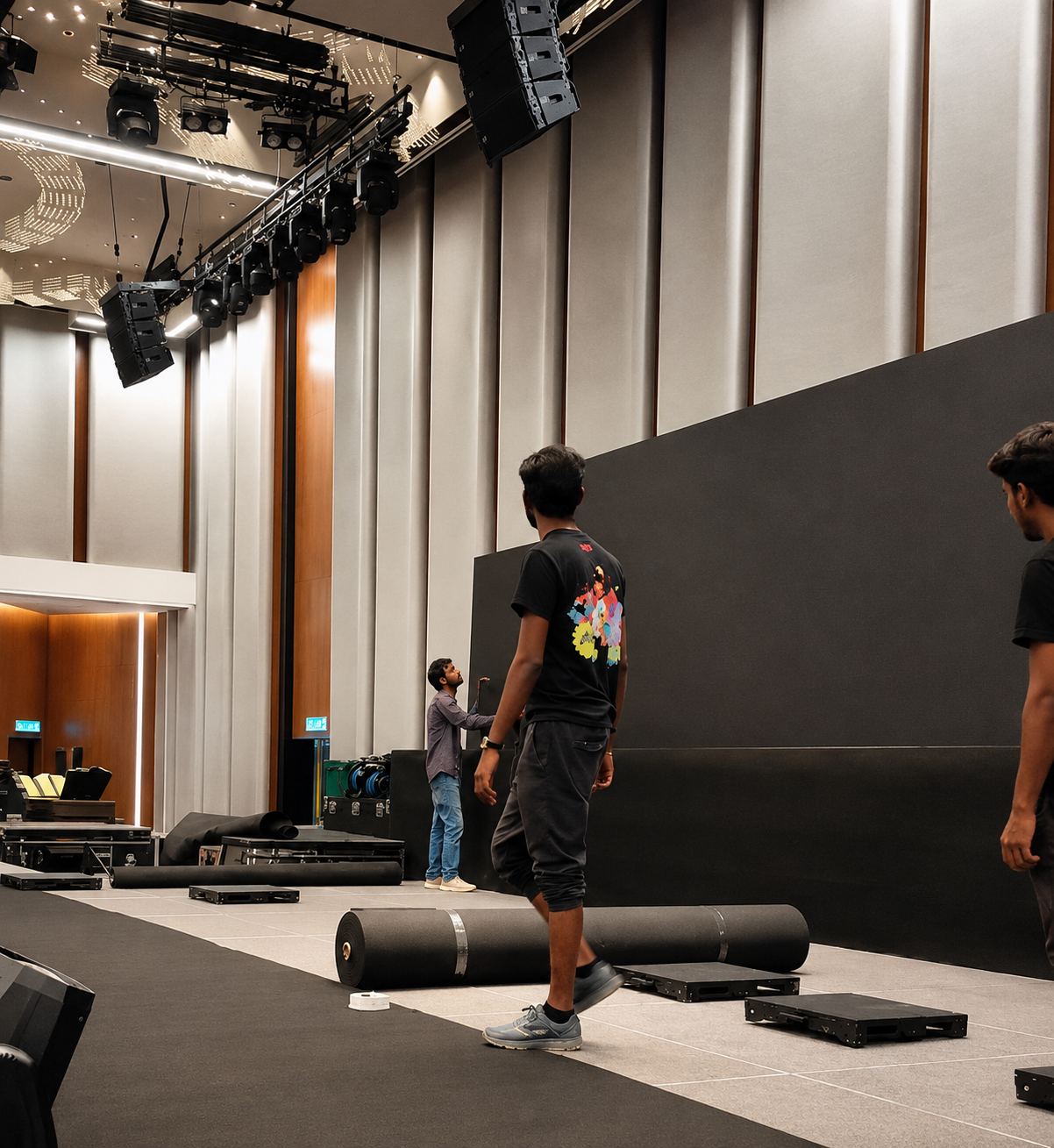
Modern events usually involve more than one screen. A large event may include LED walls, TV screens, microphones, speakers, lighting, cameras, presentation laptops, livestream equipment, and video processors.
During a site visit, AV crews check the signal flow, control area, cable paths, camera positions, speaker placement, and display outputs. This helps avoid signal delay, sync problems, poor audio coverage, or content playback issues.
For events that need coordinated sound, lighting, LED screens, microphones, and display control, our advanced AV solutions rental in Selangor can support a more complete technical setup.
For full event planning, our AV equipment rental Malaysia guide explains how LED screens, sound systems, lighting, microphones, and video systems work together.
Site Visit Checklist for Large Events
A proper venue walkthrough helps the production team confirm the technical details before setup day.
| What We Check | Why It Matters |
|---|---|
| Stage dimensions | Confirms screen size and positioning |
| Ceiling height | Determines whether truss or hanging setup is possible |
| Audience distance | Helps choose screen size and pixel pitch |
| Power points | Reduces electrical and cabling issues |
| Loading access | Prevents setup delays |
| Rigging points | Supports safer structural planning |
| Control area | Improves AV and livestream coordination |
| Cable routing | Keeps the venue safer and cleaner |
| Setup hours | Helps plan manpower and timing |
| Teardown rules | Prevents late dismantling problems |
This checklist is especially useful for corporate functions, exhibitions, gala dinners, concerts, and product launches where many technical elements must work together.
Problems a Site Visit Can Prevent
A venue site inspection helps prevent problems that are difficult to fix on event day. Once guests arrive, there is limited time to change screen placement, reroute cables, add power sources, or redesign the stage structure.
Common issues a site visit can prevent include:
- LED screen too small for the audience
- blocked views from pillars or stage structures
- insufficient power supply
- limited access for large LED panels
- unsafe cable routes
- weak control room visibility
- poor camera angles
- livestream signal issues
- truss or rigging restrictions
- delayed setup due to loading bay problems
Many technical problems are avoidable with early planning. Our article on common AV problems during events explains how pre-event checks reduce audio, video, lighting, LED screen, and power risks.
How Site Visits Improve LED Screen Quality
Venue inspection also improves the final screen appearance. When we understand the room layout, audience distance, lighting condition, and content type, we can recommend a better screen size, placement, brightness level, and pixel pitch.
For example, a ballroom event with guests seated close to the stage may need a finer pixel pitch for clearer text and sponsor visuals. A large exhibition hall may need a bigger screen or multiple displays so visitors can see the content from different angles.
Our guide on recommended LED screen size for events in Malaysia explains how screen size affects audience impact, while our article on choosing the right LED screen pixel pitch explains how viewing distance affects display clarity.
How Asia LED Screen Rental Handles Site Visits
Asia LED Screen Rental provides indoor and outdoor LED display rental services for corporate events, concerts, exhibitions, launches, and conferences across Malaysia. Our company is based in Puchong, Selangor, and we support clients with installation, technical setup, AV integration, and event support.
During a site visit, we usually assess the venue layout, stage dimensions, audience distance, ceiling height, power supply, cable routes, and installation space. This helps us recommend a screen setup that fits the event instead of forcing one standard solution into every venue.
For larger stage displays, our LED wall and large screen rental in Kuala Lumpur is suitable when the event needs a bigger screen with AV coordination and on-site technical support.
When Should a Site Visit Be Done?
A venue site visit should be done as early as possible once the event venue is confirmed. For large events, it is better to inspect the venue before finalizing the LED screen size, stage design, AV layout, and setup schedule.
| Event Type | Suggested Site Visit Timing |
|---|---|
| Corporate seminar or conference | 1–2 weeks before event |
| Product launch or gala dinner | 2–4 weeks before event |
| Exhibition or roadshow | 2–4 weeks before event |
| Concert or large production | 1 month or earlier |
Large events need more time because the setup may involve truss, staging, lighting, cameras, livestreaming, and multiple display zones. For event planners comparing venue display options, our guide on how to choose the right LED screen size for your event can help before the site inspection.
FAQ
Conclusion
In summary, venue site visits matter before large events because they help prevent screen placement mistakes, power issues, rigging risks, AV delays, logistics problems, and safety concerns.
A proper site inspection allows us to plan the LED screen, sound, lighting, staging, cable routes, and installation schedule with more confidence. For large events in Malaysia, early venue planning is one of the best ways to achieve a smoother setup and a more professional event experience.

 Malaysia