

Why is the “right timing for supportive care” more important than “what to take”?
After a cancer diagnosis, many patients and families share the same concern: “The body is already so weak… is it safe to start any kind of nourishment now?”
In reality, during different stages of cancer treatment, body condition, immune responses, and tolerance can vary significantly. That is why supportive care is not about starting as early as possible, but starting at the most suitable time.
Treatment is the core plan. Supportive nourishment should reduce burden and support recovery—never replace treatment or create avoidable risk.
How does the body differ across the different stages of cancer?
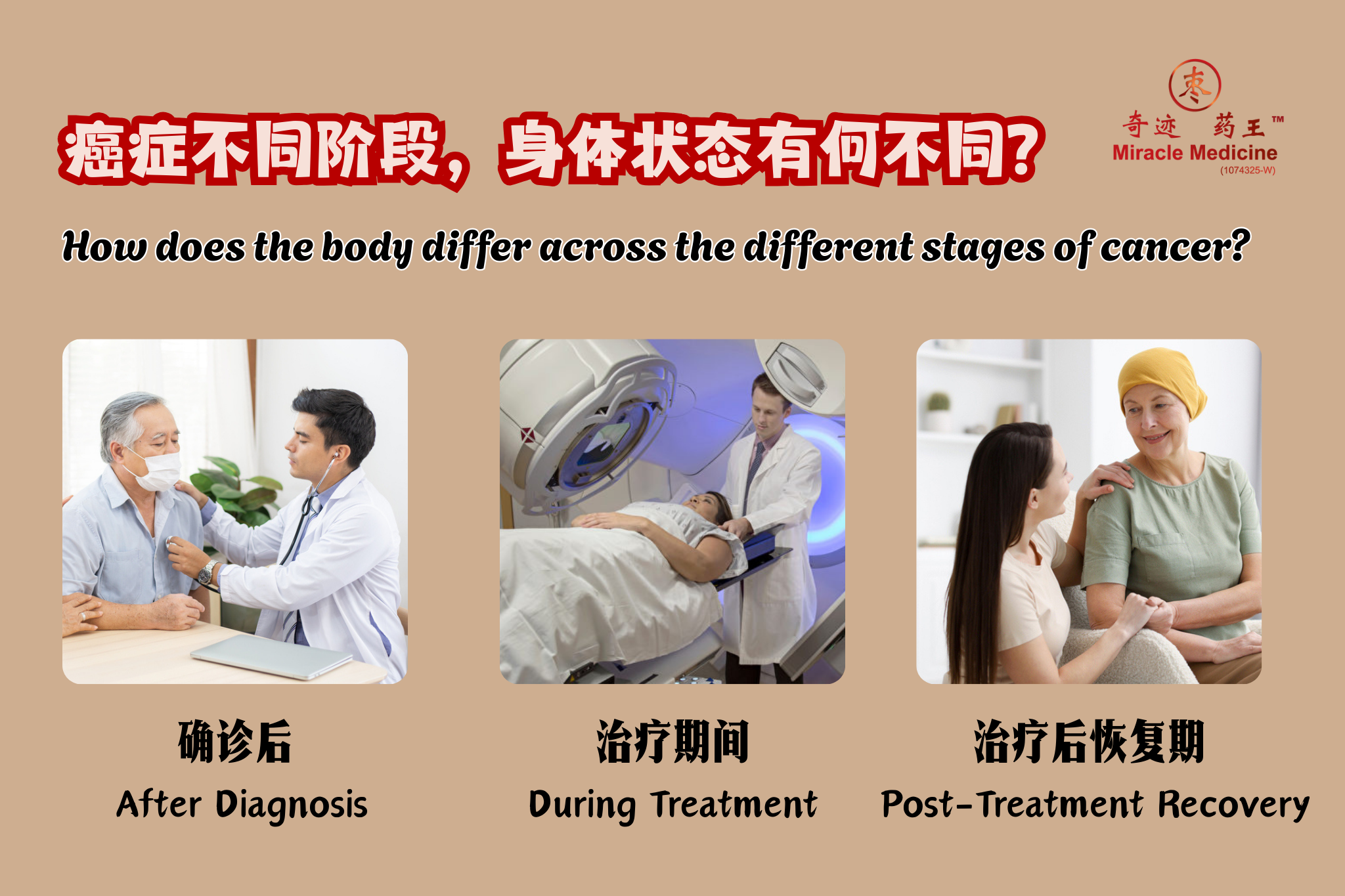
① After Diagnosis · Before Treatment
(Before chemotherapy / radiotherapy / surgery begins)
Common conditions
- High psychological stress, anxiety, poor sleep quality
- Unstable appetite, beginning decline in energy levels
- The body has not yet been exposed to treatment-related side effects
Key supportive focuses
- Build foundational nutritional reserves in preparation for upcoming treatment
- Stabilise emotions and reduce excessive tension
- Maintain light physical activity if approved by the doctor
If considering any natural products, discuss with the doctor early to avoid interfering with planned treatment.
② During Treatment
(Chemotherapy / Radiotherapy / Surgery stage)
Common conditions
- Nausea, fatigue, reduced appetite
- Fluctuations in white blood cell count or immune markers
- Increased burden on liver and kidney metabolism
Guiding principles
- Prioritise maintaining basic nutrition and safety
- Avoid adding supplements or herbal products on your own
- All supportive approaches must be approved by the attending doctor
Unreviewed supplements may interact with treatment, affect effectiveness, or increase strain on the body.
③ Post-Treatment Recovery
(Rehabilitation and long-term wellness phase)
Common conditions
- Gradual recovery of strength and immune function
- Possible ongoing fatigue or lower physical endurance
- Increasing focus on long-term health maintenance and quality of life
Key supportive focuses
- Support the body in returning to a normal rhythm
- Build gentle, sustainable lifestyle habits
- Under professional guidance, assess whether additional supportive approaches are suitable
Some patients may choose mild, stable, longer-term supportive methods as part of a broader recovery plan—based on individual assessment.
Common Questions About Traditional Supportive Approaches
Supportive care ≠ alternative treatment
Traditional supportive methods (including certain natural products) cannot replace medical treatment, surgery, or prescribed medication. In many cultures and lived experiences, these methods are positioned as supportive options that may help with overall well-being during recovery phases.
Whether a person is suitable to use them depends entirely on individual condition, the treatment plan, and the body’s response.
Positioning of Porcupine Date in Supportive Care (Educational Explanation)
.png)
In certain regions and traditional practices, porcupine date is sometimes discussed as a natural option used to support general balance and overall wellness during recovery.
- It is not a medical drug.
- It does not treat or cure cancer.
- It is not suitable for all stages or all individuals.
If considering its use, it is recommended to:
- Evaluate only after treatment or with the doctor’s approval
- Pay attention to the source, processing method, and quality control
- Avoid combining with any treatments or medications without professional guidance
Ask “Is it suitable for me, and is this the right time?” before asking “What should I take?”
Why is “individual assessment” so important?
Every cancer patient differs in:
- Type and stage of cancer
- Treatment methods and medications
- Age, underlying conditions, and metabolic capacity
Therefore, there is no one-size-fits-all timing for supportive care. The value of individual assessment is to:
- Reduce unnecessary risks
- Avoid blindly following others’ experiences
- Ensure supportive care becomes a help, not a burden
Frequently Asked Questions (FAQ)
Q: Should cancer patients start taking supplements immediately after diagnosis?
A: Not necessarily. Timing should be assessed based on the treatment plan and the patient’s condition. Starting too early or choosing unsuitable products may add unnecessary strain.
Q: Can patients take any natural supplements during treatment?
A: It is not recommended to self-start during active treatment. Decisions should follow the attending doctor’s advice.
Q: How soon after treatment can patients consider supportive nourishment?
A: It depends on individual recovery. Some patients discuss options after treatment is completed and key indicators have stabilised, under professional guidance.
- 👉 What to Eat During Chemotherapy? 5 Natural Nutrient Sources to Support Immunity
- 👉 What to Eat After Surgery? The Role of Porcupine Date in Post-Surgery Recovery
- 👉 Anticancer activity of grassy Hystrix brachyura bezoar and its mechanisms of action: an in vitro and in vivo study (research overview)
- 👉 Anti-dengue virus serotype 2 activity of tannins from porcupine dates (research overview)
Note: Research links are provided for education and discussion only. They do not imply medical efficacy or replace clinical guidance.

 Malaysia