By Editorial Team
From cold plunges to oxygen bars, are today’s health trends changing our bodies, or just our routines?
Not long ago, wellness meant eating your vegetables, getting enough sleep, and remembering to drink water. Today, it might involve stepping into a chamber colder than Antarctica, or breathing concentrated
oxygen through a tube.
Across luxury hotels, spas, and dedicated recovery studios, a new generation of wellness experiences has emerged. Part health intervention, part lifestyle statement, they promise everything from better recovery and improved focus to longevity and stress relief. Yet as these therapies become increasingly mainstream, an important question remains: how much is supported by science, and how much is powered by hope?
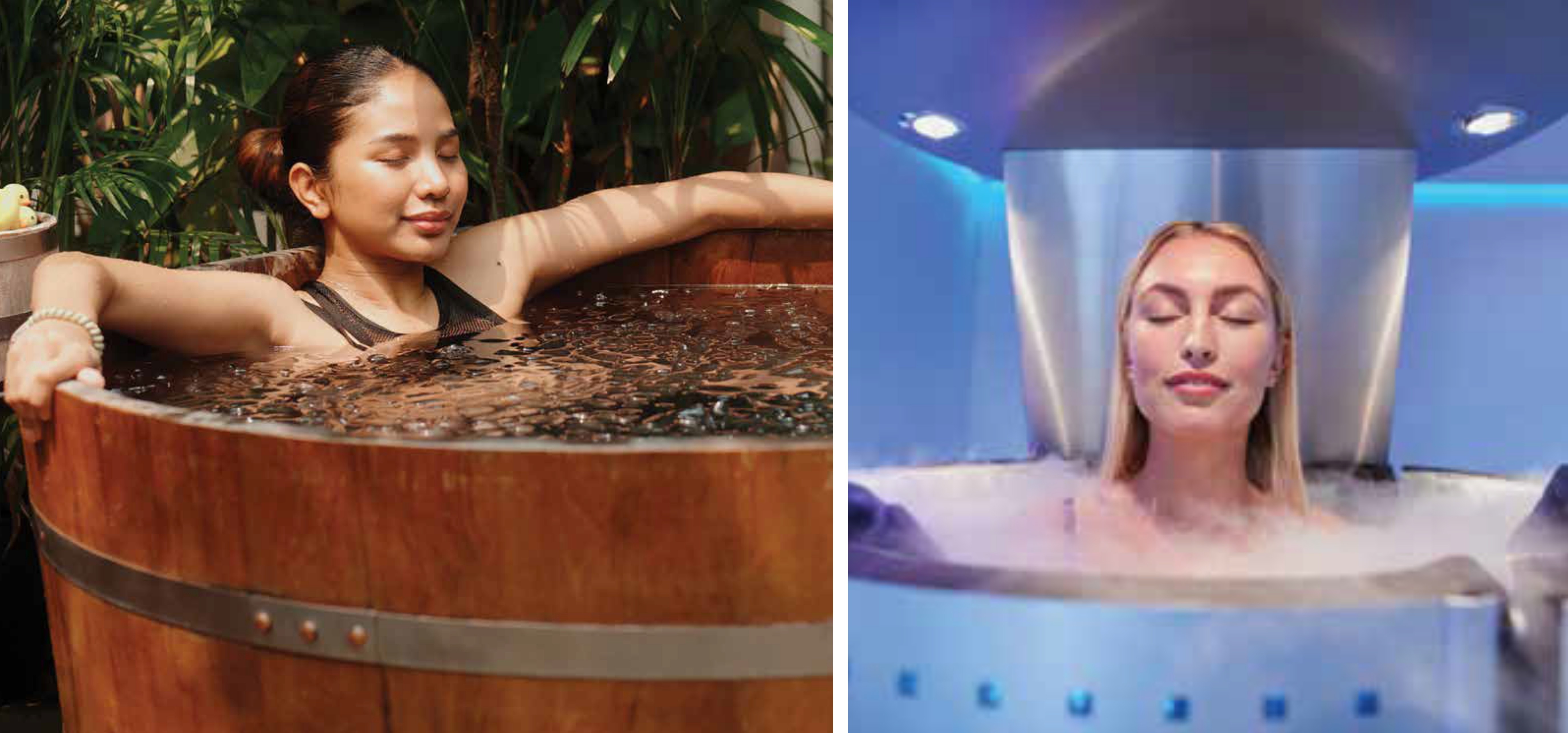
COLD PLUNGES, THE INTERNET’S FAVOURITE DISCOMFORT
Popularised by athletes, biohackers, and podcasters, cold-water immersion has become one of the most visible wellness trends of the past decade. Supporters claim benefits ranging from improved mood and alertness to reduced muscle soreness after exercise.
The science is relatively encouraging when it comes to recovery. Cold-water immersion has been shown to reduce perceived muscle soreness and may help recovery after intense exercise. The mental benefits are harder to measure, though many participants report feeling energised and focused afterwards.
The catch? Cold plunges are not suitable for everyone. Sudden exposure to very cold water can place stress on the cardiovascular system, particularly for individuals with heart conditions or uncontrolled hypertension.
CRYOTHERAPY, FOR JUST THREE MINUTES IN A FREEZER
Cryotherapy takes the logic of the ice bath and turns it up several notches. Participants enter chambers cooled to temperatures that can fall below -100°C for a few minutes at a time.
Advocates suggest it may help with recovery, inflammation, and overall wellbeing. While some users report feeling refreshed afterwards, scientific evidence remains mixed. Research has yet to show that whole-body cryotherapy consistently outperforms simpler and significantly cheaper options such as traditional coldwater immersion. It may feel futuristic, but the jury is still out.
.jpg)
INFRARED SAUNAS, THE WARM SIDE OF WELLNESS
Unlike traditional saunas, infrared saunas use infrared light to heat the body directly rather than warming the surrounding air. Supporters often associate them with relaxation, recovery, and improved wellbeing.
Research suggests sauna use may support cardiovascular health and relaxation, though many advertised benefits remain under study. Claims involving detoxification, however, are often overstated. Despite the marketing, the liver and kidneys remain the body’s primary detox systems. Perhaps the most meaningful benefit is simply being forced to sit still for twenty minutes.
OXYGEN BARS, FRESH AIR WITH BETTER MARKETING?
Oxygen bars offer concentrated oxygen through nasal cannulas, often infused with scents such as peppermint or citrus. Fans claim increased energy, sharper focus, and relief from fatigue.
For healthy individuals living at sea level, the evidence is less convincing. Most people already maintain blood oxygen levels close to optimal under normal conditions. While the experience may feel refreshing, researchers have found little evidence that recreational oxygen provides meaningful long-term health benefits for healthy users. That said, it certainly photographs well.
.jpg)
RED LIGHT THERAPY, THE GLOW-UP TREATMENT
Once largely confined to dermatology clinics, red light therapy has entered the wellness mainstream. The treatment exposes the skin to low-level wavelengths of red and near-infrared light. Of all the trends currently enjoying popularity, this is one of the better-studied, particularly in dermatology and wound care.
Research suggests it may support wound healing and improve certain aspects of skin appearance when used consistently. It is not a miracle cure, but it may be more than a passing fad.
HYPERBARIC OXYGEN THERAPY (HBOT), THE MEDICAL TREATMENT TURNED WELLNESS TREND
Originally developed for medical conditions such as decompression sickness, carbon monoxide poisoning, and certain difficult-to-heal wounds, hyperbaric oxygen therapy involves breathing oxygen in a pressurised chamber. In clinical settings, its uses are well established. In wellness circles, however, it is increasingly marketed for anti-ageing, performance enhancement, and longevity.
Researchers continue to explore these possibilities, but many of the more ambitious claims remain ahead of the available evidence.
IV DRIP THERAPY, THE CELEBRITY FAVOURITE
IV vitamin drips have become a staple of luxury wellness clinics, promising everything from hydration and recovery to enhanced immunity and energy. The appeal is understandable: nutrients delivered directly into the bloodstream sound far more effective than swallowing a tablet.
Yet for healthy individuals, evidence supporting routine vitamin infusions remains limited. Outside of specific medical needs, the body is already remarkably good at absorbing nutrients through food and drink.
SO, DO THEY WORK?
The answer depends on what “work” means.
Many of these therapies can make people feel better, more relaxed, or more recovered. Some others are still waiting for stronger evidence. Very few, however, can replace the fundamentals: sleep, exercise, nutrition, stress management, and preventive healthcare.
Perhaps that is the irony of the wellness boom. We are surrounded by increasingly sophisticated ways to optimise ourselves, yet the most effective interventions remain stubbornly ordinary.
Still, if your path to drinking more water and managing stress involves an infrared sauna overlooking the ocean, then by all means, indulge!Embrace a holistic lifestyle upgrade as the T360 Malaysia becomes your ultimate go-to solution for an enriched daily experience. Dive into a universe where convenience meets sophistication, granting you unparalleled access to a myriad of services and rewards.
Posted by TROPICANA PRIVILEGE (M) SDN. BHD. on 28 Jul 26



 Malaysia