

Men commonly consider annual blood tests such as Full Blood Count, HbA1c, lipid profile, liver function, kidney function, and uric acid, while tests like testosterone, thyroid, vitamin levels, and PSA are usually based on age, symptoms, family history, and doctor assessment. The right yearly blood test checklist for men in Malaysia should be personalized, not treated as a one-size-fits-all requirement.
At Prinz Keponggi Clinic in Kepong, Kuala Lumpur, our team supports men’s blood tests and health screening with doctor consultation, structured screening flow, and clear report explanation to help patients understand their health risks more confidently. Regular blood testing helps us detect silent health risks earlier, especially diabetes, high cholesterol, fatty liver, kidney issues, gout risk, hormone imbalance, and prostate concerns.
Men should commonly consider FBC, HbA1c, lipid profile, liver function, kidney function, and uric acid as part of an annual health review. Additional blood tests such as testosterone, thyroid function, vitamin D, vitamin B12, and PSA may be recommended based on age, symptoms, lifestyle, family history, and medical risk.
This makes annual blood tests useful for men who feel healthy but work long hours, sit most of the day, have belly fat, sleep poorly, or have a family history of diabetes, heart disease, hypertension, gout, or prostate conditions.
Annual blood tests for men help detect health problems before symptoms become obvious. Many chronic conditions, including diabetes, high cholesterol, fatty liver, and kidney impairment, may develop quietly for years.
For men considering men’s health screening in KL, blood tests are often the first step toward understanding hidden risks and deciding whether lifestyle changes, monitoring, or further medical review may be needed.
The best blood test checklist depends on the man’s age, symptoms, and risk factors. Men in their 30s may focus more on metabolic health, while men above 40 or 50 may need a broader doctor-guided review.
Checks early metabolic, liver, kidney, cholesterol, and blood health risks
Helps monitor age-related and lifestyle-related risks
PSA may be discussed based on personal risk and shared decision-making
Helps review anemia, sugar issues, thyroid imbalance, vitamin deficiency, and organ function
Helps assess diabetes risk, cholesterol, fatty liver, and gout tendency
Useful when symptoms suggest possible hormone imbalance
Helps assess prostate concerns safely and appropriately
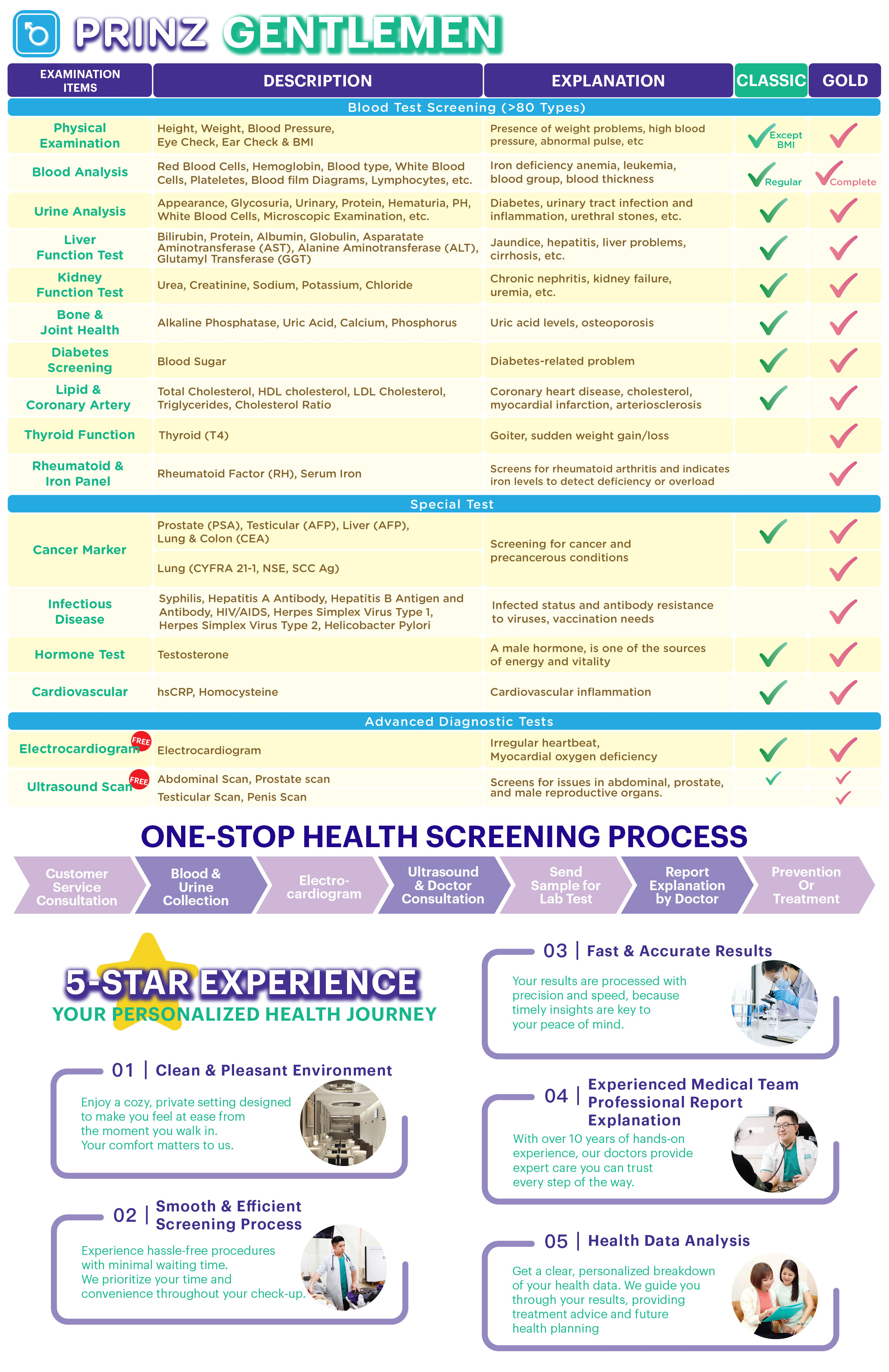
For patients who prefer a package-based approach, the Prinz Gentlemen Classic and Gold screening options may include different combinations of blood test screening, special tests, and advanced diagnostic tests, depending on the selected package.
A Full Blood Count, or FBC, checks overall blood health and may help detect anemia, infection, inflammation, and blood-related abnormalities. It is commonly included in men’s annual screening because it gives a broad overview of basic health status.
An FBC usually reviews red blood cells, white blood cells, hemoglobin, and platelets. Men with tiredness, dizziness, frequent infections, weakness, or unexplained fatigue may benefit from this test as part of a wider medical review.
Blood sugar and HbA1c tests help screen for prediabetes, type 2 diabetes, and long-term sugar control. HbA1c is especially useful because it reflects average blood sugar over the previous two to three months.
This test is commonly considered for men with belly fat, obesity, family history of diabetes, frequent thirst, frequent urination, tiredness after meals, or a sedentary lifestyle.
Men who want to understand whether diabetes can develop silently can read more about diabetes without symptoms.
A lipid profile checks cholesterol and triglyceride levels to help assess heart disease and stroke risk. It usually includes LDL cholesterol, HDL cholesterol, total cholesterol, and triglycerides.
This test is especially useful for men with work stress, smoking history, high blood pressure, diabetes risk, obesity, poor diet, or family history of heart disease. Men often feel normal even when cholesterol is high, which is why routine screening can be helpful.
For related warning signs, our patients can learn more about common symptoms of high cholesterol.
A liver function test helps assess liver health and may detect fatty liver, liver inflammation, alcohol-related liver stress, or medication-related strain. It is commonly included in a blood test for men because fatty liver risk is common among busy working adults.
Liver markers may be affected by weight gain, high cholesterol, diabetes risk, alcohol intake, poor diet, or certain medications. A result that is outside the normal range should be reviewed with a doctor, because blood results alone do not always explain the full cause.
Men concerned about liver health can read about the early signs of fatty liver.
A kidney function test checks how well the kidneys are filtering waste from the blood. Common markers include creatinine, urea, and eGFR.
Kidney function testing is especially useful for men with high blood pressure, diabetes, high protein intake, gout, dehydration habits, or long-term medication use. Results should be reviewed together with medical history, blood pressure, medication use, and other relevant findings.
A uric acid test helps assess gout risk and metabolic imbalance. High uric acid is more common in men who consume rich foods, seafood, red meat, alcohol, sugary drinks, or who have obesity and poor metabolic health.
This test may be useful for men with joint swelling, sudden big toe pain, recurrent joint discomfort, kidney stone history, or family history of gout. However, uric acid results should be interpreted together with symptoms and overall health risk.
Testosterone testing is not automatically needed every year for every man, but it may be recommended when symptoms suggest possible hormone imbalance. Symptoms may include low libido, reduced muscle strength, poor workout recovery, mood changes, low motivation, poor sleep, or persistent fatigue.
Because low testosterone symptoms can overlap with stress, thyroid issues, vitamin deficiency, sleep apnea, depression, and chronic illness, our doctor assessment is important before interpreting hormone results.
Men with related symptoms can read more about low testosterone symptoms in men.
PSA, or prostate-specific antigen, should be discussed with a doctor instead of treated as a universal yearly test for all men. It may be considered based on age, urinary symptoms, family history, personal risk, and shared decision-making.
PSA may rise due to prostate enlargement, inflammation, infection, or other non-cancer causes, so the result needs careful medical interpretation. Men with frequent urination, weak urine flow, waking at night to urinate, incomplete emptying, or family history of prostate cancer should discuss prostate screening with a doctor.
Vitamin D and B12 tests may be recommended for men with fatigue, brain fog, weak immunity, numbness, muscle weakness, or poor energy. These tests are usually symptom-based or risk-based rather than compulsory for every man every year.
Vitamin D may be low even in sunny countries when men spend most of their time indoors. Vitamin B12 may be lower in men with limited animal food intake, absorption issues, certain stomach conditions, or long-term gastric medication use.
A thyroid function test may be recommended when men have unexplained fatigue, weight changes, anxiety, hair loss, fast heartbeat, cold sensitivity, or low mood. It helps assess metabolism and thyroid hormone balance.
Thyroid symptoms can look similar to stress, poor sleep, aging, or lifestyle fatigue. That is why thyroid testing is best included when symptoms, medical history, or doctor assessment suggest it is relevant.
A useful men’s blood test checklist should explain not only what each test detects, but also who may need it most. This makes the screening more practical and medically appropriate.
| Blood Test | What It Helps Detect | Especially Useful For |
|---|---|---|
| Full Blood Count | Anemia, infection, inflammation, blood abnormalities | Men with fatigue, dizziness, weakness, frequent infections |
| HbA1c / Blood Sugar | Prediabetes, diabetes risk, sugar control | Men with belly fat, family history, frequent thirst, fatigue |
| Lipid Profile | Cholesterol and triglycerides | Men with stress, smoking, high blood pressure, family history |
| Liver Function Test | Fatty liver, liver inflammation, alcohol or medication stress | Men with weight gain, alcohol intake, high cholesterol, diabetes risk |
| Kidney Function Test | Kidney filtering function | Men with high blood pressure, diabetes, gout, long-term medication use |
| Uric Acid | Gout risk and metabolic imbalance | Men with joint pain, seafood intake, alcohol intake, obesity |
| Testosterone Profile | Possible hormone imbalance | Men with low libido, poor recovery, mood changes, reduced strength |
| PSA | Prostate risk discussion | Men with urinary symptoms, family history, or doctor-advised age risk |
| Vitamin D / B12 | Possible vitamin deficiency | Men with fatigue, brain fog, numbness, muscle weakness |
| Thyroid Function | Thyroid hormone imbalance | Men with fatigue, weight changes, anxiety, hair loss |
Fasting depends on the type of blood test and the package instructions given before screening. Some tests, such as certain blood sugar or lipid tests, may require fasting, while many other blood tests do not.
Before the appointment, our team will guide patients based on the selected screening package and test requirements. Men may also be advised to avoid heavy meals, alcohol, excessive sugar, and intense exercise before selected tests because these can affect certain readings.
For clearer preparation guidance, our patients can read what foods to avoid before a blood test.
Prinz Klinik supports men’s blood tests through structured health screening, doctor consultation, preventive healthcare guidance, and clear report explanation. Our approach helps men understand not only their numbers, but also what those results may mean for their lifestyle, symptoms, and future health risks.
At Prinz Keponggi Clinic in Kepong, Kuala Lumpur, men’s health screening is supported by a structured one-stop screening process that may include customer service consultation, blood and urine collection, ECG, ultrasound and doctor consultation where included, laboratory testing, doctor-led report explanation, and prevention or treatment guidance. As an ISO 9001-certified health screening clinic, our focus is on structured service processes, organized screening flow, consistent coordination, clear result explanation, and practical preventive healthcare guidance.
Our screening process is designed to support smooth sample handling, organized report explanation, and timely follow-up guidance where suitable.
Our services for men may include blood tests, organ function tests, cholesterol and diabetes screening, hormone and testosterone assessment, cancer risk discussion, wellness screening, and general medical consultation.
Based on the selected Prinz Gentlemen package, screening may also include urine analysis, ECG, ultrasound scan, cardiovascular markers, infectious disease screening, rheumatoid and iron panel, thyroid function, hormone testing, and cancer marker screening. Package inclusions may differ between Classic and Gold options, so patients should confirm the latest details with our clinic team before booking.
Patients can also view the Prinz Gentlemen Gold package for more details about available men’s screening options.
For broader testing information, visit our blood test in KL service page to learn more about available blood testing support at our clinic.
Most healthy adult men can consider a blood test or health screening once a year, but the frequency depends on age, symptoms, existing conditions, and doctor advice. Men with diabetes, high cholesterol, high blood pressure, liver concerns, kidney issues, gout, or abnormal previous results may need more frequent monitoring.
Men who are unsure about screening frequency can read our guide on how often should you do a medical checkup.
A men’s blood test or health screening appointment usually includes registration, basic health questions, blood sample collection, and doctor review when results are ready. Depending on the selected package, ECG, urine analysis, ultrasound scan, or other screening components may also be included.
The doctor may also review symptoms, medications, lifestyle, family history, and previous health records. This helps our team explain whether the blood test results suggest low risk, early warning signs, lifestyle-related concerns, or the need for further follow-up.
For men who are new to screening, our guide on types of blood tests and what to expect explains common blood test categories, preparation, and the screening process.
Men who want a clearer yearly blood test plan can explore our men’s health screening in KL or speak to our clinic team to choose tests based on age, symptoms, lifestyle, and family history.
Speak to Our Clinic TeamMen commonly consider FBC, HbA1c, lipid profile, liver function, kidney function, and uric acid as part of annual blood testing. Testosterone, thyroid, vitamin levels, and PSA may be added based on symptoms, age, family history, and doctor assessment.
No, PSA should not be treated as a universal yearly test for every man. It should be discussed with a doctor based on age, urinary symptoms, family history, personal risk, and the benefits and limitations of screening.
Testosterone testing is usually symptom-based rather than compulsory every year. It may be recommended for men with low libido, poor recovery, reduced muscle strength, mood changes, fatigue, or other symptoms suggesting hormone imbalance.
Yes, annual blood tests may help detect silent risks such as diabetes, high cholesterol, fatty liver, kidney impairment, gout risk, and some hormone or vitamin-related issues. Results should be reviewed with a doctor for proper interpretation.
Men over 40 commonly consider FBC, HbA1c, lipid profile, liver function, kidney function, and uric acid, with additional doctor-guided review for cardiovascular risk, prostate health, hormone symptoms, and lifestyle-related risks.
Men over 50 may need a broader preventive review, including core blood tests plus prostate health discussion, cardiovascular risk assessment, diabetes screening, kidney function monitoring, and other tests based on symptoms and doctor advice.
The Prinz Gentlemen package may include blood test screening, urine analysis, liver and kidney function tests, diabetes screening, lipid profile, uric acid, hormone testing, cancer marker screening, ECG, ultrasound scan, and doctor report explanation, depending on whether the patient selects the Classic or Gold option. Patients should confirm the latest package inclusions before booking.
Fasting depends on the selected tests and screening package. Some blood sugar and lipid tests may require fasting, while many other blood tests do not. Patients should follow the clinic’s fasting instructions before their appointment.
Men can do blood testing and health screening at Prinz Keponggi Clinic in Kepong, Kuala Lumpur. Our team provides blood tests, doctor consultation, preventive healthcare guidance, structured screening flow, and clearer report explanations for men’s health monitoring.
In summary, the blood tests men should consider every year usually include FBC, HbA1c, lipid profile, liver function, kidney function, and uric acid, while PSA, testosterone, thyroid, and vitamin tests should be guided by age, symptoms, family history, and doctor advice. At Prinz Keponggi Clinic in Kepong, Kuala Lumpur, our structured men’s screening process helps us detect silent risks earlier, explain results clearly, and support better long-term health decisions.
Prinz Klinik in Kuala Lumpur provides comprehensive health screening and preventive care for individuals and families, supporting better health at every stage of life. Book an appointment today for personalized medical support.
Posted by Prinz Keponggi Sdn Bhd on 8 Jun 26

 Malaysia