PTC Semiconductor Ceramic Components: Characteristics and Applications
PTC Semiconductor Ceramic Components: Characteristics and Applications
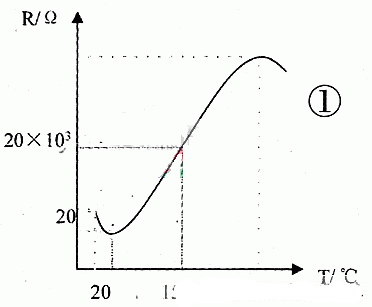
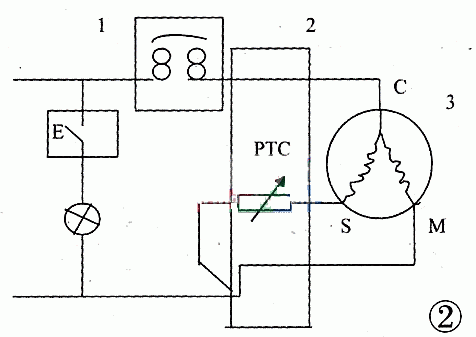
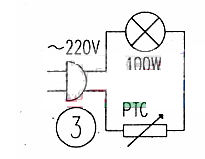
I. PTC Material PTC is a semiconductor ceramic component with a positive temperature coefficient. Its main representative material is barium titanate. It is an organic compound, molded and sintered at high temperatures to form heating elements of various shapes and specifications. When using a PTC component, simply applying an AC or DC power supply to its two terminals will achieve the rated heating temperature. II. PTC Characteristics Taking barium titanate semiconductor ceramic as an example, its temperature-resistivity relationship curve is shown in Figure 1. Below 100℃, it exhibits ordinary semiconductor characteristics; that is, as the conductor temperature increases from its initial value, the resistance decreases, exhibiting a negative temperature coefficient. However, when the temperature rises further above 100℃, its resistance increases sharply by several orders of magnitude, exhibiting a strong positive temperature coefficient characteristic. The initial temperature of this positive temperature coefficient characteristic is called the Curie temperature, denoted by tp, and the phenomenon of the above-mentioned abnormal impedance change is called the PTC characteristic. In actual manufacturing, the Curie temperature of a PTC component can be altered by differences in manufacturing processes and added materials. For example, adding strontium (Sr) or tin (Sn) shifts the Curie temperature towards lower temperatures; adding lead (Pb) shifts it towards higher temperatures. Currently, the Curie temperature of PTC heating elements is generally controlled and selected within the range of -20 to 300℃. III. Application Examples of PTC Heating Elements 1. The heating element in a PTC constant-temperature electric iron is a PTC element, consisting of 10 PTC elements connected in parallel. Due to the use of PTC heating elements, this electric iron has the following advantages: utilizing the characteristics of PTC elements, the heating element itself has an automatic temperature control function; since the resistance of PTC elements is only related to temperature, it is less affected by power supply voltage fluctuations; it is safe and reliable to use, and has a long service life. 2. PTC Automatic Constant-Temperature Rice Cooker By replacing the bimetallic constant-temperature control switch in the automatic constant-temperature rice cooker with a PTC element, and utilizing the positive temperature coefficient characteristic of the PTC element to control the current flowing through the heater during the rice cooker's heat preservation process, constant temperature control of the rice cooker is achieved more conveniently. The outstanding feature of this rice cooker is its high precision in temperature control and long service life. 3. PTC Starting Relay To ensure the normal starting and safe operation of the refrigeration compressor motor, refrigerators are equipped with starting and protection devices. The PTC starting relay is a device that controls the connection and disconnection of the motor starting winding and power supply, as shown in Figure 2. The starting relay is a contactless switch. When the refrigerator starts, the PTC element temperature is below the Curie temperature, and the resistance value is small, generally only about 20Ω. At this time, the PTC element is in the "open" state, equivalent to the relay being closed. During the starting process, because the current is 4 to 6 times greater than the normal operating current, the temperature of the PTC element rises sharply due to the thermal effect of the current. When the temperature rises above the Curie temperature, it enters a high-resistance state. The PTC element is actually in the "off" state. At this time, the current drops sharply to a stable current of 10~20mA, making the starting winding circuit almost open. This type of starter boasts advantages such as contactless arc-free operation, noiseless operation, reliable starting performance, strong adaptability to voltage fluctuations, and a wide range of compatibility with compressors. It also features small size, robust structure, vibration and shock resistance, easy installation, and long service life. However, its switching performance depends on its own temperature changes. Therefore, it cannot be restarted immediately after the refrigerator stops; it must wait until its temperature drops below the critical point before restarting. The time interval between two restarts should be 3-5 minutes. Otherwise, the PTC will remain in a near-high resistance state. The starting winding will not have a sufficiently large current to start the motor, while the running winding will have a large current, causing the motor to overheat and potentially damage it. Furthermore, the PTC element itself consumes approximately 4W of power, so connecting the PTC element in series with the circuit will increase the refrigerator's power consumption. 4. Determining and Handling the Faulty Nature of PTC Starters. Methods to determine if a PTC starter is good or bad: Connect the PTC starter as shown in Figure 3, plug the power plug into a 220V AC power outlet. If the indicator light illuminates within 1-2 seconds and dims and then goes out after 10-15 seconds, the PTC starter is good. If the indicator light does not illuminate or remains on after power is applied, the PTC starter is open-circuited or has lost its control function. To confirm the above judgment, disconnect the PTC starter from the power supply, allow it to cool for 3 minutes, and then plug it back in; repeat the above phenomenon. Using a multimeter, at room temperature (around 25℃), measure the resistance of the PTC starter using the R×1 range. A resistance value within the range of 10-50 ohms is normal. If heated, the resistance of the PTC starter should gradually increase with rising temperature, which is also normal. If the PTC starter becomes damp, its resistance will drop rapidly. It can be dried in an oven at 140-150℃ for about 3 hours. If a PTC starter is damaged, it is because the operating current exceeds its rated current, causing the PTC to overheat and break. In this case, the PTC starter must be replaced.