
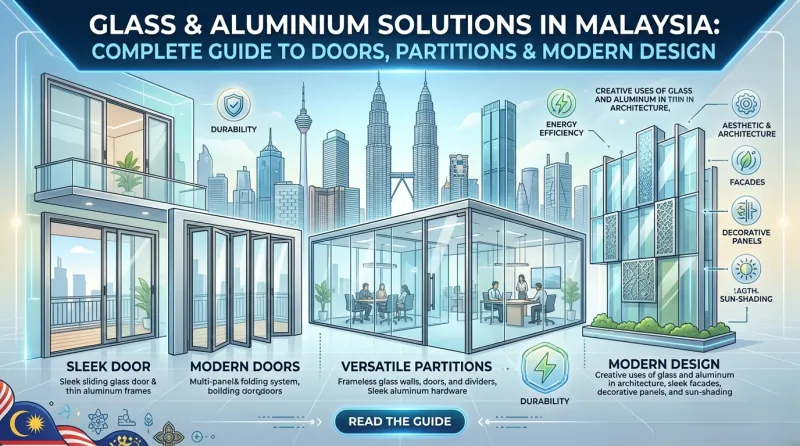
Glass & Aluminium Solutions in Malaysia: Complete Guide to Doors, Partitions & Modern Design
Glass and aluminium systems are widely used in modern Malaysian homes and commercial spaces because they offer durability, clean aesthetics, and flexible design options. This guide explains how to choose the right system based on your space, usage, and design goals.
Key facts
- Glass and aluminium systems combine strong aluminium frames with glass panels
- Common applications include doors, partitions, and structural features
- Popular options include sliding doors, folding doors, bathroom doors, and partitions
- Choice depends on space, function, and design priorities
What are glass & aluminium systems?
Glass and aluminium systems refer to architectural components that use aluminium framing with glass panels to create doors, partitions, and interior or exterior features. Aluminium provides strength and resistance to corrosion, while glass enhances natural light and openness.
Types of glass & aluminium solutions
1. Sliding Doors (Space-Saving & Modern)
Sliding doors are designed for areas where space efficiency is important. They allow smooth movement without requiring swing clearance.
- Suitable for living rooms, balconies, and offices
- Supports large panels and wide openings
- Available in multi-panel configurations
2. Folding Doors (Maximum Opening)
Folding doors allow panels to stack to one side, creating a wide and unobstructed opening.
- Ideal for indoor-outdoor transitions
- Creates near full opening depending on configuration
- Enhances visibility and airflow
3. Bathroom Aluminium Swing Doors
Designed for wet environments, these doors use aluminium for durability and easy maintenance.
- Suitable for humid and wet areas
- Multiple design and privacy options available
- Common in residential and office bathrooms
4. Tempered Glass Partitions
Tempered glass partitions divide spaces while maintaining light flow and openness.
- Made from heat-treated safety glass
- Available in clear, frosted, or tinted finishes
- Used in offices, retail spaces, and clinics
How to choose the right system
- Purpose: Privacy vs openness
- Space: Limited space favors sliding doors
- Usage: High traffic needs durable systems
- Environment: Wet areas require suitable materials
- Design: Minimalist vs feature-focused layouts
Residential vs commercial use cases
Residential
- Living room to balcony transitions
- Kitchen extensions
- Bathroom doors
- Interior partitions
Commercial
- Office meeting rooms
- Retail storefronts
- Showrooms
- Restaurants and cafés
Common mistakes to avoid
- Skipping proper site measurement
- Choosing based on appearance only
- Ignoring hardware quality
- Not planning door configuration and opening direction
Best for
- Home renovations and upgrades
- Modern office or retail design
- Custom-sized installations
- Spaces requiring natural light
Not ideal for
- Very low-budget temporary setups
- DIY installations without expertise
- Projects requiring major structural changes
Frequently asked questions
What is the best glass door for small spaces?
Sliding doors are typically the best option because they do not require swing clearance.
Are aluminium doors suitable for bathrooms?
Yes. Aluminium is durable and performs well in humid environments.
What is tempered glass used for?
Tempered glass is used for partitions and doors because it is stronger and safer than standard glass.
How do I choose between sliding and folding doors?
Choose sliding for convenience and folding for maximum opening space.
Need help choosing the right system?
If you're planning a renovation or commercial project, consider getting a professional site assessment and recommendation before deciding.

 Indonesia