I. Current Operating Conditions and the Necessity of Upgrading
Air compressor intake air contains dust, willow catkins, particulate matter, water, and gasoline contaminants. Insufficient intake air filtration efficiency will lead to a series of problems:
Premature filter clogging, reduced air intake volume, insufficient exhaust pressure, rotor wear, accelerated lubricant oxidation, and dust and scale buildup in precision valves and pipelines, significantly increasing failure rates and maintenance costs.
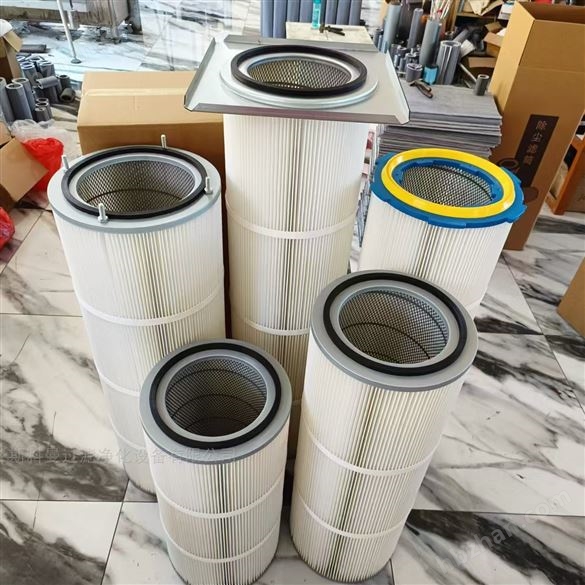
Upgrading the filtration efficiency of the air compressor's dust collector filter cartridges aims to achieve: cleaner intake air, lower resistance, longer lifespan, and greater overall machine durability.
II. Core Factors Affecting the Filtration Efficiency of Air Compressor Cartridges
* Filter media pore size accuracy and fiber layer structure
* Cartridge pleat density and effective filtration area
* Inlet airflow velocity and uniform air distribution
* Cartridge sealing structure and installation sealing
* Ambient dust concentration, humidity, and oil content
* Dust cleaning method and replacement cycle management
III. Practical Techniques for Upgrading Filtration Efficiency
1. Upgrading Filter Media Layers to Improve Interception Precision from the Source
Upgrade from ordinary single-layer polyester to multi-layer gradient composite filter media: the coarse filter layer pre-intercepts large particles, the medium filter layer blocks medium-sized dust, and the ultra-fine fiber layer intercepts fine dust. This multi-stage filtration prevents clogging and increases efficiency.
In high-dust environments, directly switch to PTFE membrane composite filter media. The dense micropores on the surface significantly improve the interception rate of fine dust, and the surface does not trap dust, making it easy to clean.
In humid, high-moisture environments, use waterproof and oil-resistant modified filter media to prevent dust from becoming damp and caking, which can cause a sharp drop in efficiency.
2. Optimize the pleated structure to increase the effective filtration area
By rationally increasing the number of pleats and optimizing pleat height and spacing, the filtration area is maximized within the shell's allowable range, reducing the load on filter media per square meter, improving filtration efficiency while reducing intake resistance.
The use of a rounded pleat shaping process avoids pleat adhesion and dust accumulation in dead corners, ensuring uniform airflow and preventing localized overload.
Replacing filter cartridges with the same outer diameter and height but a larger dust capacity, this upgrades efficiency directly without modifying the equipment.
3. Improve the sealing structure to eliminate air leakage and bypass dust leakage
Many air compressors have low filtration efficiency not because the filter cartridge is faulty, but because of seal failure.
Upgrading and thickening the aging-resistant foamed rubber sealing ring replaces the ordinary thin rubber ring.
Using an integrated end cap + fully enclosed sealing structure prevents edge leakage and allows dust-laden air to enter the main unit directly without filtration.
During installation, ensure verticality is calibrated and the material is properly tightened to avoid misalignment and gaps that could cause bypass dust leakage.
4. Pre-filtering and load reduction:
Install a primary dust filter and louvered dust cover at the air compressor inlet to intercept willow catkins, leaves, and large particles of sand and gravel, reducing the load on the main filter cartridge and allowing it to focus on fine filtration, thus doubling overall efficiency.
In dusty workshops, install negative pressure air intake ducts to draw air from clean areas, avoiding areas with concentrated dust.
5. Controlling intake air velocity and optimizing airflow conditions:
Avoid direct airflow from the air inlet to dust-generating points in the workshop, preventing high-concentration dust from impacting the filter cartridges.
Appropriately enlarge the intake duct and reduce bend resistance to lower the intake air velocity. The gentler the flow velocity, the higher the fiber filtration interception efficiency.
6. Match Reasonable Dust Cleaning and Replacement Cycles
Pulse-jet Air Compressor Filter Cartridges: Lower excessively high jet pressure and use low-frequency, moderate dust cleaning to remove surface dust without damaging the filter media fibers, ensuring stable long-term filtration efficiency.
Fixed Dust-Free Filter Cartridges: Set a fixed replacement cycle based on pressure differential and operating dust concentration. Do not wait until severe clogging occurs before replacement; inefficient operation will continuously wear down the air compressor unit.
7. Precise Matching of Specifications and Models; Avoid Mixing Low-End Substitutes
Do not arbitrarily substitute original specifications with thinner, smaller, or off-brand models. Inconsistencies in inner and outer diameters, height, and pleat structure will cause airflow short-circuiting, poor sealing, and reduced efficiency.
High-Load Operations: Directly Upgrade to the Same Size, High-End Reinforced Model: Thicker filter media, denser pleats, and reinforced frame; non-destructive installation and direct efficiency upgrade.
IV. Actual Benefits of the Upgrade
Improved intake filtration accuracy effectively protects the rotor, bearings, and precision piping;
Increased dust holding capacity of the filter cartridge reduces clogging and extends replacement intervals;
Sufficient and stable air intake for the air compressor results in constant exhaust pressure and lower energy consumption;
Reduced oil contamination and carbon buildup lower maintenance failure rates and costs.
.png)

 China
China


