
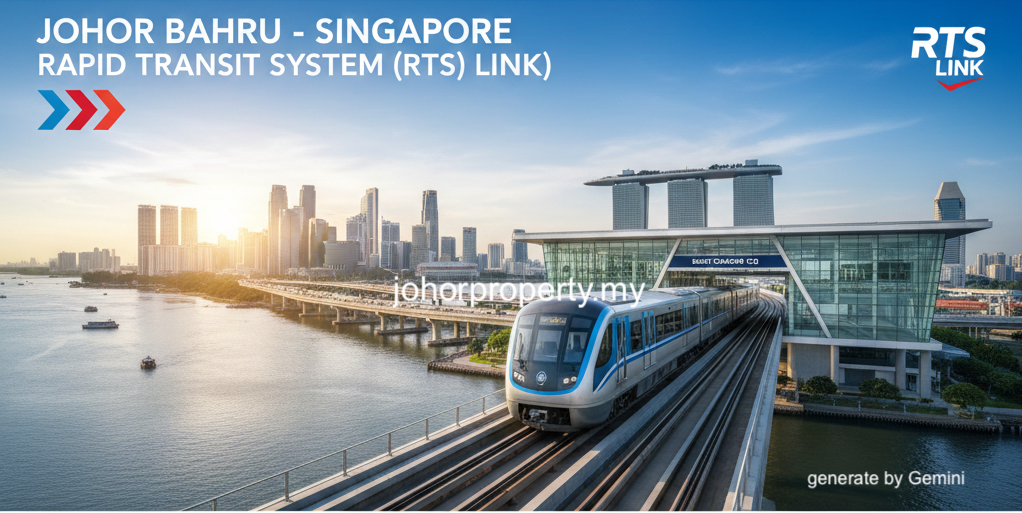
This article from Oriental Daily (published on February 1, 2026) discusses the latest developments regarding the Johor Bahru-Singapore Rapid Transit System (RTS) Link and measures to improve immigration efficiency.
Here is a summary of the key points:
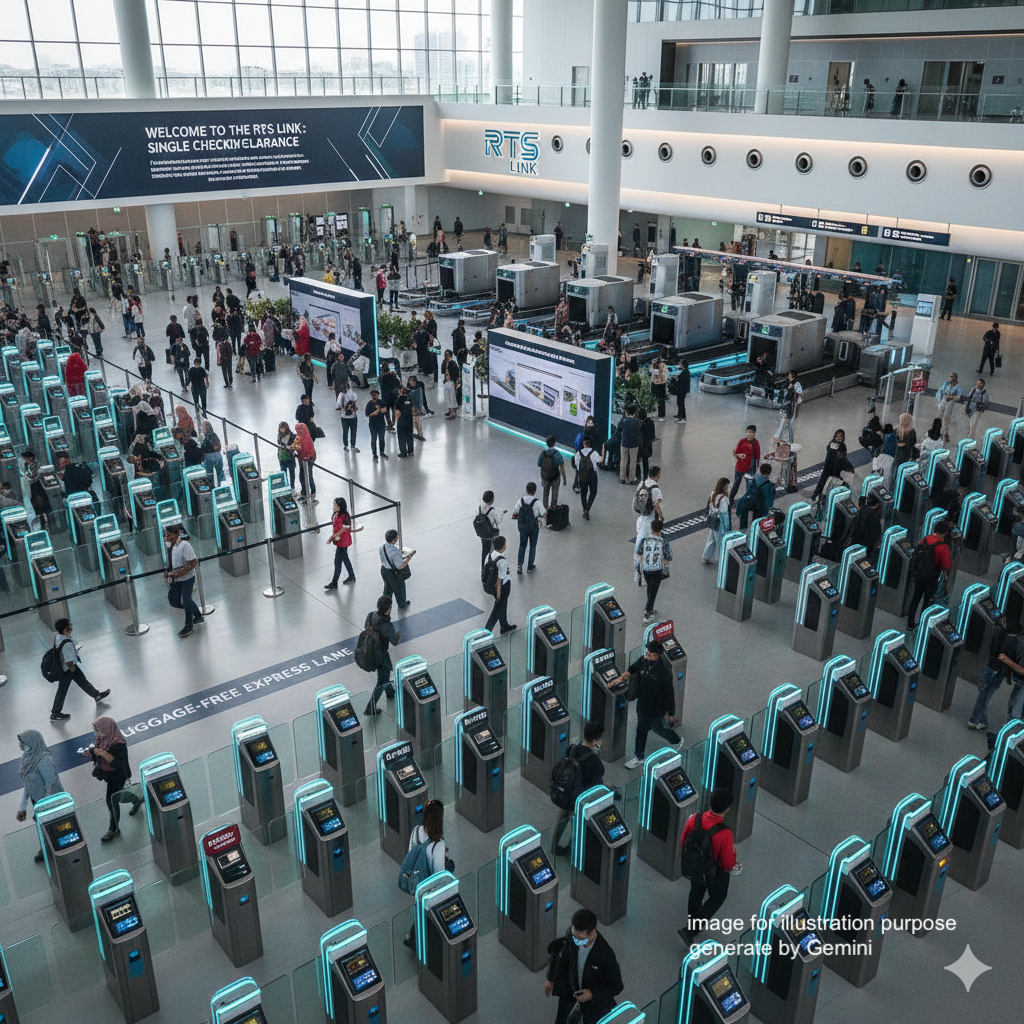
To enhance cross-border travel efficiency, the Bukit Chagar Immigration, Customs, and Quarantine (ICQ) building will be equipped with 100 automatic gate (e-Gate) lanes. These gates are a core part of the integrated clearance model, designed to handle high passenger volumes and reduce congestion, especially during peak hours.
The RTS Link will feature a "co-located" ICQ facility. This means passengers will only need to clear immigration once (at the point of departure) to complete both Malaysian and Singaporean exit/entry formalities, significantly streamlining the journey.
Beyond the 100 e-Gates, the ICQ building will include:
10 physical security screening lanes.
18 baggage scanning machines.
Dedicated lanes for passengers without luggage to speed up movement.
The implementation of QR code passport clearance to reduce reliance on manual checks.
Initial Phase: The RTS is expected to carry about 40,000 passengers per day.
Future Capacity: As the service matures, daily ridership is projected to reach 140,000.
Traffic Relief: It is estimated that the RTS will eventually handle 30% to 40% of the cross-border traffic currently using the Johor-Singapore Causeway.
Datuk Mohd Zariff Hashim, CEO of MRT Corp, stated that the project aims to be a "world-class international gateway." The customer experience framework is being benchmarked against international standards like Singapore’s Changi Airport and KLIA.
MRT Corp has set up a project information center at its RTS Link office, featuring interactive kiosks and virtual tours to help the public understand how the integrated system will operate.
In essence: The focus of the RTS Link is not just on speed, but on reliability and predictability, allowing commuters to better plan their daily schedules while significantly easing the chronic congestion at the Causeway.

 China
China

