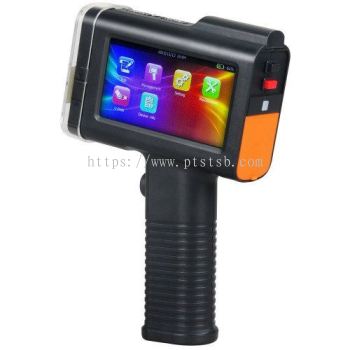
When comparing an industrial inkjet printer, the lowest purchase price does not always represent the lowest operating cost. A printer only creates value when the code on the finished product is correct, readable and still usable after normal handling. For manufacturers in Malaysia and Singapore, a more useful buying measure is therefore the cost per accepted code.
This approach converts ink, labour, downtime and rejected output into one comparable figure. It helps procurement teams, factory owners and production managers evaluate competing systems using the same operational conditions instead of relying only on quotations or headline specifications.
The basic calculation is:
Cost per accepted code = Total coding cost ÷ Number of accepted readable codes
The numerator should include every cost caused by the coding process during the measurement period. The denominator should include only codes that satisfy your agreed acceptance criteria. If a code is incomplete, incorrect, unreadable or rejected after handling, it should not be counted as accepted output.
This is different from calculating ink cost per print. Ink consumption matters, but it is only one part of the decision. A low ink cost can be cancelled out by frequent setup work, avoidable reprints or production interruptions.
Record the cartridges opened during the trial or production period and the number of accepted codes produced. Compare candidates using the same message size, coverage, resolution setting and substrate. A large logo or dense QR code naturally uses a different amount of ink from a short batch number, so unlike print jobs should not be compared directly.
Measure the time required to prepare a message, position the printhead, confirm the first print, change a cartridge and switch between products. Use your organisation’s normal labour-cost method. The purpose is not to assign blame to operators; it is to reveal how much routine attention each coding setup requires.
Include any scheduled cleaning, replacement parts, service visits and approved consumables required for normal operation. Ask every supplier to state what is included and excluded. Do not assume that two printer technologies use the same maintenance process.
Record how long the packaging line is stopped because a code fails to be produced or verified. Apply your own internal cost of lost production time. If the exact financial cost is unavailable, keep downtime minutes as a separate comparison metric rather than inventing a value.
Include packs that must be reworked, relabelled or discarded because of a coding issue. The relevant cost may include the packaging material, product handling and additional labour. Use actual internal figures and distinguish coding-related rejects from unrelated production defects.
Consider the time and resources needed to validate substrates, train operators and integrate the printer with the intended conveyor, sensor or workflow. These are implementation inputs, not automatic disadvantages. Recording them simply makes competing proposals easier to compare on equal terms.
A cost calculation is only meaningful when everyone uses the same definition of “accepted.” Before a trial begins, production, quality and procurement teams should agree on simple acceptance criteria. Depending on the application, an accepted code may need to:
For machine-readable symbols, use the verification method required by your own quality system or customer. Visual appearance alone should not be presented as proof of barcode performance.
Use a representative production trial rather than a perfect sample prepared under conditions that will never occur on the factory floor.
Run each shortlisted system under the same agreed method. If suppliers use different test conditions, the resulting cost-per-code figures will not be comparable.
For each candidate, add the measured coding costs for the test period and divide the total by accepted output. Keep the calculation transparent:
Do not turn a short demonstration into a guaranteed yearly saving. Instead, use the trial result as an evidence-based comparison, then test how sensitive the result is to changes in production volume, labour rates, downtime cost and code coverage.
The BENTSAI E62P and BENTSAI E64P can be considered when assessing inline thermal inkjet options for a packaging or production line. Their inclusion on a shortlist should not replace an application test. Confirm the required print layout, substrate and ink combination, installation space, triggering method, line conditions and operator workflow with the supplier before making a decision.
For Malaysia and Singapore operations, it is also useful to clarify how consumables and technical assistance will be obtained for the intended location. Request written confirmation for any commercial, service or warranty term that influences your calculation.
No. Ink cost per print covers ink consumption only. Cost per accepted code can also include labour, downtime, changeovers, reprints and coding-related waste.
Count only codes that pass the written criteria agreed before the trial, including correct content, placement and readability after normal handling.
The trial should be long enough to represent the buyer’s normal starts, stops, materials and changeovers. There is no universal duration that suits every production line.
Only after normalising the assumptions. Compare the same code design, substrate, production conditions, cost categories and acceptance criteria.
No. It is one decision metric. Buyers should also consider application suitability, integration requirements, support arrangements and risks specific to their operation.
A disciplined cost-per-accepted-code calculation gives Malaysian and Singaporean manufacturers a clearer basis for comparing industrial inkjet printers. It replaces vague claims with measurements taken from the buyer’s own packaging and workflow.
Book a demonstration with PTS Technology and bring your actual substrate, code artwork and production requirements. The resulting samples and recorded assumptions can support a more informed equipment evaluation before purchase.
 Malaysia