
Air Conditioning Rooftop Installation Safety Procedures: Essential Best Practices for Safe HVAC Work at Height
Air conditioning rooftop installation safety procedures are essential for protecting HVAC technicians, contractors, facility managers, and building owners during the installation of rooftop air conditioning systems. Rooftop installations are common for commercial buildings, industrial facilities, shopping malls, hotels, hospitals, office towers, and manufacturing plants because they maximize space efficiency and improve airflow management. However, working on rooftops presents unique hazards, including falls from height, unstable surfaces, adverse weather conditions, electrical risks, manual handling injuries, and falling objects. Following comprehensive rooftop installation safety procedures helps ensure compliance with occupational safety regulations while improving installation quality and reducing workplace accidents. At eakonacadem.edu.my, we provide professional HVAC training that combines technical air conditioning installation skills with practical working-at-height safety knowledge, preparing technicians to perform rooftop installations safely and efficiently.
Before beginning any rooftop air conditioning installation, technicians should conduct a detailed site survey and workplace risk assessment. The roof structure should be inspected for load-bearing capacity, structural integrity, access points, fragile roofing materials, roof openings, skylights, nearby power lines, weather exposure, and emergency escape routes. Every potential hazard should be identified and documented before equipment or personnel access the roof. A comprehensive risk assessment enables contractors to establish appropriate control measures, minimize hazards, and comply with workplace health and safety standards throughout the installation process.
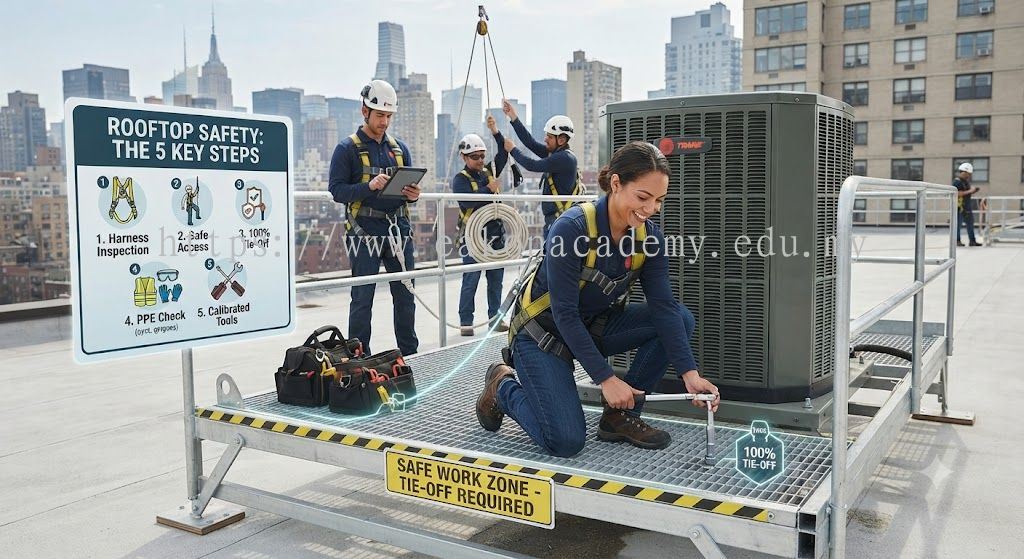
One of the most important air conditioning rooftop installation safety procedures is implementing an effective fall protection system. Rooftop work exposes technicians to significant fall hazards, especially when installing outdoor condensing units, rooftop package units, air handling units, ductwork, and refrigerant piping near roof edges. HVAC professionals should wear certified full-body safety harnesses connected to approved anchor points, horizontal lifeline systems, or permanent fall arrest systems whenever working in areas where falls are possible. Shock-absorbing lanyards and self-retracting lifelines provide additional protection while allowing technicians to move safely around rooftop work areas. Proper inspection, fitting, and maintenance of fall protection equipment are essential before every installation project.
Personal protective equipment (PPE) is another critical element of rooftop installation safety. Technicians should wear safety helmets with secure chin straps, anti-slip safety footwear, protective gloves, eye protection, hearing protection when necessary, and high-visibility clothing. PPE helps reduce the risk of injuries caused by slips, falling tools, sharp metal edges, electrical hazards, and moving equipment. All protective equipment should be inspected regularly to ensure it remains in good working condition and complies with current safety standards.
Safe rooftop access is an essential part of every air conditioning rooftop installation safety procedure. Access ladders, stairways, scaffolding, and mobile elevated work platforms should be inspected before use to verify stability and structural condition. Ladders should be securely positioned, extend above the roof edge where required, and provide safe access without excessive climbing hazards. For large commercial HVAC projects, scissor lifts, boom lifts, cranes, and other elevated access equipment offer safer alternatives for transporting technicians and heavy equipment to rooftop work areas. Only trained and competent operators should use these machines, following manufacturer guidelines and workplace safety procedures at all times.
Manual handling and lifting operations require careful planning during rooftop air conditioning installation. Outdoor condenser units, rooftop package units, air handling equipment, steel supports, ductwork, copper piping, refrigerant cylinders, and installation materials are often heavy and difficult to transport safely. Mechanical lifting equipment such as cranes, hoists, lifting slings, forklifts, or pulley systems should be used whenever practical to reduce manual handling risks. Proper lifting plans, coordinated communication, and designated lifting zones help prevent injuries, dropped loads, and equipment damage during rooftop installation.
Electrical safety is equally important when installing rooftop air conditioning systems. HVAC technicians frequently work near electrical switchboards, rooftop power supplies, transformers, solar panels, and control systems. Before connecting electrical components, all power sources should be isolated using lockout/tagout procedures whenever possible. Electrical isolation should be verified using approved testing equipment, and insulated tools should be used during installation. Maintaining safe distances from energized electrical systems significantly reduces the risk of electrical shock while working at height.
Weather conditions can dramatically affect rooftop safety. Strong winds, heavy rainfall, lightning, extreme heat, and slippery roof surfaces increase the likelihood of falls and equipment accidents. Air conditioning rooftop installation should be postponed whenever severe weather creates unsafe working conditions. Contractors should monitor weather forecasts before and throughout the installation process, ensuring technicians are not exposed to unnecessary environmental hazards. Safe scheduling protects workers while maintaining installation quality and project efficiency.
Good housekeeping plays an important role in rooftop installation safety. Installation materials, copper pipes, mounting brackets, electrical cables, refrigerant hoses, power tools, and packaging materials should be organized properly to prevent trips, slips, and falling object hazards. Loose tools should be secured whenever working near roof edges, and debris should be removed regularly throughout the installation process. Maintaining a clean and organized worksite improves both safety and productivity.
Emergency preparedness is another essential rooftop installation safety procedure. Every project should have an emergency response plan that includes rescue procedures for workers suspended in fall arrest systems, first aid equipment, emergency communication methods, evacuation routes, and trained personnel capable of responding quickly to incidents. Regular emergency drills ensure installation teams understand rescue procedures and can respond effectively during unexpected situations, reducing the severity of workplace injuries.
Ongoing professional training is fundamental to improving rooftop installation safety within the HVAC industry. Air conditioning technicians should receive certified training in working at height, fall protection systems, rooftop hazard identification, ladder safety, elevated work platform operation, manual handling, electrical safety, and emergency rescue techniques. Continuous education helps technicians remain current with evolving safety regulations, modern equipment technologies, and industry best practices while enhancing confidence and professional competence.
At eakonacadem.edu.my, we are dedicated to producing highly skilled HVAC professionals through industry-focused training programs that combine advanced air conditioning installation techniques with comprehensive rooftop safety education. Our practical courses provide hands-on experience in risk assessment, fall protection systems, rooftop access procedures, equipment lifting methods, electrical safety, emergency response planning, and occupational safety compliance. By mastering air conditioning rooftop installation safety procedures, technicians can perform residential, commercial, and industrial HVAC installations safely, efficiently, and professionally while minimizing workplace risks, meeting regulatory requirements, improving customer confidence, and building successful long-term careers in the air conditioning and refrigeration industry.
Xem thêm chi tiết về EAKON ACADEMY SDN BHD
