
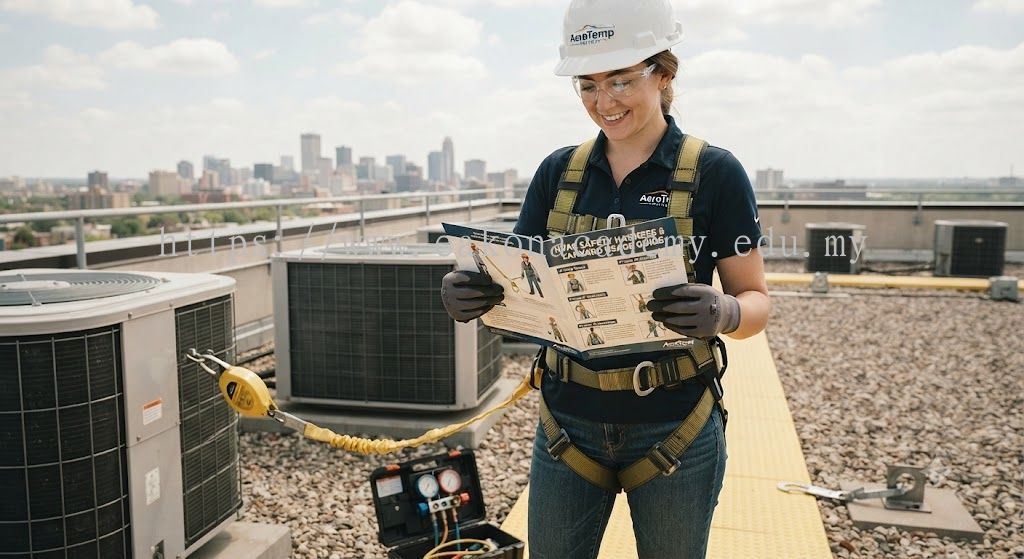
HVAC Safety Harness and Lanyard Usage Guide: Essential Fall Protection Practices for HVAC Technicians
HVAC installation, servicing, and maintenance work often require technicians to operate at elevated locations such as rooftops, commercial buildings, industrial facilities, high-rise properties, and mechanical platforms. These working environments create potential risks, especially falls from height, unstable working areas, and unsafe access conditions. Proper knowledge of personal fall protection equipment is essential to protect technicians and ensure safe HVAC operations. A complete HVAC safety harness and lanyard usage guide helps technicians understand the correct selection, inspection, fitting, and application of safety harnesses and lanyards when performing air conditioning work at height. At Eakon Academy (eakonacadem.edu.my), our HVAC training programmes focus on developing professional technicians who combine technical HVAC skills with strong workplace safety awareness.
Safety harnesses and lanyards are important components of a fall protection system used by HVAC technicians working in elevated environments. Many HVAC systems, including rooftop air conditioning units, outdoor condenser systems, VRF and VRV systems, and commercial cooling equipment, require technicians to perform installation and maintenance tasks above ground level. Without proper fall protection equipment and correct usage procedures, technicians may face serious risks that can lead to workplace accidents and injuries.
The first step in safe HVAC safety harness and lanyard usage is understanding the purpose of each component. A full-body safety harness is designed to distribute fall forces across stronger areas of the body, while a lanyard connects the technician’s harness to a suitable anchor point. Together, these components form an important part of a fall arrest system that helps prevent serious injuries during unexpected fall incidents.
Before using a safety harness, HVAC technicians should perform a detailed inspection to ensure the equipment is safe and reliable. Important inspection points include checking straps for cuts or damage, examining stitching for signs of wear, inspecting buckles and adjustment points, and ensuring D-rings and connectors are in good condition. Any harness showing damage, excessive wear, or defects should be removed from service immediately.
Proper fitting of the safety harness is essential for effective protection. Technicians should ensure shoulder straps, chest straps, leg loops, and waist adjustments are correctly positioned and tightened. A harness that is too loose may not provide adequate protection during a fall, while an incorrectly adjusted harness may restrict movement or create discomfort. Proper fitting allows HVAC technicians to work safely while maintaining mobility during installation and maintenance activities.
Lanyard selection is another important part of HVAC fall protection procedures. Different work environments may require different types of lanyards, such as shock-absorbing lanyards or self-retracting lifelines (SRLs). HVAC technicians should understand the correct application of each type of lanyard and select equipment suitable for the specific working conditions. Proper lanyard selection helps reduce fall distance and minimise impact forces.
Correct lanyard connection methods must always be followed during HVAC work at height. The lanyard should be connected only to approved anchor points designed for fall protection applications. Technicians should never attach lanyards to unsuitable structures such as refrigerant pipes, ductwork, electrical conduits, or temporary supports unless they are specifically approved for safety purposes. Incorrect attachment methods can reduce the effectiveness of the entire fall protection system.
Anchor point inspection is also an important part of safe harness and lanyard usage. Before beginning work, technicians should confirm that anchor points are secure, suitable, and capable of supporting fall forces. Proper anchor point selection ensures the safety harness and lanyard system can function correctly during emergency situations.
HVAC technicians should also understand the importance of maintaining proper body positioning while using harnesses and lanyards. Working near roof edges, elevated platforms, and outdoor equipment requires careful movement and awareness of surroundings. Technicians should avoid overreaching, unsafe climbing practices, and unnecessary movements that could increase fall risks.
Tool management is another important safety consideration when using harness systems. HVAC installation and maintenance involve various tools, testing equipment, and components that may create hazards if dropped. Using tool bags, tool belts, and tool lanyards helps prevent falling objects and improves workplace safety when working at height.
Personal protective equipment (PPE) should be used together with safety harnesses and lanyards to provide comprehensive protection. HVAC technicians should wear safety helmets with chin straps, anti-slip safety footwear, protective gloves, safety glasses, and suitable work clothing. Proper PPE selection reduces exposure to additional workplace hazards.
Regular maintenance and storage of harnesses and lanyards are necessary to maintain equipment performance. Safety equipment should be cleaned, stored properly, and inspected regularly according to manufacturer recommendations. Exposure to chemicals, moisture, extreme temperatures, and improper storage conditions may reduce equipment effectiveness.
Emergency rescue planning is another essential part of using HVAC fall protection systems. If a technician falls while connected to a harness and lanyard system, immediate rescue procedures are required to prevent suspension trauma. Employers should establish rescue plans, provide emergency equipment, and train workers on appropriate response procedures.
Continuous training is important to ensure HVAC technicians understand the correct use of safety harnesses and lanyards. Professional training should include fall hazard identification, equipment inspection, harness fitting, lanyard connection methods, anchor point safety, ladder safety, and emergency rescue procedures. Proper training improves technician confidence and reduces workplace risks.
At Eakon Academy (eakonacadem.edu.my), we provide professional HVAC training programmes designed to prepare technicians for modern industry requirements. Our courses cover air conditioning installation, servicing, maintenance, troubleshooting, working at height safety, fall protection systems, PPE requirements, electrical safety, refrigerant handling, and industry best practices. Through practical hands-on training, students gain the knowledge and skills required to perform HVAC work safely and professionally. By following this HVAC Safety Harness and Lanyard Usage Guide, technicians can improve workplace safety, reduce fall risks, protect themselves and others, comply with safety expectations, and build successful careers in the HVAC industry.
Lebih maklumat tentang EAKON ACADEMY SDN BHD Malaysia
