
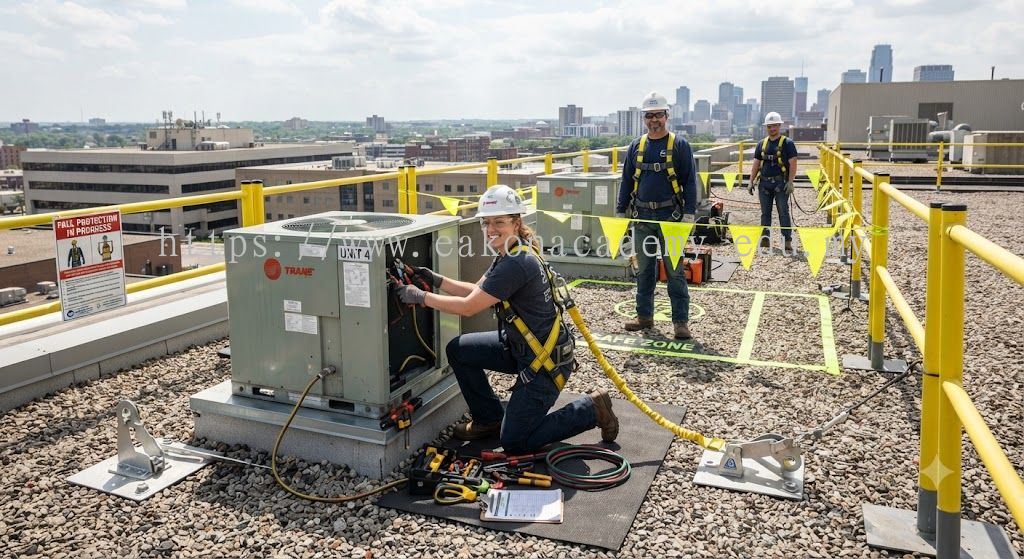
HVAC Rooftop Work Fall Prevention Methods: Essential Safety Practices for HVAC Technicians Working at Height
HVAC rooftop installation, servicing, and maintenance activities require technicians to work in elevated environments where proper safety practices are essential to prevent accidents and injuries. Rooftop air conditioning units, commercial HVAC systems, VRF and VRV equipment, ventilation systems, and industrial cooling equipment are commonly located in areas that require technicians to access roof surfaces and perform complex maintenance tasks. Without effective safety planning, rooftop HVAC work can expose technicians to serious hazards such as falls, unstable surfaces, slippery conditions, dropped tools, and unsafe access methods. Understanding HVAC rooftop work fall prevention methods is important to help technicians reduce workplace risks, improve safety performance, and complete HVAC tasks professionally. At Eakon Academy (eakonacadem.edu.my), our HVAC training programmes emphasise the importance of combining technical skills with proper working at height safety knowledge.
Fall prevention is a major safety concern in the HVAC industry because rooftop work involves additional risks compared to ground-level maintenance. Technicians may need to carry tools, install outdoor units, connect refrigerant piping, perform electrical testing, and troubleshoot HVAC systems while working near elevated edges. A structured fall prevention approach helps technicians identify hazards, prepare suitable safety equipment, and follow safe procedures throughout the installation and maintenance process.
The first method for preventing falls during HVAC rooftop work is performing a detailed working at height risk assessment before beginning any task. Technicians and supervisors should inspect the rooftop environment and identify possible hazards such as roof edges, fragile surfaces, uneven areas, obstacles, electrical equipment, weather conditions, and limited access points. A proper risk assessment helps determine the appropriate control measures, personal protective equipment (PPE), and safe working methods required for the specific HVAC activity.
Proper planning and preparation are essential fall prevention methods for rooftop HVAC operations. Before accessing the roof, technicians should review the work scope, equipment location, required tools, access routes, and possible hazards. Preparing all necessary equipment before starting work reduces unnecessary movement and prevents unsafe situations. Good planning also improves work efficiency and ensures technicians can focus on completing maintenance tasks safely.
Using suitable fall protection equipment is one of the most important HVAC rooftop work fall prevention methods. Technicians working near roof edges or elevated areas should use appropriate safety equipment such as full-body safety harnesses, shock-absorbing lanyards, self-retracting lifelines (SRLs), connectors, and approved anchor points. These systems help prevent falls or reduce injury severity if an unexpected incident occurs. Proper training ensures technicians understand how to inspect, wear, connect, and maintain their fall protection equipment correctly.
A full-body safety harness is a key component of rooftop fall prevention systems. Before use, technicians should inspect the harness for damaged straps, broken stitching, worn buckles, defective D-rings, and connector problems. The harness must be fitted correctly to provide secure support while allowing comfortable movement during HVAC installation and servicing work. Regular inspection and maintenance ensure the equipment remains reliable and effective.
Another important fall prevention method is using safe and approved anchor points. HVAC technicians must connect fall protection equipment only to suitable anchorage systems designed to support fall forces. Unsafe attachment points such as refrigerant pipes, ductwork, electrical conduits, or temporary structures should not be used unless specifically approved for safety purposes. Correct anchor point selection ensures the entire fall protection system functions properly.
Maintaining safe rooftop access is also essential for preventing falls. Technicians may use ladders, scaffolding, elevated work platforms, or other access equipment to reach rooftop HVAC systems. All access equipment should be inspected before use and positioned correctly. Technicians should avoid unsafe climbing practices, maintain proper contact while using ladders, and keep access routes clear from obstacles.
Rooftop surface management is another effective fall prevention method. Before beginning work, technicians should check for wet surfaces, loose materials, debris, uneven areas, and damaged roofing sections. Keeping the work area clean and organised reduces slip and trip hazards. Proper housekeeping also helps technicians move safely while carrying tools and equipment.
Personal protective equipment (PPE) plays an important role in rooftop HVAC safety. Technicians should wear safety helmets with chin straps, anti-slip safety footwear, protective gloves, safety glasses, and suitable work clothing. These protective items help reduce injuries caused by falling objects, sharp components, electrical hazards, and unstable working conditions.
Tool control is another important part of preventing rooftop accidents. HVAC technicians often use multiple tools and components during maintenance activities. Tools should be secured using tool bags, belts, or lanyards to prevent dropped objects. Proper tool management protects workers below and improves overall workplace organisation.
Weather monitoring is also necessary during rooftop HVAC work. Rain, strong winds, extreme temperatures, and poor visibility can increase the likelihood of accidents. Technicians should evaluate weather conditions before starting work and stop activities when the environment becomes unsafe. Monitoring conditions helps maintain safer working operations.
Emergency rescue planning should also be included in HVAC rooftop fall prevention procedures. If a technician falls while connected to a fall protection system, quick rescue action is required to prevent suspension trauma. Employers should establish emergency procedures, communication methods, rescue equipment requirements, and first aid arrangements.
Continuous safety training is essential for HVAC technicians who perform rooftop work. Professional training should include fall prevention methods, working at height procedures, ladder safety, PPE usage, risk assessment techniques, equipment inspection, and emergency response planning. Proper training improves technician awareness and helps create a safer working environment.
At Eakon Academy (eakonacadem.edu.my), we provide professional HVAC training programmes designed to prepare technicians for real-world industry challenges. Our courses cover air conditioning installation, servicing, maintenance, troubleshooting, rooftop safety procedures, working at height training, fall protection systems, PPE requirements, electrical safety, refrigerant handling, and industry best practices. Through practical hands-on training, students gain the knowledge and confidence required to perform HVAC work safely and professionally. By applying effective HVAC Rooftop Work Fall Prevention Methods, technicians can reduce workplace hazards, improve safety performance, protect themselves and others, comply with industry safety expectations, and build successful careers in the HVAC industry.
Lebih maklumat tentang EAKON ACADEMY SDN BHD Malaysia
