
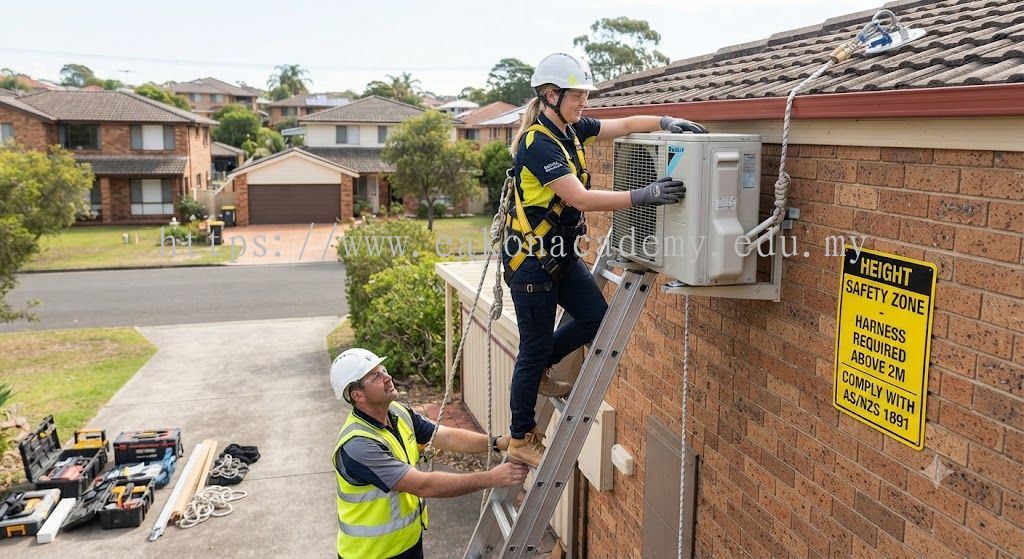
Aircond Installer Height Safety Guidelines: Complete Safety Practices for HVAC Technicians Working at Height in Malaysia
Aircond installer height safety guidelines are essential safety practices designed to protect HVAC technicians who perform air conditioning installation work in elevated locations. Many air conditioning installation projects require installers to work at height, including mounting indoor units, installing outdoor condenser units, connecting refrigerant piping, performing electrical connections, and carrying out system testing on rooftops, high-rise buildings, and commercial facilities. Following proper height safety guidelines helps reduce workplace risks, prevent accidents, and ensure professional HVAC installation standards. Eakon Academy provides industry-focused HVAC training programs that help technicians develop technical skills and strong safety awareness for modern air conditioning installation work in Malaysia.
Working at height is one of the most significant hazards faced by aircond installers. Technicians may be exposed to risks such as falls, unstable working surfaces, dropped tools, incorrect ladder usage, and unsafe access methods. Understanding aircond installer height safety guidelines allows HVAC professionals to identify potential hazards, prepare suitable safety controls, and complete installation tasks safely. Proper height safety knowledge is important for both individual technicians and HVAC contractors who want to maintain a safe and efficient working environment.
Before beginning any air conditioning installation project, technicians should conduct a detailed site assessment and risk evaluation. The assessment should include checking the installation location, identifying possible fall hazards, inspecting access routes, reviewing weather conditions, and determining the safest method for completing the work. A proper risk assessment helps installers understand workplace conditions and implement effective safety measures before starting elevated installation activities.
The correct use of personal protective equipment (PPE) is a major part of aircond installer height safety guidelines. Depending on the working environment, technicians may need to use safety helmets, safety harnesses, protective footwear, gloves, and other suitable protective equipment. PPE provides additional protection against unexpected hazards such as falling objects, slips, and accidental impacts. Proper training on PPE selection, inspection, and usage ensures that technicians can work more safely during installation activities.
Safe ladder practices are also an important requirement for aircond installers. Many residential and commercial air conditioning installations involve working on ladders to mount indoor units, install piping, or complete electrical connections. Incorrect ladder positioning, overreaching, unstable surfaces, and improper climbing methods can increase the risk of falls. Professional HVAC safety training teaches technicians how to inspect ladders, position them correctly, maintain safe working balance, and use appropriate access equipment.
For rooftop and high-rise air conditioning installation projects, additional height safety measures are required. Aircond installers must understand fall prevention methods, safe movement on elevated surfaces, proper handling of tools, and communication procedures when working with other team members. Rooftop environments may include uneven surfaces, limited access areas, and changing weather conditions, making proper safety planning essential.
Handling HVAC equipment at height also requires careful attention. Air conditioning units, outdoor condensers, compressors, copper pipes, and installation tools can be heavy and difficult to transport. Poor lifting methods or unsecured equipment may result in dropped objects, injuries, or property damage. Technicians should follow safe lifting procedures, organize tools properly, and use suitable equipment handling methods to maintain a secure workplace.
Electrical and refrigerant safety should also be included in height safety practices for aircond installers. Technicians must follow proper procedures when working with electrical connections, refrigerant piping, leak testing, and system commissioning. Combining technical knowledge with safety procedures ensures reliable HVAC system performance while protecting workers from unnecessary risks.
Eakon Academy offers professional HVAC training programs that combine practical installation skills with workplace safety knowledge. Through hands-on training, technicians and contractors can improve their understanding of air conditioning installation techniques, height safety procedures, hazard control methods, and professional service standards. These programs help HVAC professionals build confidence and maintain higher safety performance in the workplace.
Following proper aircond installer height safety guidelines is essential for reducing workplace accidents and improving the quality of HVAC installation services. Safe working practices protect technicians, customers, and equipment while supporting long-term success in the air conditioning industry. Eakon Academy continues to support Malaysia’s HVAC sector by developing skilled, knowledgeable, and safety-conscious air conditioning professionals prepared to meet modern industry requirements.
Lebih maklumat tentang EAKON ACADEMY SDN BHD Malaysia
