
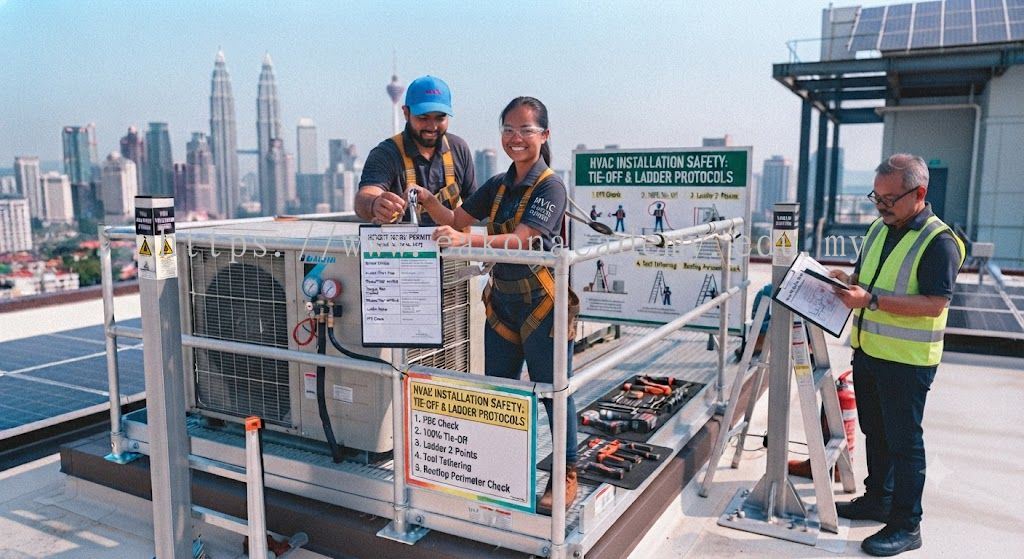
Aircon Installer Height Work Permit Requirements: Complete Safety Guide for HVAC Professionals in Malaysia
Aircon installer height work permit requirements are an important part of workplace safety management for HVAC technicians who perform installation, maintenance, and repair activities at elevated locations. Many air conditioning installation projects involve working at height, including installing outdoor units on rooftops, mounting indoor units on high walls, connecting refrigerant piping, and performing service work in commercial buildings. Proper work permit procedures help ensure that aircon installers understand potential hazards, follow approved safety practices, and complete their tasks in a controlled and professional manner. Eakon Academy provides professional HVAC training programs that support technicians and contractors in improving workplace safety awareness and technical competency in Malaysia.
Working at height is considered a high-risk activity within the HVAC industry because accidents can result in serious injuries or property damage. Therefore, understanding aircon installer height work permit requirements is essential for every HVAC contractor and technician before starting elevated work. A height work permit system provides a structured process to identify hazards, evaluate risks, confirm safety controls, and ensure that workers are properly prepared before performing tasks at height.
The first step in obtaining a height work permit is conducting a detailed risk assessment of the installation area. HVAC contractors should evaluate the working environment, identify possible fall hazards, inspect access points, and determine the safest method to complete the air conditioning installation work. The assessment should consider factors such as rooftop conditions, ladder stability, weather conditions, electrical hazards, equipment handling requirements, and the availability of safety equipment. Proper planning helps reduce workplace accidents and improves overall installation safety.
Aircon installer height work permit requirements also include ensuring that technicians have suitable training and competency before performing work at height. HVAC installers should understand safe working procedures, fall prevention methods, emergency response actions, and the correct use of personal protective equipment (PPE). Proper training ensures that technicians are capable of identifying unsafe conditions and making appropriate decisions while working in elevated areas.
The use of appropriate safety equipment is another important requirement for height work permits. Depending on the work environment, aircon installers may need safety harnesses, helmets, safety footwear, gloves, fall protection systems, and other protective equipment. Before beginning work, technicians should inspect all safety equipment to ensure it is suitable and in good condition. Correct PPE usage provides additional protection and helps reduce the severity of injuries in the event of an accident.
Safe access and work positioning are also key elements in height work permit procedures. Air conditioning installers may use ladders, scaffolding, mobile platforms, or other access equipment during installation activities. Technicians must ensure that all access equipment is properly inspected, positioned securely, and used according to safety procedures. Unsafe climbing methods, unstable platforms, and improper positioning can increase the risk of falls and workplace incidents.
For commercial and industrial HVAC projects, height work permits are especially important because installation activities often involve larger equipment, complex building structures, and multiple workers. Proper communication between supervisors and technicians ensures that everyone understands their responsibilities, safety requirements, and emergency procedures. A well-managed permit system improves coordination and creates a safer working environment.
Electrical and refrigerant safety should also be considered when issuing height work permits for air conditioning installation. HVAC technicians must follow safe electrical isolation procedures, use correct testing equipment, and handle refrigerants responsibly during installation work. Combining safety permit procedures with technical knowledge helps prevent accidents and ensures reliable HVAC system performance.
Eakon Academy focuses on providing practical HVAC training that combines technical installation skills with workplace safety knowledge. Through professional training programs, technicians and contractors can improve their understanding of air conditioning installation procedures, height safety requirements, hazard control methods, and industry best practices. These skills help HVAC professionals perform safer work while improving service quality and customer confidence.
Following proper aircon installer height work permit requirements is essential for maintaining a safe and professional HVAC working environment. Effective permit systems protect workers, reduce workplace risks, and support successful air conditioning installation projects. Eakon Academy continues to develop skilled and safety-conscious HVAC technicians who are prepared to meet modern industry safety expectations in Malaysia.
Lebih maklumat tentang EAKON ACADEMY SDN BHD Malaysia
