
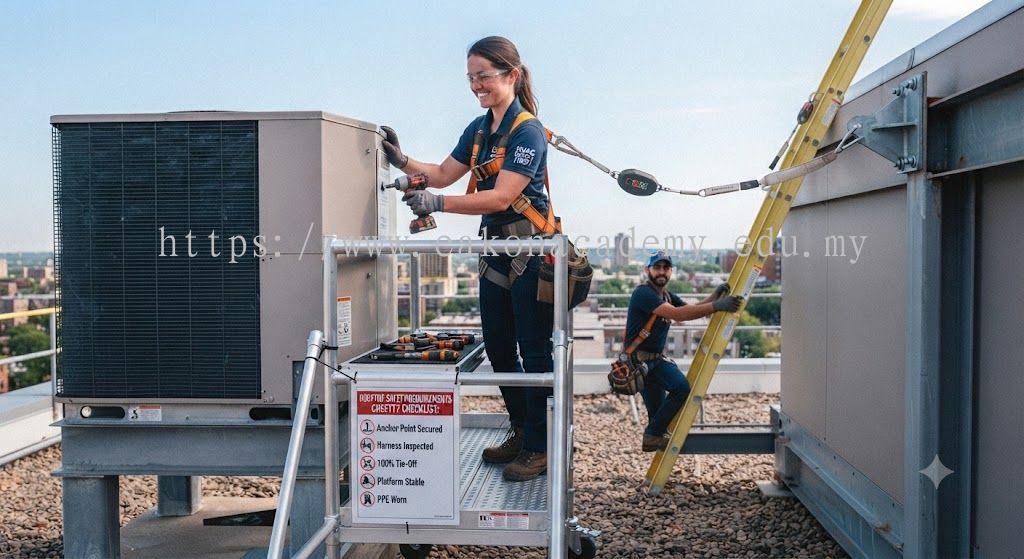
Air Conditioning Technician Occupational Safety Requirements: Essential Workplace Safety Guide for HVAC Professionals in Malaysia
Air conditioning technician occupational safety requirements are essential guidelines that help HVAC professionals perform installation, servicing, repair, and maintenance work in a safe and responsible manner. As the air conditioning industry continues to expand in Malaysia, technicians are required to understand proper workplace safety practices to protect themselves, customers, and surrounding environments. Eakon Academy provides professional HVAC training programs that focus on developing technical skills, safety awareness, and industry-standard working practices for air conditioning technicians.
HVAC technicians face various occupational hazards during their daily work activities, including electrical risks, refrigerant exposure, working at height, manual handling injuries, tool-related accidents, and equipment hazards. Understanding air conditioning technician occupational safety requirements allows technicians to identify workplace risks and apply effective control measures before performing any task. Proper safety knowledge improves work quality, reduces accidents, and supports a more professional HVAC service environment.
One of the most important occupational safety requirements for air conditioning technicians is conducting proper workplace risk assessments. Before starting any installation, maintenance, or repair activity, technicians should evaluate the work area, identify potential hazards, and determine suitable safety procedures. A risk assessment helps technicians understand possible dangers related to electrical systems, access conditions, equipment handling, and environmental factors. By planning work carefully, HVAC professionals can reduce workplace incidents and improve operational efficiency.
Electrical safety is a major component of air conditioning technician occupational safety requirements. HVAC systems contain electrical components such as compressors, motors, circuit boards, control panels, wiring systems, and power connections. Technicians must understand safe electrical practices, including power isolation, electrical testing procedures, correct use of tools, and safe handling of electrical components. Proper electrical safety training helps prevent electric shocks, short circuits, equipment damage, and serious workplace injuries.
Refrigerant handling safety is another critical area for modern HVAC technicians. Air conditioning systems use different types of refrigerants that require proper handling, storage, charging, recovery, and leak detection procedures. Incorrect refrigerant management can create health risks, reduce system efficiency, and negatively impact the environment. Professional HVAC training helps technicians understand safe refrigerant practices, responsible handling methods, and compliance with industry requirements.
Working at height is also a significant occupational safety concern for air conditioning technicians. Many HVAC tasks involve installing outdoor units, servicing rooftop systems, accessing ceiling-mounted equipment, and performing maintenance at elevated locations. Technicians must follow proper height safety procedures, use appropriate personal protective equipment (PPE), and apply safe working methods when operating on ladders, platforms, or rooftops. Effective height safety practices help prevent falls and protect workers from serious injuries.
Manual handling and equipment safety are also included in air conditioning technician occupational safety requirements. HVAC technicians frequently move heavy equipment such as indoor units, outdoor condensers, compressors, tools, and installation materials. Incorrect lifting techniques may lead to physical injuries or equipment damage. Proper training in lifting methods, equipment transportation, and workplace organization helps technicians perform their duties safely and efficiently.
The use of appropriate personal protective equipment (PPE) is another essential requirement for HVAC workplace safety. Depending on the task, technicians may require safety helmets, gloves, protective footwear, eye protection, and other safety equipment. Correct PPE usage provides additional protection against workplace hazards and supports safer working conditions.
Eakon Academy offers professional HVAC training programs that combine practical technical knowledge with occupational safety education. Through hands-on training, technicians and contractors can improve their understanding of HVAC installation procedures, maintenance practices, hazard control methods, and workplace safety requirements. These skills help professionals enhance their confidence, improve service quality, and meet the expectations of today’s HVAC industry.
Following proper air conditioning technician occupational safety requirements is essential for creating a safer, more efficient, and professional HVAC working environment. By prioritizing workplace safety, technicians can reduce risks, protect customers, and deliver reliable air conditioning services. Eakon Academy continues to support Malaysia’s HVAC industry by training skilled and safety-conscious technicians who are prepared to meet modern occupational safety standards.
Lebih maklumat tentang EAKON ACADEMY SDN BHD Malaysia
