
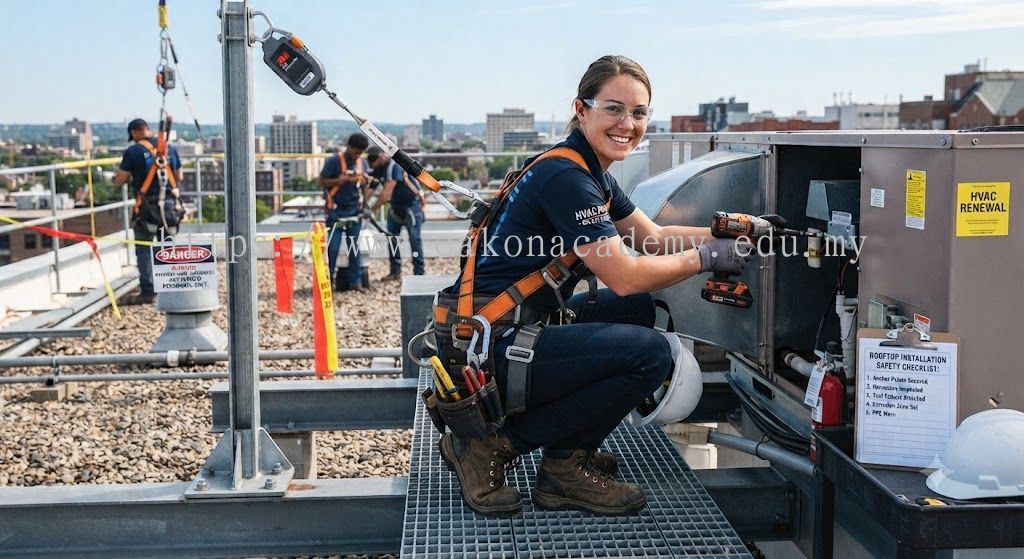
Air Conditioning Rooftop Installation Safety Procedures: Complete Safety Guide for HVAC Technicians in Malaysia
Air conditioning rooftop installation safety procedures are essential guidelines for HVAC technicians and contractors who perform installation work in elevated and challenging environments. Rooftop air conditioning installation involves various risks, including working at height, electrical hazards, heavy equipment handling, weather exposure, and equipment transportation. Following proper safety procedures helps prevent workplace accidents, improves installation efficiency, and ensures high-quality HVAC system performance. Eakon Academy provides professional HVAC training programs designed to equip technicians with the necessary technical knowledge and safety skills required for modern air conditioning rooftop installation projects in Malaysia.
Rooftop air conditioning installation is commonly used in commercial buildings, industrial facilities, warehouses, and high-rise properties where outdoor units and HVAC equipment are placed on building rooftops. Due to the elevated working environment, technicians must understand proper air conditioning rooftop installation safety procedures before starting any project. Effective safety planning allows HVAC professionals to identify potential hazards, prepare suitable safety controls, and perform installation activities with greater confidence and professionalism.
The first step in safe rooftop air conditioning installation is conducting a detailed site risk assessment. HVAC contractors should inspect the rooftop area, identify possible hazards, and evaluate the conditions before beginning work. Important factors include roof access points, surface stability, edge protection, weather conditions, electrical systems, lifting requirements, and available working space. A proper risk assessment helps technicians understand the working environment and implement appropriate safety measures to reduce accidents.
Working at height safety is one of the most important aspects of air conditioning rooftop installation safety procedures. HVAC technicians may need to move around rooftops, install mounting brackets, connect refrigerant piping, perform electrical connections, and position outdoor units in elevated locations. Proper fall protection equipment, including safety harnesses, helmets, and suitable personal protective equipment (PPE), should be used whenever required. Technicians must also receive proper training on safe movement, access methods, and fall prevention practices.
Safe transportation and lifting of air conditioning equipment are also critical during rooftop installation. Outdoor condenser units, compressors, tools, and installation materials can be heavy and difficult to move onto rooftops. Improper lifting methods can cause injuries, equipment damage, or dropped objects that may endanger workers below. HVAC technicians should understand proper lifting techniques, equipment handling procedures, and the safe use of lifting tools to ensure a controlled installation process.
Electrical safety is another important requirement for rooftop air conditioning installation. HVAC systems require electrical connections involving power supplies, control panels, wiring, and protective devices. Technicians must follow safe electrical procedures, including isolating power sources, testing electrical circuits, using suitable tools, and following approved installation standards. These practices help prevent electrical shocks, equipment failure, and workplace incidents.
Refrigerant handling safety must also be included in rooftop HVAC installation procedures. Technicians need proper knowledge of refrigerant piping installation, leak testing, vacuum procedures, charging methods, and environmental safety practices. Incorrect refrigerant handling can affect system efficiency and create unnecessary safety risks. Professional HVAC training helps technicians understand responsible refrigerant management and correct installation techniques.
Weather conditions should also be considered when performing rooftop air conditioning installation. Strong winds, rain, extreme heat, or slippery surfaces can increase workplace hazards. Technicians should monitor environmental conditions and postpone unsafe activities when necessary. Proper planning and communication among workers help maintain a safer rooftop working environment.
Eakon Academy focuses on providing practical HVAC training that combines technical installation skills with workplace safety knowledge. Through hands-on training programs, technicians and contractors can improve their understanding of rooftop installation methods, height safety requirements, hazard control procedures, and professional HVAC standards. These skills help industry professionals complete projects more safely while improving service quality and customer satisfaction.
Following proper air conditioning rooftop installation safety procedures is essential for protecting workers, maintaining equipment reliability, and achieving successful HVAC project outcomes. Safety-focused installation practices reduce risks, improve productivity, and support the development of professional HVAC technicians in Malaysia. Eakon Academy continues to support the HVAC industry by providing quality training that prepares technicians to meet modern safety and technical requirements.
Lebih maklumat tentang EAKON ACADEMY SDN BHD Malaysia
