
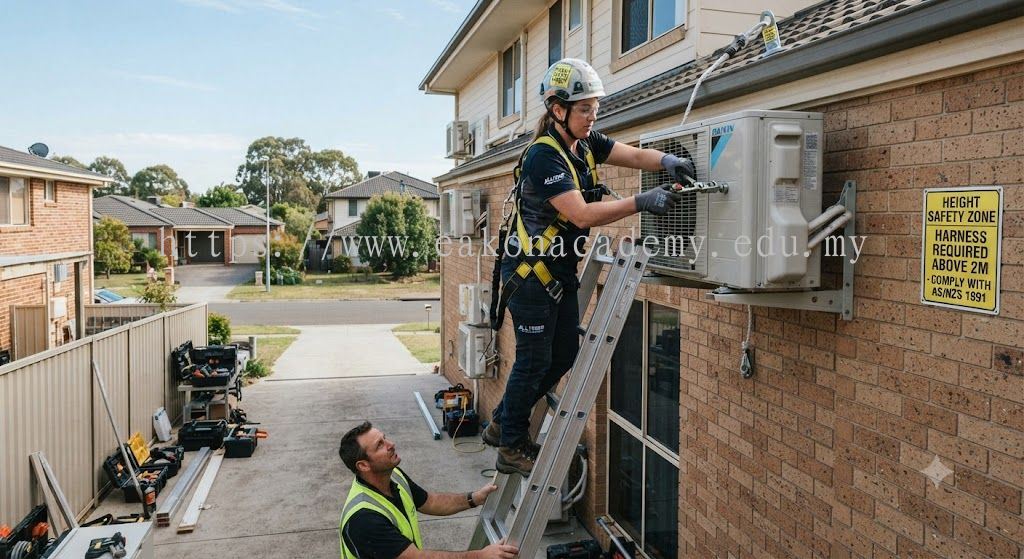
Air Conditioning Installation Height Safety Requirements: Essential Safety Practices for HVAC Technicians in Malaysia
Air conditioning installation height safety requirements are an important part of professional HVAC training and workplace safety management. Many air conditioning installation projects involve working at elevated areas such as building rooftops, external walls, ceilings, commercial buildings, and high-rise structures. Without proper height safety knowledge and correct working procedures, HVAC technicians may face serious risks including falls, injuries, equipment damage, and project delays. Eakon Academy provides professional HVAC training programs designed to improve technician safety awareness, technical skills, and compliance with industry safety practices in Malaysia.
Working at height is one of the major hazards faced by air conditioning installers. Technicians frequently perform tasks such as mounting indoor units, installing outdoor condenser units, fixing brackets, connecting refrigerant piping, and carrying out maintenance work in elevated locations. Therefore, understanding air conditioning installation height safety requirements is essential to ensure every HVAC worker can complete their tasks safely and efficiently. Proper training helps technicians identify height-related risks and apply effective control measures before beginning installation work.
A key requirement for safe air conditioning installation at height is conducting a proper risk assessment before starting the job. HVAC contractors should evaluate the installation environment, identify potential hazards, and determine suitable safety controls. This includes checking access areas, assessing working platforms, reviewing weather conditions, identifying fall risks, and ensuring technicians have the necessary safety equipment. A detailed risk assessment allows contractors to create safer working conditions and reduce the possibility of accidents.
The correct use of personal protective equipment (PPE) is another important aspect of air conditioning installation height safety requirements. HVAC technicians working at height should be equipped with suitable safety harnesses, helmets, safety shoes, gloves, and other protective equipment based on the work environment. Proper PPE usage helps reduce the severity of injuries and provides additional protection when unexpected situations occur during installation activities.
Ladder safety and elevated platform safety are also critical for air conditioning installers. Many HVAC tasks require technicians to access higher areas for mounting units, installing piping, or performing system connections. Incorrect ladder positioning, unstable platforms, or improper climbing techniques can lead to dangerous falls. Professional HVAC safety training teaches technicians how to inspect ladders, use access equipment correctly, maintain safe working positions, and avoid unnecessary risks when performing installation work.
For larger commercial and industrial air conditioning projects, technicians may need to work on rooftops, scaffolding, or specialized access systems. Air conditioning installation height safety requirements include understanding fall protection methods, safe movement on elevated surfaces, proper equipment handling, and communication between workers. Effective teamwork and safety procedures are essential to prevent accidents when multiple technicians are involved in complex HVAC installation projects.
Handling HVAC equipment at height also requires careful planning and control. Air conditioning units, tools, copper piping, and installation materials can be heavy and difficult to transport in elevated areas. Improper lifting methods may result in dropped objects, injuries, or equipment damage. Technicians should receive proper training on material handling, lifting techniques, and safe transportation methods to maintain a secure working environment.
Eakon Academy supports HVAC professionals by providing practical training focused on installation safety, working-at-height procedures, hazard control, and technical competency. Through hands-on learning, technicians and contractors can strengthen their understanding of safe air conditioning installation practices while improving workplace safety performance. These skills are valuable for individuals seeking to advance their HVAC careers and companies aiming to maintain higher safety standards.
Following proper air conditioning installation height safety requirements helps create safer workplaces, improve installation quality, and protect both technicians and customers. Safety-focused HVAC practices allow contractors to complete projects more efficiently while reducing accidents and operational risks. With professional training from Eakon Academy, Malaysia’s air conditioning technicians can develop the confidence, knowledge, and safety awareness needed to meet modern HVAC industry expectations.
Lebih maklumat tentang EAKON ACADEMY SDN BHD Malaysia
