
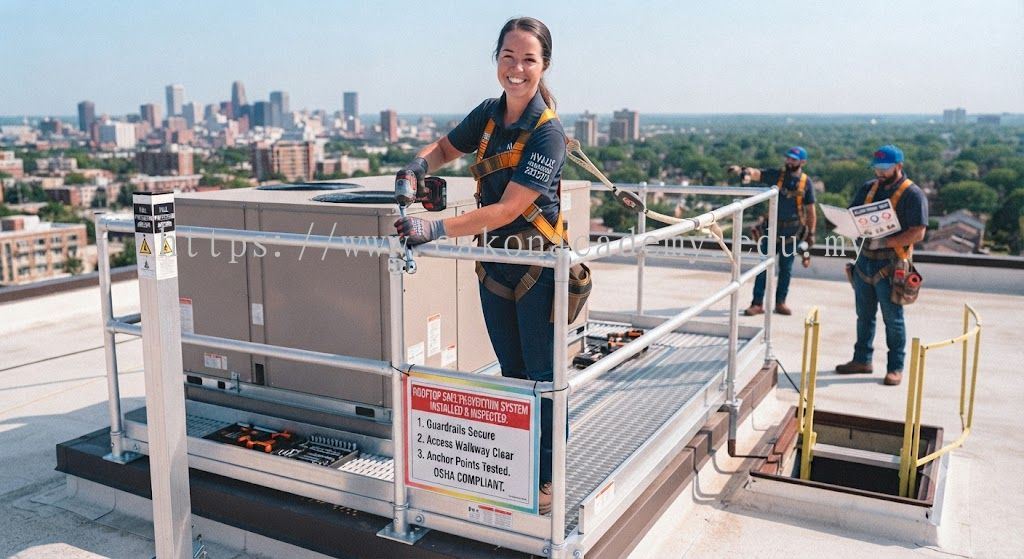
Air Conditioning Installation Hazard Control Guide: Improving HVAC Safety Standards for Technicians and Contractors in Malaysia
Air conditioning installation hazard control guide is an essential resource for HVAC technicians, contractors, and engineering professionals who want to improve workplace safety and reduce risks during air conditioning installation activities. With the increasing demand for residential, commercial, and industrial air conditioning systems in Malaysia, proper hazard identification and control measures are becoming more important to ensure safe, efficient, and professional HVAC operations. Eakon Academy provides practical HVAC training programs that help technicians understand installation safety procedures, workplace risk management, and industry best practices.
Air conditioning installation involves various potential hazards, including electrical risks, working at height dangers, heavy equipment handling, refrigerant exposure, sharp tools, hot work activities, and improper use of installation equipment. Without proper hazard control methods, HVAC technicians may face workplace accidents that can affect their health, productivity, and project quality. A proper air conditioning installation hazard control guide helps workers recognize these risks and apply effective preventive measures before, during, and after installation work.
One of the most important parts of air conditioning installation hazard control is conducting a workplace risk assessment before starting any project. HVAC contractors should identify possible hazards at the work location, evaluate the level of risk, and implement suitable control measures. This includes checking electrical systems, assessing installation areas, ensuring safe access points, preparing necessary safety equipment, and confirming that technicians have the correct skills and training to perform the work safely.
Electrical hazards are among the most common risks during air conditioning installation. HVAC systems require electrical connections for indoor units, outdoor units, compressors, control systems, and power supplies. Technicians must follow proper electrical safety procedures such as isolating power sources, using electrical testing equipment, wearing appropriate personal protective equipment (PPE), and following approved installation guidelines. Effective electrical hazard control helps prevent electric shocks, short circuits, equipment damage, and workplace injuries.
Working at height is another major safety concern for air conditioning installers, especially when installing outdoor units, piping systems, or equipment in high-rise buildings. A proper air conditioning installation hazard control guide should include safe ladder usage, proper scaffolding practices, fall protection equipment, and awareness of elevated work risks. Providing working-at-height training ensures technicians can perform installation tasks safely while reducing the possibility of falls and accidents.
Manual handling and equipment lifting are also important areas of hazard control in HVAC installation. Air conditioning units, compressors, copper piping, tools, and installation materials can be heavy and difficult to transport. Incorrect lifting methods may cause muscle injuries, equipment damage, or workplace accidents. HVAC technicians should be trained in proper lifting techniques, equipment handling procedures, and teamwork practices to ensure safer installation processes.
Refrigerant safety is another key element in controlling hazards during air conditioning installation. Technicians must understand proper refrigerant handling, leak prevention, charging procedures, and environmental safety requirements. Incorrect refrigerant practices can reduce system efficiency, create safety risks, and negatively impact the environment. Professional HVAC safety training helps technicians develop the knowledge needed to manage refrigerants responsibly and follow industry regulations.
Eakon Academy focuses on providing quality HVAC training that combines technical knowledge with practical safety skills. Through professional courses, technicians and contractors can improve their understanding of air conditioning installation procedures, hazard control methods, workplace safety practices, and industry compliance requirements. These skills help HVAC professionals deliver safer, higher-quality installation services while building customer trust and professional reputation.
By following an effective air conditioning installation hazard control guide, HVAC companies can create safer working environments, improve operational efficiency, and reduce workplace risks. Safety-focused installation practices not only protect technicians but also contribute to better system performance and long-term customer satisfaction. Eakon Academy supports Malaysia’s HVAC industry by developing skilled, knowledgeable, and safety-conscious air conditioning professionals prepared for modern industry challenges.
Lebih maklumat tentang EAKON ACADEMY SDN BHD Malaysia
