
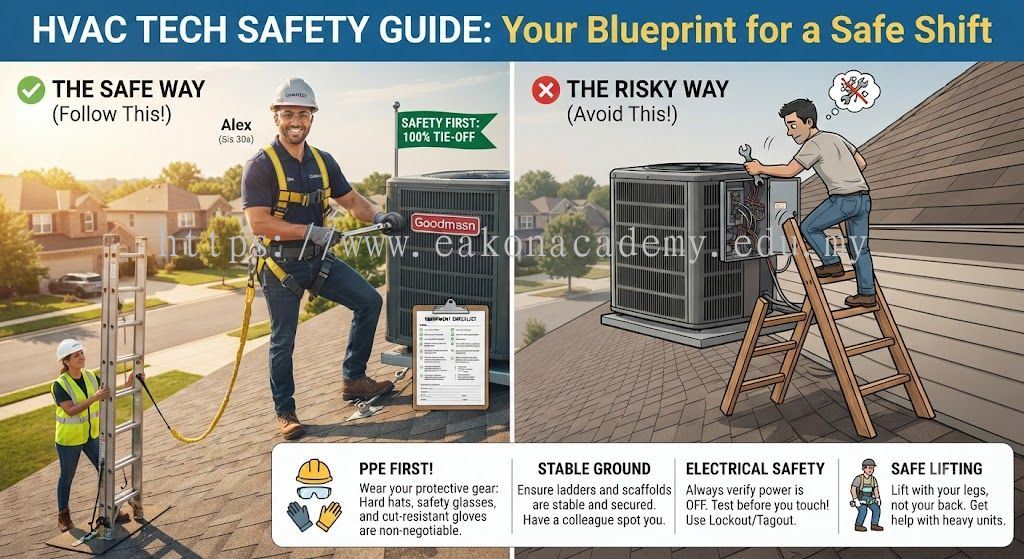
Aircond Technician Occupational Safety Guide – Essential Workplace Safety Knowledge for HVAC Professionals
The aircond technician occupational safety guide provides essential knowledge and safety practices for HVAC professionals involved in air conditioning installation, servicing, repair, and maintenance activities. The HVAC industry requires technicians to work in various environments, including residential buildings, commercial facilities, factories, and industrial sites where different workplace hazards may exist. Understanding occupational safety principles helps air conditioning technicians identify risks, follow proper procedures, and maintain a safe working environment while delivering high-quality HVAC services. At Eakon Academy, we emphasize the importance of developing skilled technicians who combine technical expertise with strong workplace safety awareness.
Air conditioning technicians perform many tasks that involve potential safety risks, including electrical work, refrigerant handling, equipment installation, troubleshooting, lifting heavy components, and working at height. Without proper safety knowledge, technicians may experience hazards such as electrical accidents, exposure to harmful conditions, falls, equipment injuries, and workplace incidents. A professional aircond technician occupational safety guide helps workers understand how to recognize these hazards and apply effective control measures before starting any HVAC task.
Occupational safety begins with proper risk assessment and workplace preparation. Before performing installation or maintenance activities, HVAC technicians should inspect the working area, identify possible hazards, prepare suitable tools, and ensure appropriate safety equipment is available. Factors such as electrical safety, equipment condition, working environment, chemical handling, and personal protection requirements should be carefully considered. Proper planning allows technicians to complete their work more safely while improving efficiency and reducing unnecessary risks.
A complete occupational safety approach is especially important for technicians involved in split air conditioner installation, commercial HVAC maintenance, VRF and VRV system servicing, refrigeration equipment repair, and industrial cooling system operations. These tasks may involve working with electrical components, pressurized refrigerant systems, heavy equipment, and elevated work areas. By following the principles in an aircond technician occupational safety guide, technicians can develop safer working habits and improve their ability to manage different workplace challenges.
Personal protective equipment (PPE) plays a major role in maintaining occupational safety for HVAC technicians. Proper safety equipment such as helmets, protective footwear, gloves, eye protection, safety harnesses, and suitable work clothing helps reduce the risk of injury during technical activities. Technicians should understand the correct selection, inspection, and usage of safety equipment to ensure effective protection. Professional HVAC training helps workers develop awareness of how safety equipment supports their daily work responsibilities.
Workplace safety also includes proper handling of HVAC tools, equipment, and materials. Technicians must use tools correctly, maintain organized work areas, and follow safe procedures when lifting, transporting, and installing air conditioning components. Proper housekeeping helps prevent accidents and creates a more professional working environment. Understanding occupational safety practices allows technicians to improve service quality while protecting themselves and others around the workplace.
At Eakon Academy, our HVAC training programs focus on developing technicians with strong technical abilities and professional safety awareness. Through practical hands-on learning, participants gain knowledge in air conditioning installation, servicing techniques, troubleshooting methods, equipment handling, and workplace safety procedures. Learning from an aircond technician occupational safety guide helps trainees become more responsible, confident, and prepared for real HVAC industry requirements.
For HVAC contractors and service companies, implementing strong occupational safety practices provides many benefits, including reduced workplace accidents, improved productivity, better employee protection, and increased customer confidence. A safety-focused technician demonstrates professionalism and commitment to delivering reliable HVAC services. Companies that prioritize occupational safety also create a stronger reputation within the air conditioning and refrigeration industry.
Developing knowledge from an aircond technician occupational safety guide is an important step for anyone building a career as an HVAC professional. Combining technical expertise with workplace safety skills allows technicians to perform their responsibilities more effectively and confidently. Eakon Academy provides professional HVAC training programs designed to strengthen technical competency, improve safety awareness, and prepare future HVAC professionals for successful careers in the air conditioning and refrigeration industry.
Lebih maklumat tentang EAKON ACADEMY SDN BHD Malaysia
