
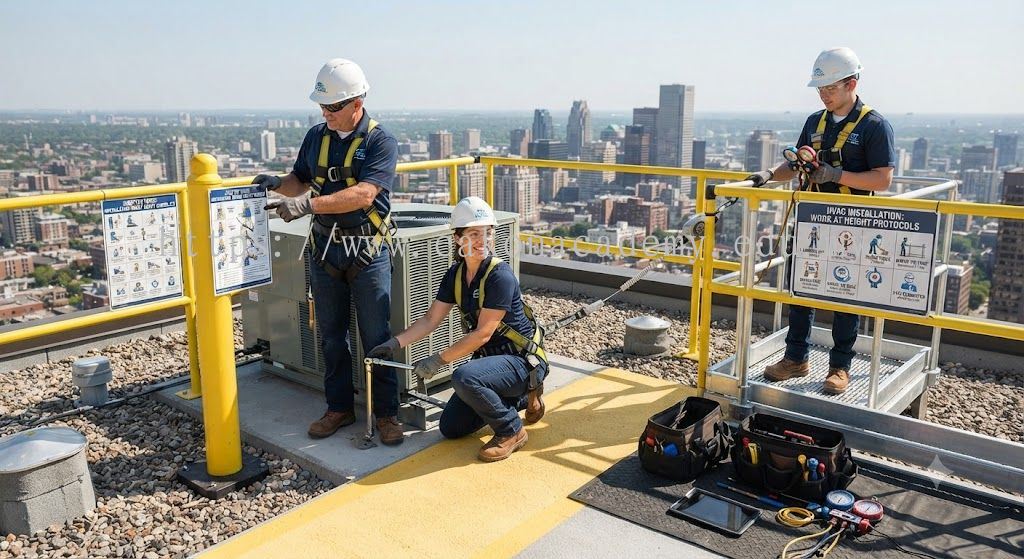
HVAC Outdoor Unit Installation Height Safety: Essential Guidelines for Safe Air Conditioning Installation Work
HVAC outdoor unit installation height safety is an essential safety practice designed to protect air conditioning technicians, refrigeration engineers, HVAC contractors, and installation professionals who perform outdoor condenser unit installation in elevated locations. In the HVAC industry, outdoor units are often installed in challenging areas such as building rooftops, external walls, balconies, high-rise structures, commercial facilities, industrial plants, and mechanical equipment platforms. These installation environments require technicians to work at height while handling heavy equipment, electrical connections, refrigerant piping, and installation tools. Without proper safety procedures, outdoor unit installation activities can expose workers to serious hazards including falls, unstable working surfaces, dropped objects, electrical risks, and improper lifting methods. Understanding HVAC outdoor unit installation height safety helps technicians perform installation work safely, efficiently, and professionally. At eakonacadem.edu.my, we provide professional HVAC training programs that combine advanced air conditioning installation techniques with practical working at height safety procedures, preparing technicians to meet industry requirements and perform safe HVAC projects throughout Malaysia.
Outdoor air conditioning units are critical components of split air conditioning systems, VRF and VRV systems, and commercial HVAC installations. Proper installation ensures efficient cooling performance, reliable operation, and longer equipment lifespan. However, when outdoor units are installed at elevated locations, technicians must consider additional safety factors including access methods, lifting procedures, fall protection systems, electrical safety, and environmental conditions. Professional HVAC technicians must understand how to balance technical installation requirements with workplace safety responsibilities.
The first step in HVAC outdoor unit installation height safety is conducting a detailed risk assessment before beginning installation work. Technicians and supervisors should evaluate the installation location to identify potential hazards such as roof edges, unstable surfaces, external wall conditions, lifting challenges, electrical systems, weather conditions, and possible falling object risks. A proper risk assessment allows the team to establish suitable safety controls and determine the safest installation method before workers access elevated areas.
Proper planning is essential when installing outdoor air conditioning units at height. Before starting the project, technicians should prepare all necessary tools, installation materials, lifting equipment, personal protective equipment (PPE), access platforms, and emergency procedures. Outdoor units can be heavy and difficult to position in elevated areas, so careful planning helps reduce physical strain, prevent equipment damage, and minimise unnecessary exposure to height-related hazards.
Fall prevention is one of the most important elements of HVAC outdoor unit installation height safety. When technicians work near roof edges, elevated platforms, external walls, or high-rise building structures, appropriate fall protection measures must be implemented. Depending on the work environment, technicians may require full-body safety harnesses, shock-absorbing lanyards, self-retracting lifelines, certified anchor points, or other approved fall protection systems. Proper training ensures technicians understand how to inspect and use safety equipment correctly during outdoor unit installation activities.
Safety harness inspection and correct usage are critical responsibilities for HVAC technicians. Before beginning installation work, technicians should inspect harness straps, buckles, connectors, D-rings, lanyards, and other components to ensure they are safe for use. Damaged or worn safety equipment should never be used. Proper fitting and connection methods ensure technicians receive maximum protection when working at elevated locations.
Safe lifting and positioning of outdoor units are also important parts of height safety procedures. Outdoor condenser units may be heavy and require multiple workers, lifting equipment, or mechanical assistance during installation. Technicians should use proper lifting techniques and avoid unsafe manual handling practices. Correct lifting procedures reduce the risk of injuries, equipment damage, and accidents during installation.
Selecting the correct access equipment is another key requirement for safe outdoor unit installation at height. Depending on the installation environment, technicians may use ladders, scaffolding, Mobile Elevated Work Platforms (MEWPs), scissor lifts, or boom lifts. Each access method requires proper inspection, safe setup, and trained operation. Choosing suitable access equipment improves stability and allows technicians to complete installation work more efficiently.
Ladder safety is particularly important for smaller outdoor unit installation tasks. Technicians should ensure ladders are inspected, positioned on stable surfaces, and used according to safe climbing procedures. Maintaining three points of contact, avoiding overreaching, and securing tools properly help reduce the risk of falls. For higher-risk installations, technicians should use more stable access solutions instead of relying only on ladders.
Electrical safety must always be considered during outdoor unit installation at height. HVAC technicians often work near electrical wiring, isolators, control panels, and power supply connections. Proper electrical isolation procedures, safe testing methods, and correct installation practices help prevent electrical accidents that could result in serious injuries or falls. Combining electrical safety with height safety procedures creates a safer installation environment.
Refrigerant piping and tool management are also important during elevated outdoor unit installation. Technicians use various tools such as drills, vacuum pumps, refrigerant gauges, torque wrenches, pipe cutters, and electrical testers. These tools should be stored securely using tool bags, belts, or tethering systems to prevent dropped objects. Proper organisation improves efficiency and protects workers and property below.
Weather conditions can significantly affect HVAC outdoor unit installation height safety. Outdoor installation work may become dangerous during heavy rain, strong winds, lightning, or slippery conditions. Technicians should evaluate environmental conditions before starting work and postpone activities whenever safety risks become unacceptable. Monitoring weather conditions helps protect workers and ensures installation quality.
Emergency planning is another important aspect of safe outdoor unit installation at height. Every elevated HVAC installation project should include emergency procedures covering falls, injuries, equipment failure, electrical incidents, and rescue situations. Technicians should understand emergency communication methods, first aid procedures, and rescue planning requirements. Proper preparation allows faster response during unexpected events.
Professional HVAC training plays an important role in developing technicians who can perform outdoor unit installation safely and effectively. Training in working at height procedures, fall prevention methods, safety harness usage, lifting techniques, PPE selection, ladder safety, electrical safety, and risk assessment helps technicians improve confidence and workplace performance.
At eakonacadem.edu.my, we are committed to developing highly skilled HVAC professionals through practical, industry-focused training programs that integrate advanced air conditioning installation knowledge with comprehensive workplace safety practices. Our courses cover HVAC outdoor unit installation height safety, working at height safety procedures, fall protection systems, outdoor condenser installation techniques, safety harness training, ladder safety, Mobile Elevated Work Platform (MEWP) operation, workplace risk assessment, electrical safety, emergency rescue procedures, and professional HVAC installation skills. Students gain valuable hands-on experience that prepares them for residential, commercial, and industrial HVAC projects throughout Malaysia. By applying proper HVAC outdoor unit installation height safety procedures, technicians can reduce workplace accidents, improve installation quality, comply with safety standards, increase employer confidence, enhance customer satisfaction, and build successful long-term careers in the air conditioning and refrigeration industry while maintaining the highest standards of safety and professionalism.
Lebih maklumat tentang EAKON ACADEMY SDN BHD Malaysia
