
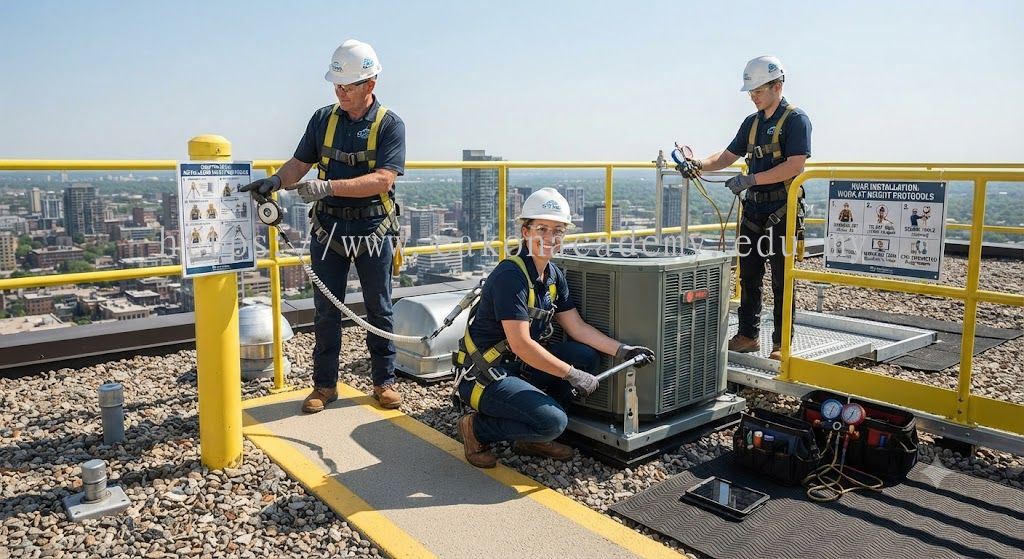
HVAC Installation Safety Procedures at Elevated Locations: Essential Guidelines for Safe Air Conditioning Work at Height
HVAC installation safety procedures at elevated locations are essential practices designed to protect air conditioning technicians, refrigeration engineers, HVAC contractors, and mechanical installation teams who perform equipment installation and maintenance in elevated work environments. In the modern HVAC industry, many air conditioning systems are installed in locations that require technicians to work above ground level, including rooftops, high-rise buildings, commercial facilities, industrial plants, factories, warehouses, hospitals, and large mechanical areas. These elevated locations create potential hazards such as falls from height, unstable working surfaces, electrical risks, falling tools, heavy equipment handling, and unpredictable weather conditions. Following proper HVAC installation safety procedures at elevated locations helps reduce workplace accidents, improve installation quality, protect technicians, and ensure professional compliance with workplace safety requirements. At eakonacadem.edu.my, we provide professional HVAC training programs that combine advanced air conditioning installation knowledge with practical working at height safety skills, preparing technicians to perform safe and efficient HVAC projects throughout Malaysia.
The installation of modern HVAC systems often involves complex tasks that require careful planning and professional safety awareness. Equipment such as rooftop air conditioning units, VRF and VRV systems, chillers, air handling units (AHUs), ventilation systems, ductwork, and commercial refrigeration equipment may be positioned in elevated areas where access requires specialised safety procedures. Technicians must understand how to manage risks, select appropriate safety equipment, and follow structured installation methods to ensure both worker protection and successful project completion.
The first step in HVAC installation safety procedures at elevated locations is conducting a detailed risk assessment before work begins. Technicians and supervisors should inspect the installation area to identify potential hazards such as roof edges, fragile surfaces, uneven platforms, electrical systems, access limitations, lifting requirements, weather conditions, and possible falling object risks. A comprehensive risk assessment helps determine suitable control measures and allows the team to prepare a safer installation strategy before technicians access elevated areas.
Proper work planning is another important part of safe HVAC installation at height. Before beginning installation activities, technicians should prepare all required tools, materials, lifting equipment, personal protective equipment (PPE), access systems, and emergency procedures. Good preparation reduces unnecessary movement while working at elevated locations and prevents unsafe practices such as carrying heavy equipment while climbing ladders or working without proper protection. Effective planning improves productivity while maintaining a safer working environment.
Fall prevention and fall protection systems are critical components of HVAC installation safety procedures at elevated locations. Whenever possible, technicians should reduce exposure to height risks through better planning, ground-level preparation, or safer installation methods. When elevated work is necessary, technicians should use suitable fall protection equipment including full-body safety harnesses, shock-absorbing lanyards, self-retracting lifelines, and approved anchor points. Proper training ensures technicians understand how to inspect, wear, adjust, and connect fall protection systems correctly.
Safety harness usage is especially important when installing outdoor air conditioning units, rooftop systems, and commercial HVAC equipment. Before every use, technicians should inspect harness straps, stitching, buckles, connectors, D-rings, and lanyards to ensure the equipment is in safe working condition. Correct fitting and connection methods provide better protection and allow technicians to move safely while performing installation tasks at elevated locations.
Safe lifting and handling procedures are also essential during HVAC installation at height. Many air conditioning components, including outdoor units, compressors, motors, and ductwork sections, can be heavy and difficult to handle in elevated areas. Technicians should use proper lifting methods, mechanical lifting equipment, and teamwork procedures to prevent injuries and equipment damage. Proper planning of lifting activities reduces risks and improves installation efficiency.
Access equipment selection plays a major role in HVAC installation safety. Depending on the project requirements, technicians may use ladders, scaffolding, Mobile Elevated Work Platforms (MEWPs), scissor lifts, or boom lifts. Each type of access equipment requires proper inspection, safe operation, and trained users. Choosing the correct access solution improves stability and reduces the possibility of falls during HVAC installation activities.
Tool and material control is another important safety requirement when working at elevated locations. HVAC technicians use various tools such as drills, vacuum pumps, refrigerant gauges, electrical testers, torque wrenches, and pipe cutting equipment. These tools should be secured using tool bags, tool belts, or approved tethering systems to prevent dropped objects. Proper organisation protects workers below and prevents damage to customer property and HVAC equipment.
Electrical safety must always be considered during elevated HVAC installation. Technicians often work near electrical panels, isolators, compressors, control systems, and power supply connections. Proper electrical isolation procedures, lockout/tagout practices, and safe testing methods help prevent electrical incidents that could lead to serious injuries or falls. Combining electrical safety with height safety procedures creates a complete protection system.
Environmental conditions are another important factor during HVAC installation at elevated locations. Outdoor installation activities may be affected by rain, strong winds, lightning, extreme heat, and slippery surfaces. Technicians should monitor workplace conditions and stop work whenever safety risks become unacceptable. Responsible decision-making helps protect workers and ensures better installation outcomes.
Emergency planning should also be included in every elevated HVAC installation project. Technicians and contractors should establish procedures for falls, injuries, equipment failure, electrical incidents, and rescue situations. Emergency plans should include communication methods, first aid requirements, rescue procedures, and assigned responsibilities. Proper preparation ensures faster response during unexpected events.
Professional training is essential for developing competent HVAC technicians who can work safely in challenging environments. Training in working at height procedures, fall protection systems, safety harness usage, lifting techniques, PPE selection, risk assessment, ladder safety, MEWP operation, electrical safety, and emergency rescue planning helps technicians perform their duties with greater confidence and professionalism.
At eakonacadem.edu.my, we are committed to developing highly skilled HVAC professionals through practical, industry-focused training programs that integrate advanced air conditioning installation expertise with comprehensive workplace safety practices. Our courses cover HVAC installation safety procedures at elevated locations, working at height safety, fall prevention methods, safety harness training, rooftop HVAC installation safety, ladder safety, Mobile Elevated Work Platform (MEWP) operation, workplace risk assessment, electrical safety, emergency rescue procedures, and professional HVAC installation techniques. Students gain valuable hands-on experience that prepares them for residential, commercial, and industrial HVAC projects throughout Malaysia. By applying proper HVAC installation safety procedures at elevated locations, technicians can reduce workplace accidents, improve installation quality, comply with safety standards, increase employer confidence, enhance customer satisfaction, and build successful long-term careers in the air conditioning and refrigeration industry while maintaining the highest standards of safety and professionalism.
Lebih maklumat tentang EAKON ACADEMY SDN BHD Malaysia
