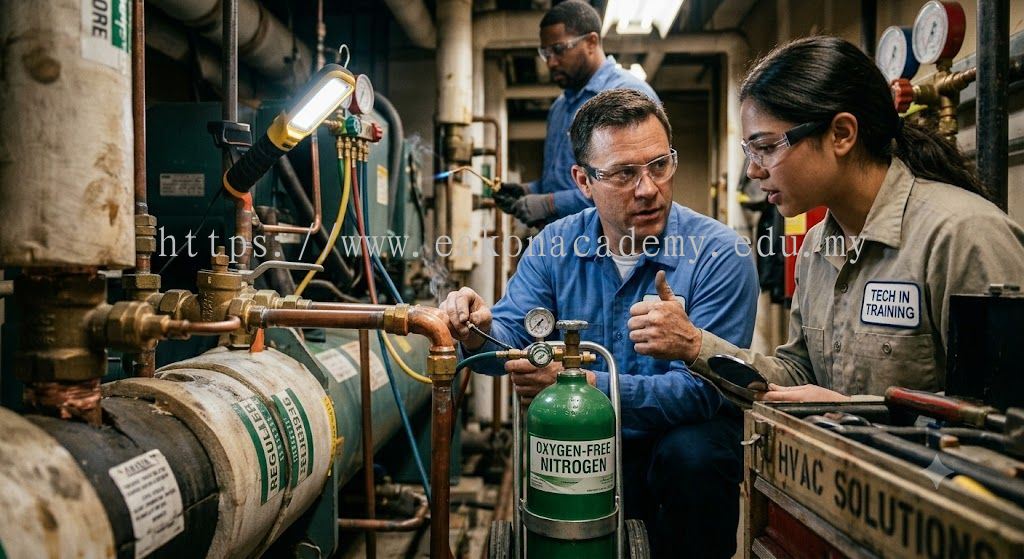
Nitrogen Purging During Brazing Refrigeration: Essential Technique for Clean, Efficient, and Leak-Free HVAC Systems
Nitrogen purging during brazing refrigeration is a critical industry practice used to ensure clean, strong, and long-lasting copper pipe joints in air conditioning and refrigeration systems. During the brazing process, copper tubing is exposed to high temperatures, which can cause internal oxidation if oxygen is present inside the pipe. This oxidation creates scale and debris that can contaminate the refrigeration system, reduce efficiency, and damage key components. By using nitrogen purging during brazing, technicians can eliminate oxygen inside the pipe and maintain a clean internal environment, ensuring optimal system performance. At Eakon Academy, HVAC training programs strongly emphasize nitrogen purging during brazing refrigeration as an essential professional skill.
Nitrogen purging during brazing refrigeration works by introducing a controlled flow of dry nitrogen gas into the piping system while brazing is performed. This inert gas displaces oxygen inside the copper tubing, preventing oxidation from forming on the internal pipe walls. Without nitrogen purging, high-temperature brazing can produce copper oxide flakes that circulate through the system once it is operational. These contaminants can clog expansion valves, damage compressors, and reduce heat exchange efficiency, leading to higher energy consumption and system failure.
One of the main benefits of nitrogen purging during brazing refrigeration is improved system cleanliness and efficiency. Clean internal copper surfaces allow refrigerant to flow smoothly without obstruction, ensuring stable pressure levels and efficient heat transfer. This results in better cooling performance, lower operating costs, and longer system lifespan. In contrast, systems brazed without nitrogen purging often experience reduced efficiency and higher maintenance requirements due to internal contamination.
Another important aspect of nitrogen purging during brazing refrigeration is protection of sensitive HVAC components. Modern refrigeration systems rely on precise mechanical parts such as compressors, expansion valves, solenoid valves, and filters. Internal debris caused by oxidation can severely damage these components, leading to system breakdowns and costly repairs. By maintaining a clean internal environment during brazing, nitrogen purging helps protect these components and ensures long-term system reliability.
Proper application of nitrogen purging during brazing refrigeration requires controlled flow and correct setup. Technicians must regulate nitrogen pressure carefully to ensure a gentle, consistent flow through the piping system. Excessive pressure can disrupt the brazing process, while insufficient flow may not fully prevent oxidation. Skilled HVAC technicians are trained to balance nitrogen flow correctly to achieve optimal brazing conditions and maintain joint quality.
Nitrogen purging during brazing refrigeration is also an important requirement in modern HVAC industry standards and best practices. Many professional installation guidelines and certification programs require nitrogen purging as part of the brazing process to ensure system cleanliness and reliability. Following these standards helps technicians deliver high-quality installations that meet industry expectations and customer satisfaction.
At Eakon Academy, HVAC training programs provide hands-on experience in nitrogen purging during brazing refrigeration. Trainees learn how to set up nitrogen equipment, control flow rates, and integrate purging techniques into real brazing procedures. This practical training ensures that technicians are fully prepared for professional HVAC installation and maintenance work in real-world environments.
Mastering nitrogen purging during brazing refrigeration is essential for technicians who want to achieve excellence in the HVAC industry. Proper nitrogen use improves system cleanliness, enhances performance, reduces maintenance issues, and extends equipment lifespan. With professional training and practical experience, HVAC technicians can deliver reliable, efficient, and high-quality refrigeration systems that meet industry standards and customer expectations in residential, commercial, and industrial applications.
Lebih maklumat tentang EAKON ACADEMY SDN BHD Malaysia