
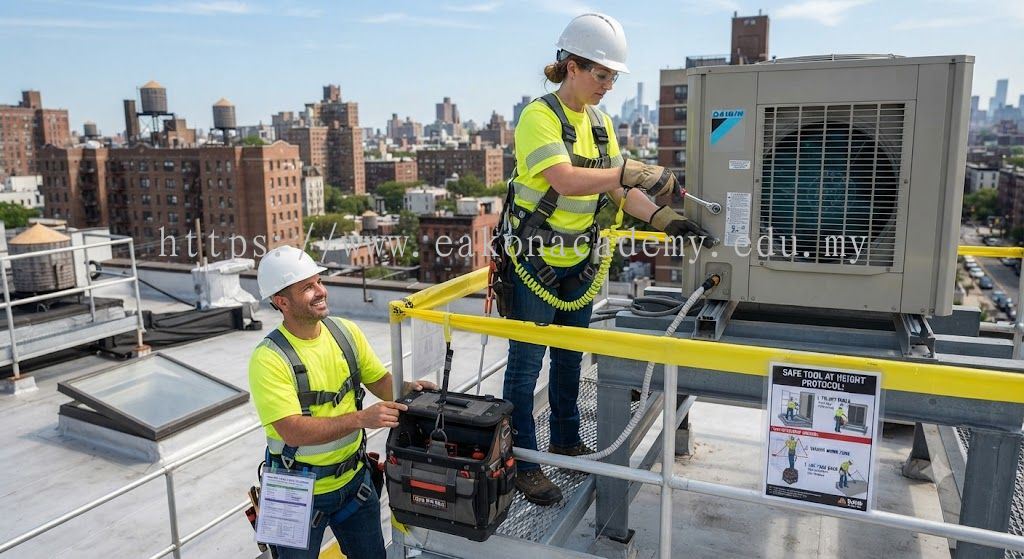
Aircon Installer Tool Safety at Elevated Work Areas: Essential Guidelines for Safe HVAC Installation Practices
Aircon installer tool safety at elevated work areas is a critical aspect of workplace safety for HVAC technicians who perform air conditioning installation, maintenance, and repair tasks in high-level environments. Many modern air conditioning projects require technicians to work on rooftops, external walls, ceiling spaces, scaffolding systems, ladders, elevated work platforms, and commercial building structures where improper tool handling can create serious hazards. Tools and equipment used during HVAC installation, such as cordless drills, impact drivers, screwdrivers, torque wrenches, pipe cutters, flaring tools, multimeters, vacuum pumps, and refrigerant service equipment, must be properly managed to prevent accidents. Poor tool control at elevated locations can lead to dropped objects, worker injuries, equipment damage, and project delays. At Eakon Academy (eakonacadem.edu.my), we provide professional HVAC training programs that focus on safe tool handling, working at height procedures, hazard prevention, and practical installation skills to help technicians perform air conditioning work safely and efficiently.
Elevated work areas present unique challenges that require careful planning and proper safety procedures. Before beginning any air conditioning installation at height, technicians should conduct a detailed risk assessment to identify potential hazards related to tools, equipment, access methods, and surrounding conditions. Factors such as working platform stability, weather conditions, electrical hazards, overhead obstacles, and the presence of workers below should be evaluated before work begins. Proper preparation allows technicians to select suitable tools, organize equipment effectively, and implement preventive measures that reduce the possibility of accidents during elevated HVAC activities.
One of the most important elements of aircon installer tool safety at elevated work areas is preventing dropped tools. Falling tools from rooftops, ladders, or scaffolding can cause serious injuries to people below and may damage expensive air conditioning equipment or building structures. HVAC technicians should use appropriate tool retention systems, including tool lanyards, safety straps, wrist tethers, retractable holders, and secure tool bags. These systems ensure that essential tools remain connected to the technician or a safe anchor point during installation work. Proper tool tethering allows technicians to maintain productivity while significantly reducing the risk of dropped object incidents.
Effective tool organization is another key factor in maintaining safety at elevated work areas. Technicians should avoid placing tools loosely on rooftop surfaces, ceiling structures, scaffolding platforms, or ladder steps where they may fall or create trip hazards. Using professional tool belts, portable toolboxes, service bags, and storage containers helps maintain control over equipment throughout the installation process. Tools should be arranged according to frequency of use, allowing technicians to access necessary equipment without excessive reaching, twisting, or unstable movements that could affect balance.
The selection and inspection of tools are also essential for safe HVAC work at height. Aircon installers should always use tools that are suitable for the specific installation task and inspect them before use. Damaged tools, worn components, defective electrical equipment, or poorly maintained instruments can increase the risk of accidents. Power tools should be checked for damaged cables, battery conditions, switches, and mechanical problems, while hand tools should be inspected for cracks, loose handles, or excessive wear. Regular maintenance and inspection ensure tools remain reliable and safe during elevated installation activities.
Working at height requires proper access equipment and safe movement practices. Aircon installers should use certified ladders, scaffolding, and elevated work platforms that are appropriate for the job requirements. Ladders should be placed on stable surfaces, secured properly, and inspected before use. Technicians should avoid carrying loose tools while climbing and should use tool bags or lifting systems to transport equipment safely. Maintaining three points of contact when climbing and ensuring proper positioning of tools improves stability and reduces fall risks.
Electrical safety is another important consideration when handling tools in elevated work environments. Air conditioning installations often involve electrical wiring, outdoor condenser connections, control systems, and power supply components. Technicians must use insulated tools, properly rated electrical testing equipment, and safe isolation procedures when working with electrical systems. Poor electrical tool handling at height can increase the severity of accidents due to difficult access and limited working space. Following proper electrical safety procedures protects technicians and prevents damage to HVAC equipment.
Environmental conditions can also influence tool safety at elevated work locations. Rooftop air conditioning installations may expose technicians to strong winds, rain, extreme heat, slippery surfaces, and reduced visibility. These conditions can affect grip strength, tool control, and overall balance. Technicians should evaluate weather conditions before starting work and apply additional safety measures when required. Securing lightweight tools, improving workplace organization, and maintaining clear communication between team members help reduce risks in challenging environments.
Personal protective equipment (PPE) provides additional protection during elevated HVAC installation work. Safety helmets protect technicians from falling objects, gloves improve grip when handling tools, and safety footwear provides stability on different surfaces. Fall protection systems, including harnesses and approved anchor points, should be used where necessary to reduce the consequences of accidental falls. Regular inspection and correct use of PPE are essential parts of maintaining safe working conditions at elevated work areas.
Continuous training and competency development are essential for improving aircon installer tool safety at elevated work areas. HVAC technicians should receive hands-on training covering working at height procedures, dropped object prevention, tool tethering techniques, hazard identification, emergency response, and safe installation practices. Professional training helps technicians understand workplace risks and develop safe habits that improve overall project performance. Companies that prioritize safety training benefit from fewer workplace incidents, better productivity, and stronger customer confidence.
At Eakon Academy (eakonacadem.edu.my), we are dedicated to developing skilled HVAC professionals through comprehensive training programs that combine technical expertise with workplace safety practices. Our air conditioning installation courses emphasize safe tool handling, elevated work area safety, risk assessment, electrical protection, refrigerant management, and professional installation standards. By mastering aircon installer tool safety at elevated work areas, technicians can prevent accidents, reduce dropped object risks, improve installation efficiency, and deliver reliable HVAC services with confidence. Proper tool safety practices at height are essential for creating safer workplaces and supporting long-term success in the air conditioning and refrigeration industry.
更多 EAKON ACADEMY SDN BHD 相关资料 Malaysia
