
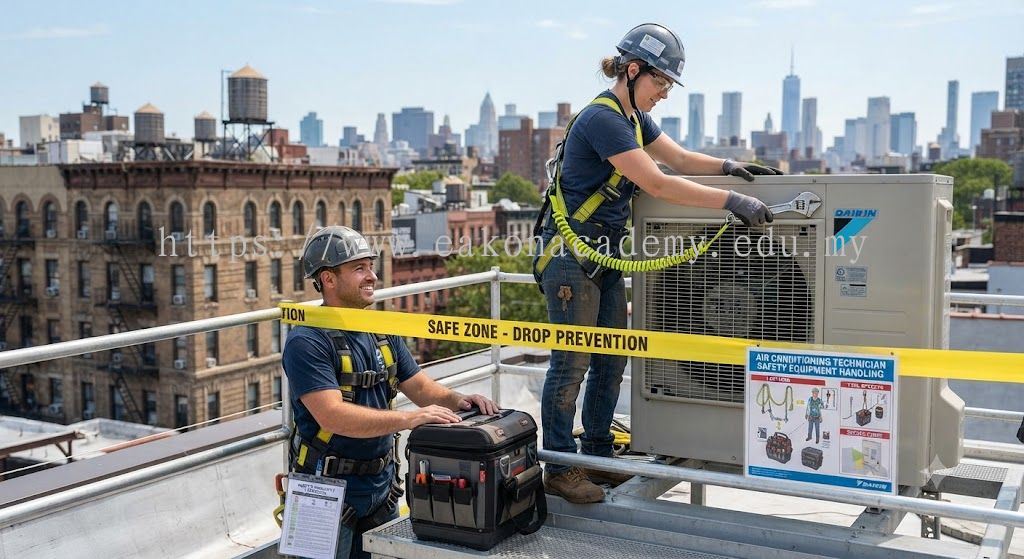
Air Conditioning Technician Safety Equipment Handling Tools: Essential Practices for Safe and Professional HVAC Operations
Air conditioning technician safety equipment handling tools are fundamental to ensuring a safe, efficient, and professional working environment within the HVAC industry. Every air conditioning technician uses a wide variety of hand tools, power tools, diagnostic instruments, lifting equipment, and specialized refrigeration service tools while installing, servicing, maintaining, and repairing residential, commercial, and industrial air conditioning systems. Improper handling of these tools can lead to workplace accidents, equipment damage, costly repairs, reduced productivity, and serious injuries. Therefore, understanding proper safety equipment handling techniques is an essential skill for every HVAC professional. At Eakon Academy (eakonacadem.edu.my), we provide industry-focused training programs that teach technicians how to safely use, inspect, transport, maintain, and store HVAC tools while complying with Malaysian occupational safety regulations and international industry best practices.
Every successful air conditioning installation or maintenance project begins with selecting the correct tool for the job. HVAC technicians regularly use cordless drills, impact drivers, insulated screwdrivers, pipe cutters, tube benders, flaring tools, swaging tools, torque wrenches, manifold gauge sets, vacuum pumps, refrigerant recovery machines, leak detectors, digital multimeters, clamp meters, pressure gauges, and brazing equipment. Each tool has a specific purpose and should only be operated according to the manufacturer’s instructions. Using the wrong tool or operating damaged equipment increases the likelihood of injuries, refrigerant leaks, electrical faults, and poor installation quality. Proper tool selection not only enhances workplace safety but also improves installation accuracy and long-term system performance.
Before using any HVAC equipment, technicians should perform a detailed pre-use inspection. Power tools should be checked for damaged cables, cracked housings, loose components, worn switches, and defective batteries. Hand tools should be inspected for damaged handles, worn cutting edges, rust, or loose fittings. Measuring instruments such as multimeters and pressure gauges should be calibrated regularly to ensure accurate readings. Identifying defects before work begins helps prevent unexpected equipment failure and minimizes safety risks during air conditioning installation and servicing activities.
Electrical safety is one of the highest priorities when handling HVAC tools. Air conditioning technicians frequently work with energized electrical circuits, compressors, motors, control panels, and distribution boards. Insulated hand tools, properly rated multimeters, lockout and tagout procedures, and voltage verification devices help reduce the risk of electrical shock and equipment damage. Technicians should always isolate electrical supplies before carrying out installation, maintenance, or troubleshooting tasks unless live testing is absolutely necessary and performed by qualified personnel using appropriate protective equipment. Following safe electrical handling procedures protects both technicians and customers while ensuring compliance with recognized safety standards.
Personal protective equipment (PPE) is another critical component of safe equipment handling. HVAC technicians should wear safety helmets, cut-resistant gloves, protective eyewear, steel-toe safety boots, hearing protection, flame-resistant clothing for brazing operations, and respiratory protection when working in dusty or confined environments. PPE provides an important layer of defense against common hazards such as flying debris, sharp metal edges, electrical contact, refrigerant exposure, burns, and falling objects. Regular inspection and replacement of worn PPE ensure that protective equipment continues to provide effective protection throughout every HVAC project.
Manual handling techniques are equally important when transporting and positioning air conditioning equipment. Outdoor condensing units, indoor fan coil units, compressors, copper pipes, ductwork, vacuum pumps, and recovery machines can be heavy and difficult to maneuver. Improper lifting techniques can result in back injuries, muscle strains, and long-term musculoskeletal disorders. Technicians should use proper lifting postures, mechanical lifting aids, team lifting procedures, and ergonomic practices whenever handling heavy equipment. Planning the movement of tools and equipment before starting work also reduces unnecessary physical strain and improves overall job efficiency.
Tool organization and storage contribute significantly to workplace safety. HVAC technicians should keep tools organized in dedicated toolboxes, tool belts, or storage compartments to prevent loss, damage, and trip hazards. Sharp tools should be stored securely with protective covers, while electrical equipment should be protected from moisture and extreme temperatures. Batteries should be charged and stored according to manufacturer recommendations, and refrigerant service equipment should be cleaned after each use to maintain reliability. Proper housekeeping creates a safer work environment and allows technicians to locate equipment quickly, reducing downtime during installation and maintenance tasks.
Working at height introduces additional challenges for HVAC technicians, particularly during rooftop condenser installations, ceiling cassette servicing, and elevated outdoor unit maintenance. In these situations, technicians should use certified ladders, scaffolding, elevated work platforms, and fall protection systems. Hand tools should be secured using tool lanyards or tethering systems to prevent dropped object incidents. Establishing exclusion zones below elevated work areas further protects other workers and the public from potential injuries caused by falling tools or materials. Safe equipment handling at height significantly reduces workplace accidents and supports a strong safety culture.
Safe handling of refrigeration equipment is another essential aspect of HVAC operations. Technicians frequently operate vacuum pumps, refrigerant recovery machines, nitrogen cylinders, charging scales, leak detectors, and pressure testing equipment. Proper handling procedures prevent refrigerant leaks, equipment damage, frostbite injuries, and environmental contamination. Pressure testing should always follow manufacturer specifications, while refrigerant charging and recovery should comply with environmental regulations and industry standards. Regular maintenance and calibration of refrigeration service equipment improve measurement accuracy and ensure consistent system performance.
Continuous training plays a vital role in improving equipment handling skills and maintaining workplace safety. HVAC technology continues to evolve with new refrigerants, energy-efficient systems, advanced diagnostic tools, and digital control technologies. Professional technicians should participate in ongoing training programs covering safe tool handling, equipment maintenance, hazard identification, electrical safety, refrigerant management, risk assessment, and emergency response procedures. Investing in professional development enables technicians to remain competent, confident, and prepared for increasingly complex HVAC installations and maintenance projects.
At Eakon Academy (eakonacadem.edu.my), we are committed to producing highly skilled HVAC professionals through practical, hands-on training that combines technical expertise with comprehensive workplace safety practices. Our air conditioning technician courses emphasize safe equipment handling, proper tool selection, preventive maintenance, working at height, electrical safety, refrigerant handling, manual lifting techniques, and compliance with Malaysian occupational safety requirements. By mastering air conditioning technician safety equipment handling tools, technicians can reduce workplace injuries, improve installation quality, enhance customer satisfaction, and build long-term professional success. A strong commitment to safe equipment handling not only protects technicians and valuable HVAC systems but also strengthens operational efficiency, supports regulatory compliance, and contributes to a safer, more productive air conditioning industry.
更多 EAKON ACADEMY SDN BHD 相关资料 Malaysia
