
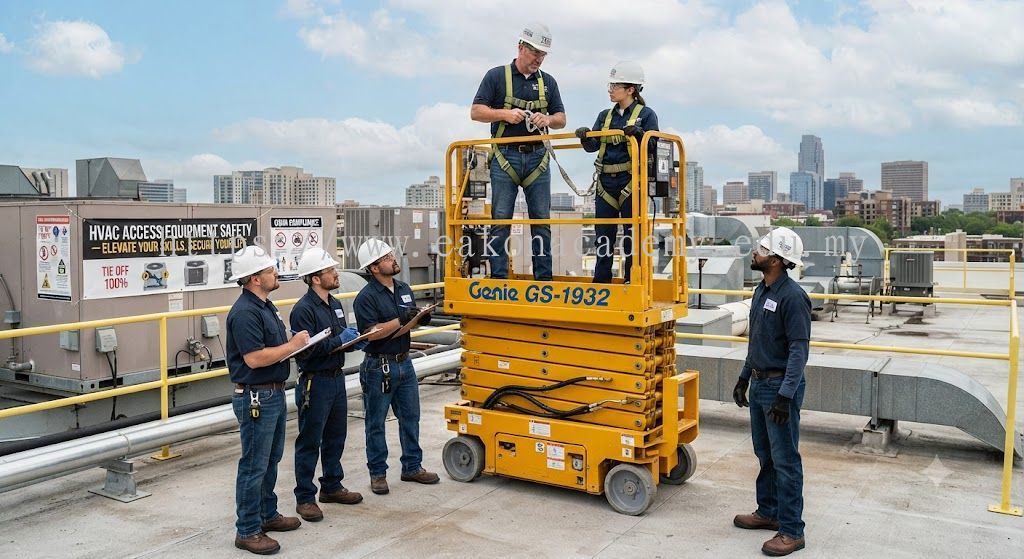
HVAC Technician Access Equipment Safety Training: Improving Workplace Safety and Skills for Professional HVAC Operations
The HVAC industry requires technicians to perform a wide range of installation, maintenance, troubleshooting, and repair activities in various working environments. Many air conditioning systems are installed in locations that are difficult to access, including rooftops, high ceilings, commercial buildings, industrial facilities, factories, warehouses, and mechanical rooms. To complete these tasks safely and efficiently, HVAC technicians must understand the correct use of access equipment such as ladders, scaffolding, Elevated Work Platforms (EWPs), scissor lifts, boom lifts, and aerial platforms. HVAC technician access equipment safety training provides essential knowledge and practical skills to help technicians identify hazards, operate access equipment correctly, and perform elevated HVAC work according to professional safety practices. At Eakon Academy (eakonacadem.edu.my), we provide industry-focused HVAC training programmes designed to develop skilled technicians with strong technical ability and workplace safety awareness throughout Malaysia.
Access equipment plays an important role in modern HVAC installation and maintenance activities. HVAC technicians frequently use different types of access equipment to reach air conditioning units, ductwork, ventilation systems, chillers, VRF systems, and other mechanical components installed at height. Proper access equipment allows technicians to work more comfortably, improve productivity, and reduce the risks associated with unsafe climbing methods. However, incorrect selection, improper operation, or poor maintenance of access equipment can create serious workplace hazards, including falls, equipment instability, falling objects, injuries, and property damage. Professional HVAC technician access equipment safety training helps technicians understand how to select, inspect, and use equipment safely for different HVAC applications.
A key part of access equipment safety training is learning how to identify workplace hazards before starting any task. HVAC technicians must understand how to assess working conditions and recognize potential risks such as uneven surfaces, unstable flooring, overhead electrical cables, limited workspace, poor lighting, weather conditions, nearby machinery, and pedestrian movement. Through proper hazard identification and risk assessment, technicians can develop safer work plans, choose suitable equipment, and implement effective control measures. This proactive approach reduces accidents and ensures HVAC projects are completed safely and efficiently.
Choosing the correct access equipment is another important skill covered in HVAC technician access equipment safety training. Different HVAC tasks require different access solutions depending on working height, location, equipment size, and site conditions. Technicians learn how to determine whether a ladder, scaffold, scissor lift, boom lift, or other elevated access equipment is appropriate for a specific job. Understanding equipment limitations, load capacities, and operating requirements helps prevent unsafe practices and ensures technicians use the right tools for the right application.
Equipment inspection is an essential safety procedure included in professional HVAC access equipment training. Before using any access equipment, technicians must perform checks to confirm that the equipment is safe and functioning properly. Training covers inspection procedures for ladders, platforms, wheels, hydraulic systems, batteries, safety rails, emergency controls, stabilizers, and structural components. Identifying damaged or faulty equipment before use helps prevent unexpected failures and protects technicians during installation and maintenance activities.
Operator competency is a major factor in maintaining workplace safety. HVAC technician access equipment safety training provides participants with knowledge of correct operating procedures, equipment controls, safe positioning methods, and emergency response actions. For elevated platforms such as scissor lifts and boom lifts, technicians learn how to safely operate controls, maintain platform stability, manage loads, and follow manufacturer guidelines. Practical hands-on training allows participants to gain confidence while developing the skills needed for real-world HVAC work environments.
Personal Protective Equipment (PPE) is also an important part of safe access equipment operation. HVAC technicians are trained on the correct selection and use of safety equipment, including helmets, gloves, safety footwear, eye protection, high-visibility clothing, and fall protection systems. When working on elevated platforms, technicians may need to use approved safety harnesses and lanyards according to workplace requirements. Proper PPE usage provides additional protection against falls, impacts, and other hazards associated with elevated HVAC tasks.
Safe working practices also include proper equipment positioning and load management. HVAC technicians must understand the importance of placing access equipment on stable surfaces and avoiding unsafe positioning near edges, obstacles, or hazardous areas. Tools, refrigerant equipment, spare parts, and installation materials must be properly secured to prevent falling objects. Following correct load management procedures improves safety and allows technicians to complete their work more effectively.
Environmental awareness is another important aspect of HVAC technician access equipment safety training. Outdoor HVAC activities may expose technicians to strong winds, rain, extreme temperatures, and poor visibility. Training helps technicians understand how environmental conditions affect access equipment stability and operating safety. By monitoring workplace conditions and applying appropriate controls, technicians can reduce risks and protect themselves during elevated work.
Communication and teamwork are essential for safe HVAC operations, especially on commercial and industrial projects. Technicians often work alongside electricians, engineers, contractors, supervisors, and facility management teams. Clear communication helps coordinate activities, maintain safe working areas, prevent accidents, and improve emergency response. A strong safety culture ensures that everyone involved understands their responsibilities and follows proper procedures.
Emergency preparedness is another important topic covered in access equipment safety training. Technicians learn how to respond to equipment failure, emergency situations, and workplace incidents. Understanding emergency procedures, equipment shutdown methods, rescue plans, and communication protocols helps technicians react quickly and effectively when unexpected situations occur.
Employers who invest in HVAC technician access equipment safety training benefit from improved workplace safety, reduced accident risks, increased productivity, and better compliance with occupational safety requirements. Skilled technicians are more confident, efficient, and capable of handling complex HVAC projects while maintaining professional standards. Safety training also enhances the reputation of HVAC companies by demonstrating a commitment to worker protection and quality service delivery.
At Eakon Academy (eakonacadem.edu.my), we are committed to developing highly competent HVAC professionals through comprehensive technical and safety training programmes. Our HVAC technician access equipment safety training combines theoretical knowledge with practical hands-on experience, covering hazard identification, equipment selection, inspection procedures, safe operation techniques, emergency response, and workplace safety practices. By completing professional access equipment safety training, HVAC technicians can improve their technical capabilities, strengthen workplace safety awareness, enhance career opportunities, and confidently perform air conditioning installation, servicing, and maintenance tasks in challenging environments. Through continuous learning and professional development, Eakon Academy supports the growth of a safer, more skilled, and more reliable HVAC workforce throughout Malaysia.
更多 EAKON ACADEMY SDN BHD 相关资料 Malaysia
