
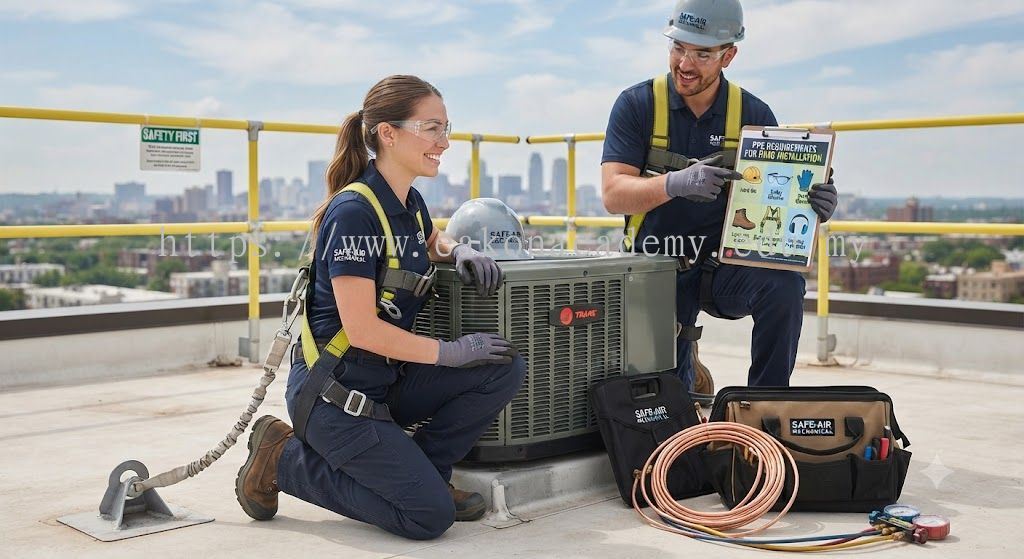
Air Conditioning Installation PPE Safety Requirements – Essential Protective Equipment Guide for HVAC Technicians
The air conditioning installation PPE safety requirements are an important part of professional HVAC training and workplace safety management. Personal protective equipment (PPE) helps protect air conditioning technicians during installation activities by reducing the risks associated with electrical work, equipment handling, working at height, sharp materials, and other workplace hazards. HVAC technicians are required to perform various installation tasks, including mounting indoor units, installing outdoor condenser units, connecting refrigerant piping, handling tools, and performing electrical connections. At Eakon Academy, we emphasize the importance of combining technical HVAC knowledge with proper safety practices to develop competent and responsible technicians.
Air conditioning installation involves multiple processes that require careful attention to safety. Technicians may encounter risks such as falling objects, electrical exposure, dust, sharp edges, heavy equipment, refrigerant handling hazards, and elevated working conditions. Understanding air conditioning installation PPE safety requirements allows HVAC professionals to select and use the correct protective equipment before beginning any installation task. Proper PPE usage helps reduce injuries, improve workplace protection, and support a safer working environment.
Personal protective equipment is designed to provide protection against specific workplace hazards. Common PPE used during air conditioning installation includes safety helmets, protective footwear, gloves, eye protection, suitable work clothing, hearing protection when required, and fall protection equipment for elevated work. Each item serves an important purpose in protecting technicians while they perform installation activities. Professional HVAC training helps workers understand how to select, inspect, maintain, and correctly use PPE according to the requirements of each project.
One of the key elements of air conditioning installation PPE safety requirements is understanding when and how each safety item should be used. For example, safety helmets help protect technicians from falling objects, while protective footwear provides protection when handling heavy air conditioning equipment. Gloves help reduce the risk of cuts and injuries when working with metal components, copper piping, and installation materials. Eye protection is important during drilling, cutting, and other activities that may produce dust or particles.
Height safety equipment is also an important consideration for air conditioning installation projects. Technicians who install outdoor units, rooftop systems, or high-level indoor units may require additional protection such as safety harnesses and fall prevention systems. Following safe working at height for HVAC technicians practices ensures that workers understand how to manage elevated installation tasks safely while using appropriate protective equipment.
Electrical safety is another important area related to PPE requirements. HVAC installation often involves connecting power supplies, testing electrical components, and troubleshooting system operation. Proper protective equipment, combined with safe electrical procedures, helps reduce the risk of electrical accidents. Technicians should always understand workplace safety procedures before performing electrical-related tasks during air conditioning installation.
At Eakon Academy, our HVAC training programs are designed to provide practical industry knowledge and safety awareness for technicians at different skill levels. Through hands-on training, participants learn professional installation methods, servicing procedures, troubleshooting techniques, equipment handling, and workplace safety practices. Understanding air conditioning installation PPE safety requirements helps trainees develop professional working habits and prepares them for real HVAC project environments.
For HVAC contractors and service companies, implementing proper PPE requirements improves workplace safety, reduces accident risks, and enhances overall service quality. A technician who understands the correct use of protective equipment can complete installation work more confidently while protecting themselves, customers, and colleagues. Companies that prioritize PPE safety also demonstrate professionalism and commitment to responsible HVAC operations.
Developing knowledge of air conditioning installation PPE safety requirements is an essential step for anyone pursuing a career in the air conditioning and refrigeration industry. Combining technical HVAC skills with proper PPE awareness allows technicians to perform installation work safely, efficiently, and professionally. Eakon Academy provides quality HVAC training programs designed to strengthen technical competency, improve safety knowledge, and prepare future HVAC professionals for successful careers in the modern HVAC industry.
更多 EAKON ACADEMY SDN BHD 相关资料 Malaysia
