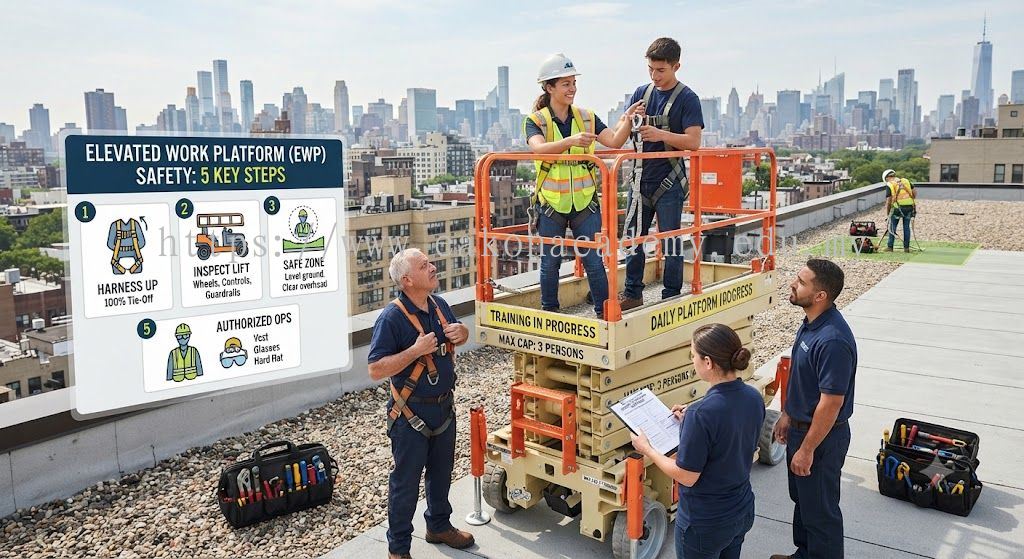
HVAC Elevated Work Platform Safety Training: Essential Skills for Safe and Professional Height Work Operations
HVAC elevated work platform safety training is an essential programme designed to equip air conditioning and refrigeration technicians with the knowledge and practical skills required to safely operate and work around elevated access equipment during installation, maintenance, repair, and servicing activities. Modern HVAC projects often require technicians to access high-level locations such as rooftops, commercial buildings, industrial facilities, warehouses, factories, mechanical rooms, and high-rise structures. Elevated work platforms (EWPs), including mobile elevated work platforms (MEWPs), boom lifts, scissor lifts, and aerial platforms, are commonly used to provide safe access to difficult working areas. Proper HVAC elevated work platform safety training helps technicians understand safe operating procedures, hazard identification, equipment inspection, fall prevention methods, and workplace safety practices. At Eakon Academy (eakonacadem.edu.my), we integrate practical HVAC technical training with occupational safety awareness to develop competent technicians who can perform elevated HVAC work safely and professionally.
Air conditioning installation and maintenance frequently involve tasks that cannot be completed from ground level. HVAC technicians may need elevated access when installing outdoor condensing units, servicing rooftop air conditioning systems, maintaining commercial HVAC equipment, repairing ductwork, inspecting ventilation systems, or performing preventive maintenance on large cooling systems. Working at height using elevated work platforms introduces specific risks, including falls, equipment instability, incorrect operation, electrical hazards, poor weather conditions, and improper positioning. HVAC elevated work platform safety training provides technicians with the understanding needed to manage these risks effectively and complete their work according to industry safety expectations.
A key component of elevated work platform safety training is learning how to conduct proper pre-operation inspections. Before operating any elevated work platform, technicians should inspect critical components such as control systems, emergency stop functions, guardrails, wheels, hydraulic systems, stabilisers, warning alarms, and safety devices. Identifying equipment defects before operation prevents accidents and ensures the platform functions correctly during HVAC installation or maintenance activities. Proper inspection procedures also help technicians understand equipment limitations and recognise when machinery should not be used due to unsafe conditions.
Workplace risk assessment is another important element covered in HVAC elevated work platform safety training. Before beginning elevated HVAC work, technicians must evaluate the working environment, identify potential hazards, and implement suitable control measures. Factors such as overhead obstacles, electrical cables, uneven ground surfaces, nearby workers, restricted areas, weather conditions, and equipment positioning must be carefully considered. A detailed risk assessment allows technicians to select appropriate operating methods and maintain a safer working environment throughout the project.
Fall protection and personal protective equipment (PPE) are essential aspects of safe elevated work platform operation. HVAC technicians should understand the correct use of safety harnesses, lanyards, anchor points, helmets, gloves, protective footwear, and other safety equipment required for elevated work. Training helps technicians understand when fall protection is necessary, how to inspect PPE before use, and how to correctly connect safety equipment to approved attachment points. Proper PPE usage reduces injury risks and provides additional protection during HVAC installation and maintenance activities.
Safe operation techniques are also a major focus of HVAC elevated work platform safety training. Technicians learn how to operate platform controls, position equipment correctly, maintain safe distances from hazards, avoid overloading platforms, and communicate effectively with ground personnel. Proper communication between operators and supporting team members is especially important during HVAC projects involving heavy equipment, outdoor units, ducting materials, or installation components. Effective teamwork improves safety, productivity, and overall project efficiency.
Electrical safety awareness is another critical area when using elevated work platforms for HVAC work. Many air conditioning installations involve electrical connections, testing, commissioning, and troubleshooting near power sources. Technicians must understand safe working distances, electrical hazard identification, isolation procedures, and the importance of avoiding contact with energised systems. Combining elevated platform safety knowledge with electrical safety practices creates a comprehensive approach to protecting HVAC professionals during complex installation and maintenance tasks.
Environmental conditions must also be considered before operating elevated work platforms. Strong winds, rain, lightning, poor visibility, unstable surfaces, and extreme temperatures can affect platform stability and technician safety. HVAC elevated work platform safety training teaches technicians how to evaluate environmental conditions, recognise unsafe situations, and make responsible decisions before and during operation. Proper planning ensures work is carried out safely while preventing unnecessary risks.
At eakonacadem.edu.my, our professional HVAC training programmes combine hands-on technical learning with essential workplace safety practices. Students gain practical experience in air conditioning installation, HVAC servicing, refrigeration systems, electrical troubleshooting, refrigerant handling, system commissioning, and preventive maintenance. Safety training includes elevated work platform awareness, hazard identification, workplace risk assessment, fall prevention procedures, PPE management, safe equipment operation, emergency response planning, and professional work practices. This integrated approach prepares technicians to handle modern HVAC projects with confidence and responsibility.
For HVAC contractors and employers, investing in HVAC elevated work platform safety training provides valuable long-term benefits. A properly trained workforce experiences fewer workplace accidents, improved productivity, reduced equipment damage, stronger safety compliance, better project management, and increased customer confidence. Companies that prioritise safety demonstrate professionalism and reliability, helping them build stronger reputations within the competitive HVAC industry. Safety-focused organisations are also better positioned to secure larger commercial, industrial, and facility maintenance projects.
As the HVAC industry continues to develop throughout Malaysia, technicians must possess both advanced technical expertise and strong safety competencies. Understanding HVAC elevated work platform safety training enables professionals to perform installation, maintenance, and repair activities safely while meeting modern workplace requirements. Eakon Academy is committed to developing skilled HVAC professionals through industry-focused education that combines practical technical knowledge with comprehensive occupational safety training. Visit eakonacadem.edu.my to explore our professional HVAC courses, air conditioning installation programmes, maintenance training, and safety-focused workshops designed to prepare technicians for successful careers in the heating, ventilation, air conditioning, and refrigeration industry.
更多 EAKON ACADEMY SDN BHD 相关资料 Malaysia