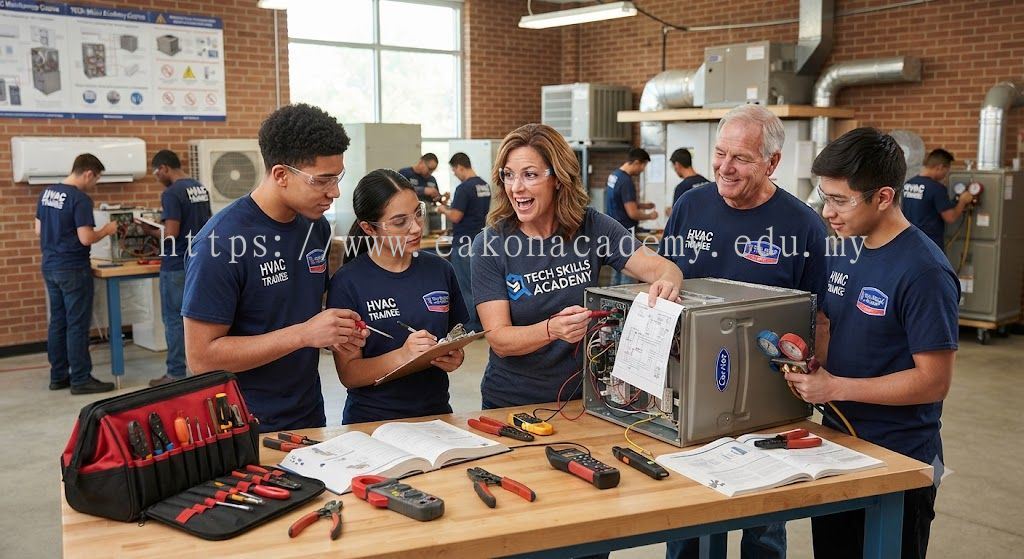
HVAC Preventive Maintenance Course for Professional Skills Development and Reliable System Performance
HVAC preventive maintenance course is a professional training program designed to provide individuals with the essential knowledge and practical skills required to inspect, maintain, troubleshoot, and improve the performance of heating, ventilation, and air conditioning systems. Preventive maintenance plays an important role in ensuring HVAC equipment operates efficiently, reducing unexpected breakdowns, improving energy efficiency, and extending the lifespan of system components. As businesses, industries, and buildings continue to rely on reliable HVAC solutions, skilled technicians with preventive maintenance expertise are highly valued in the industry. Eakon Academy, available at eakonacadem.edu.my, provides professional HVAC training programs focused on practical learning, technical knowledge, and industry-based applications to prepare participants for careers in the HVAC sector.
A comprehensive HVAC preventive maintenance course helps participants understand the importance of proactive HVAC system care. Unlike corrective maintenance, which focuses on repairing equipment after failure occurs, preventive maintenance involves scheduled inspections, cleaning, testing, and servicing to prevent problems before they happen. Through proper preventive maintenance procedures, technicians can identify early signs of equipment issues, reduce repair costs, maintain system efficiency, and ensure consistent cooling performance.
One of the key areas covered in an HVAC preventive maintenance course is understanding HVAC system components and their functions. Participants learn about essential components such as compressors, evaporator coils, condenser units, fans, motors, electrical controls, sensors, refrigerant circuits, and air distribution systems. Understanding these components enables technicians to perform detailed inspections and determine whether equipment is operating under normal conditions or requires further maintenance.
Regular inspection and cleaning procedures are important parts of HVAC preventive maintenance training. Participants learn how to inspect air filters, clean coils, check drainage systems, evaluate airflow performance, and maintain important HVAC components. Dirty filters, blocked airflow, and contaminated coils can reduce system efficiency and increase energy consumption. Proper maintenance procedures help HVAC systems operate more effectively while improving indoor comfort and reliability.
Refrigerant system maintenance is another important topic included in an HVAC preventive maintenance course. Proper refrigerant levels and system pressure are essential for achieving efficient cooling performance. Participants learn how to perform refrigerant inspections, pressure testing, leak detection, and charging procedures. Understanding refrigerant systems allows technicians to maintain cooling efficiency while protecting major components such as compressors and heat exchangers.
Electrical inspection and testing are also essential skills developed through HVAC preventive maintenance training. Modern HVAC systems rely on electrical components such as capacitors, contactors, wiring connections, control boards, and sensors. Participants learn how to inspect electrical systems, identify potential faults, and perform maintenance checks safely. Proper electrical maintenance helps prevent unexpected failures and improves overall HVAC system reliability.
Troubleshooting skills are another important component of an HVAC preventive maintenance course. Technicians must be able to recognize early warning signs such as unusual noises, temperature fluctuations, poor airflow, increased energy consumption, and abnormal system readings. Through practical training, participants learn how to analyze system conditions, identify possible causes, and recommend suitable maintenance actions before serious problems occur.
Preventive maintenance planning is especially important for commercial buildings, industrial facilities, and organizations that depend on continuous HVAC operation. A structured maintenance schedule helps reduce equipment downtime, improve energy management, and maintain a comfortable indoor environment. Skilled HVAC technicians with preventive maintenance knowledge can support businesses by ensuring their cooling systems remain efficient and dependable.
Eakon Academy offers professional HVAC training programs that combine theoretical knowledge with hands-on practical experience. Participants gain valuable skills in HVAC inspection procedures, preventive maintenance techniques, troubleshooting methods, and system performance evaluation. The training approach helps learners develop confidence and technical ability to handle real-world HVAC maintenance tasks.
Completing an HVAC preventive maintenance course provides valuable career opportunities for individuals seeking to improve their technical skills and professional qualifications. Trained HVAC technicians can pursue careers as maintenance specialists, HVAC service technicians, building facility technicians, and engineering support professionals. Professional preventive maintenance knowledge enables technicians to improve system reliability, reduce operational costs, and deliver high-quality HVAC services.
Investing in HVAC preventive maintenance training is a valuable step for anyone looking to strengthen their career in the HVAC industry. With proper knowledge, practical experience, and professional training, HVAC technicians can contribute to more efficient, reliable, and sustainable HVAC systems for residential, commercial, and industrial applications.
更多 EAKON ACADEMY SDN BHD 相关资料 Malaysia