HVAC Inspection and Repair Course for Professional System Evaluation and Advanced Repair Skills
HVAC inspection and repair course is a professional training program designed to provide participants with the technical knowledge and practical skills required to inspect, troubleshoot, repair, and maintain heating, ventilation, and air conditioning systems. As HVAC systems become increasingly important in residential, commercial, and industrial applications, skilled technicians with strong inspection and repair abilities are essential to ensure reliable operation, energy efficiency, and long-term equipment performance. Eakon Academy, available at eakonacadem.edu.my, provides industry-focused HVAC training programs that combine technical knowledge with hands-on practical experience to prepare participants for successful careers in the HVAC industry.
A comprehensive HVAC inspection and repair course helps participants understand the complete process of evaluating HVAC system conditions and performing effective repair procedures. Through structured training, learners gain knowledge of major HVAC components, including compressors, evaporator coils, condenser units, refrigerant circuits, electrical controls, motors, fans, sensors, and air distribution systems. Understanding these components enables technicians to conduct accurate inspections and identify potential problems before they develop into major system failures.
One of the key focuses of an HVAC inspection and repair course is developing professional inspection skills. HVAC technicians must be able to assess equipment conditions, identify signs of wear, evaluate system performance, and determine whether components require maintenance or replacement. Inspection procedures may include checking airflow performance, measuring temperature differences, testing electrical components, examining refrigerant conditions, and evaluating overall system operation. Accurate inspections help technicians provide reliable repair recommendations and improve system efficiency.
Troubleshooting and fault diagnosis are important elements of HVAC inspection and repair training. HVAC systems may experience various issues such as poor cooling performance, refrigerant leakage, electrical faults, abnormal noises, airflow restrictions, water leakage, and compressor problems. Participants learn how to analyze system symptoms, perform technical tests, and identify the root causes of faults. Strong troubleshooting abilities allow technicians to complete repairs more efficiently and reduce unnecessary equipment downtime.
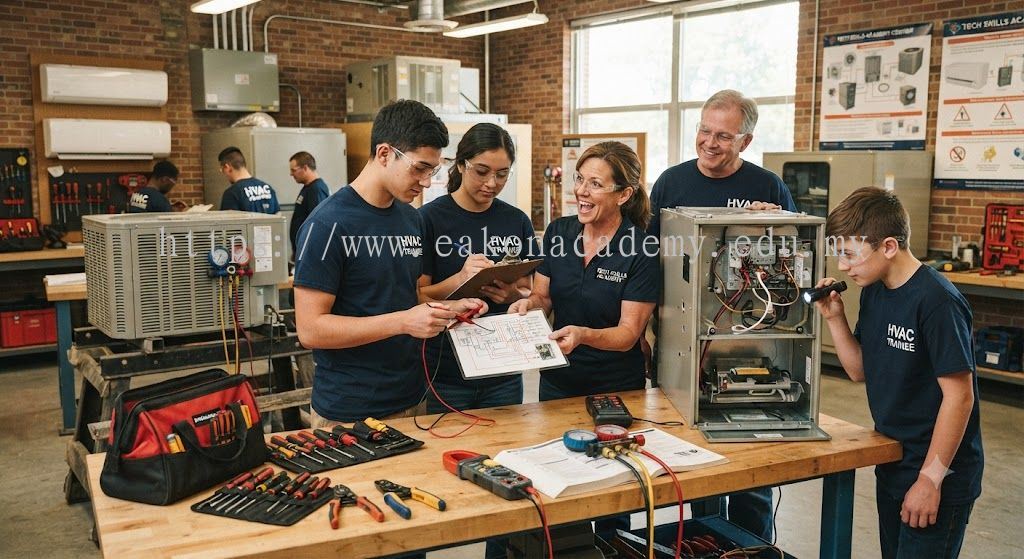
Practical repair techniques are also included in an HVAC inspection and repair course. Participants gain hands-on experience in using HVAC tools, testing system components, performing corrective repairs, and restoring equipment performance. Practical training allows learners to understand real-world repair challenges and develop confidence in handling different types of air conditioning and HVAC systems. These skills are valuable for technicians who need to provide professional maintenance and repair services.
Refrigerant system inspection and repair are important areas covered in professional HVAC training. Proper refrigerant management is essential for maintaining cooling efficiency and protecting major system components. Participants learn how to perform refrigerant pressure checks, detect leaks, evaluate system performance, and apply correct refrigerant charging procedures. Professional knowledge of refrigerant systems enables technicians to maintain safe and efficient HVAC operation.
Electrical system inspection is another critical skill developed through HVAC inspection and repair courses. Modern HVAC systems rely on electrical components such as capacitors, contactors, wiring connections, control boards, and sensors. Participants learn how to perform electrical testing, identify faulty components, and apply safe repair procedures. Strong electrical troubleshooting knowledge helps technicians resolve complex HVAC problems effectively.
Preventive maintenance practices are also emphasized during HVAC inspection and repair training. Regular inspection and early fault detection help prevent major equipment failures and reduce long-term maintenance costs. Participants learn how to evaluate equipment conditions, create maintenance plans, and recommend improvement actions to enhance HVAC reliability.
Safety procedures are an essential part of professional HVAC inspection and repair training. Participants learn safe working methods, proper tool handling, electrical safety practices, and responsible refrigerant management. These skills ensure technicians can perform inspection and repair tasks professionally while maintaining workplace safety standards.
Completing an HVAC inspection and repair course provides valuable career opportunities for individuals seeking to improve their technical capabilities. Skilled HVAC professionals can pursue careers as service technicians, repair specialists, maintenance engineers, and building facility technicians. Strong inspection and repair knowledge allows technicians to deliver higher-quality services and meet the growing demands of the HVAC industry.
Eakon Academy offers professional HVAC training programs that focus on practical application, technical development, and industry requirements. Participants gain valuable experience in HVAC inspection methods, troubleshooting techniques, repair procedures, and system performance evaluation. The training approach helps learners develop confidence and professional competency for real working environments.
Investing in an HVAC inspection and repair course is a valuable step for individuals who want to strengthen their HVAC expertise and career opportunities. Professional training enables technicians to improve system reliability, reduce repair time, enhance energy efficiency, and provide dependable HVAC solutions. With proper knowledge and practical experience, HVAC professionals can contribute to safer, more efficient, and sustainable HVAC operations across various industries.
更多 EAKON ACADEMY SDN BHD 相关资料 Malaysia