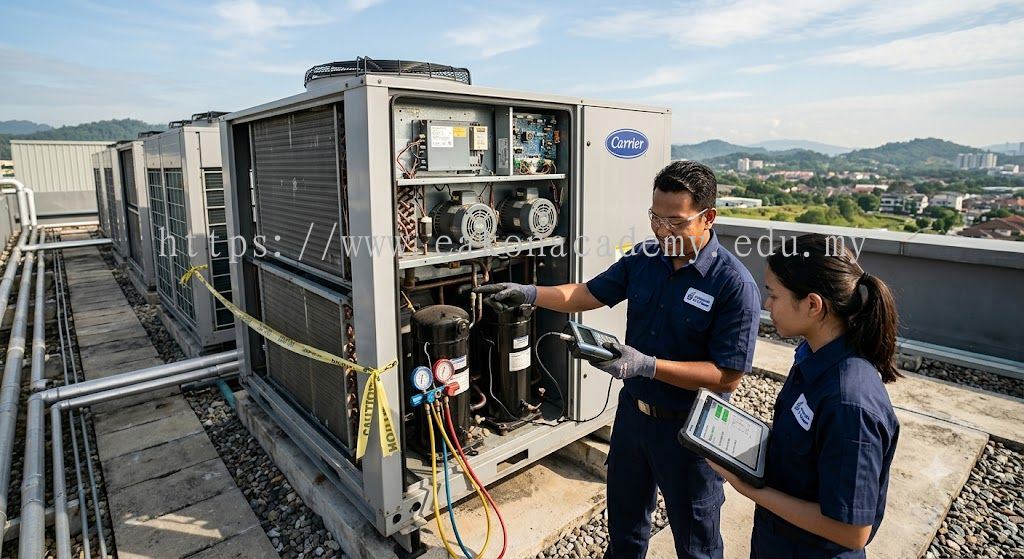
Commercial HVAC Servicing Techniques Training for Professional Building Cooling System Maintenance
Commercial HVAC servicing techniques are essential skills for technicians who are responsible for maintaining, troubleshooting, and optimizing large-scale heating, ventilation, and air conditioning systems used in commercial buildings. As businesses, offices, shopping centres, industrial facilities, and public buildings depend on reliable HVAC systems to maintain indoor comfort and operational efficiency, skilled HVAC professionals are increasingly required to provide high-quality servicing solutions. Eakon Academy offers professional HVAC training programs designed to develop advanced technical knowledge and practical skills in commercial HVAC servicing techniques for modern cooling system applications.
Commercial HVAC systems are more complex compared to residential air conditioning units because they involve larger capacities, advanced control systems, multiple components, and continuous operating requirements. Effective commercial HVAC servicing techniques require technicians to understand system inspection, preventive maintenance, performance analysis, fault diagnosis, electrical testing, refrigerant management, and equipment optimization. By applying proper servicing methods, HVAC professionals can improve system reliability, reduce unexpected breakdowns, and ensure commercial cooling systems operate efficiently.
A professional commercial HVAC servicing techniques training program provides learners with a strong understanding of different HVAC equipment and maintenance procedures. Participants can learn about essential components such as compressors, condensers, evaporators, air handling units, ventilation systems, thermostats, control panels, pumps, and refrigeration circuits. Understanding how each component works allows technicians to perform accurate inspections and identify potential problems that may affect system performance.
At Eakon Academy, commercial HVAC training focuses on practical skills that are relevant to real workplace environments. Learners are introduced to important servicing procedures such as HVAC system assessment, cleaning methods, pressure testing, temperature measurement, airflow inspection, refrigerant checking, electrical troubleshooting, and preventive maintenance planning. These techniques help technicians improve their ability to maintain various commercial HVAC systems, including packaged air conditioning units, VRF systems, rooftop units, and centralized cooling systems.
Preventive maintenance is a critical part of commercial HVAC servicing techniques because commercial buildings often require continuous cooling performance. Regular servicing helps reduce equipment failure, improve energy efficiency, and extend the operational lifespan of HVAC systems. Professional technicians who understand preventive maintenance strategies can detect early warning signs, replace damaged components, optimize system operation, and recommend suitable maintenance schedules based on building requirements.
Energy efficiency is also a major focus in modern commercial HVAC servicing. Inefficient HVAC systems can result in higher electricity consumption, increased maintenance costs, and reduced indoor comfort. Through proper servicing techniques, technicians can improve system performance by maintaining clean heat transfer surfaces, ensuring correct refrigerant levels, checking electrical connections, and optimizing airflow distribution. These practices help businesses achieve better energy management while maintaining a comfortable indoor environment.
Troubleshooting skills are another important aspect of commercial HVAC servicing techniques. Commercial systems may experience various issues such as insufficient cooling, abnormal pressure readings, control system errors, refrigerant leaks, airflow problems, and electrical faults. Professional HVAC technicians must be able to analyze system conditions, use diagnostic tools correctly, and apply effective repair solutions. Proper training enables technicians to handle complex HVAC challenges with greater confidence and accuracy.
Safety and compliance are also important elements in commercial HVAC maintenance. Technicians must understand safe working procedures when handling electrical systems, refrigerants, mechanical components, and specialized HVAC equipment. Professional training helps ensure that servicing activities are performed according to industry standards while protecting technicians, building occupants, and the environment.
Developing expertise in commercial HVAC servicing techniques provides valuable career opportunities for individuals seeking to advance in the HVAC industry. With increasing demand for skilled HVAC professionals in Malaysia, technicians with strong commercial servicing knowledge can support businesses in maintaining efficient and reliable cooling systems.
Eakon Academy provides comprehensive HVAC training designed to equip learners with practical skills in installation, maintenance, troubleshooting, and advanced commercial HVAC servicing techniques. Through hands-on learning and industry-focused training, participants can enhance their technical capabilities and prepare for professional opportunities in the HVAC and refrigeration sector. Visit eakonacadem.edu.my to explore specialized HVAC courses that help build skilled and competent HVAC professionals.
更多 EAKON ACADEMY SDN BHD 相关资料 Malaysia