HVAC System Servicing Techniques: Professional Training for Advanced HVAC Maintenance and System Performance Optimisation
HVAC system servicing techniques are essential skills that enable technicians, engineers, and maintenance professionals to inspect, maintain, troubleshoot, and optimise heating, ventilation, air conditioning, and refrigeration (HVACR) systems effectively. As modern HVAC systems become more advanced with inverter technology, smart controls, energy-efficient components, and environmentally friendly refrigerants, professional servicing knowledge is increasingly important for ensuring reliable system operation. Proper HVAC servicing techniques help improve cooling efficiency, reduce energy consumption, prevent unexpected breakdowns, enhance indoor air quality, and extend the operational lifespan of equipment. At Eakon Academy (eakonacadem.edu.my), our HVAC training programmes focus on developing practical servicing skills and technical knowledge required to perform professional HVAC maintenance according to industry standards and best practices.
Effective HVAC system servicing begins with a complete understanding of system operation, refrigeration principles, electrical components, airflow management, and mechanical functions. Technicians must understand how compressors, condensers, evaporators, expansion devices, refrigerant circuits, fans, motors, thermostats, sensors, and control systems work together to deliver efficient cooling. Through structured HVAC training at Eakon Academy, participants learn how to analyse system conditions, identify performance issues, and apply appropriate servicing techniques that restore equipment efficiency and reliability.
One of the most important HVAC system servicing techniques is conducting a thorough system inspection before performing any maintenance work. Professional technicians must evaluate the overall condition of HVAC equipment by checking operating temperatures, refrigerant pressures, airflow performance, electrical conditions, component wear, and visible signs of damage. Participants learn systematic inspection methods that allow them to identify early warning signs such as refrigerant leaks, dirty coils, blocked drainage systems, abnormal electrical readings, and mechanical issues before they develop into major failures.
Cleaning and component maintenance are also important parts of effective HVAC servicing techniques. Dust, dirt, and contaminants can accumulate on air filters, evaporator coils, condenser coils, blower wheels, and heat exchanger surfaces, reducing system performance and increasing energy consumption. During practical training, participants learn professional cleaning procedures, coil maintenance methods, filter servicing, condensate drain inspection, and airflow improvement techniques. These practices help maintain efficient heat transfer, improve indoor air quality, reduce equipment stress, and extend HVAC system lifespan.
Refrigeration system analysis is another critical servicing technique covered in professional HVAC training. Participants learn how to evaluate refrigerant conditions by measuring pressure, analysing temperature relationships, identifying possible leaks, performing pressure testing, conducting vacuum evacuation, and applying correct refrigerant charging procedures. Proper refrigerant servicing ensures optimum cooling performance, protects compressors, prevents refrigerant loss, and supports environmentally responsible HVAC operation. Eakon Academy emphasises safe and accurate refrigerant handling methods that meet modern industry requirements.
Electrical testing and troubleshooting are essential HVAC system servicing techniques for diagnosing equipment problems accurately. Modern HVAC systems include complex electrical components such as compressors, capacitors, contactors, relays, inverter modules, sensors, thermostats, control boards, and protection devices. Participants learn how to safely inspect electrical circuits, measure voltage and current, test component operation, identify electrical faults, and verify system performance after servicing. These skills allow technicians to perform accurate repairs while improving service efficiency and customer confidence.
Preventive maintenance strategies are another important focus of HVAC system servicing techniques. Regular maintenance helps reduce unexpected equipment failures, minimise repair costs, and maintain consistent system performance. Participants learn how to develop maintenance schedules, conduct servicing checklists, record equipment conditions, monitor performance trends, and recommend suitable maintenance actions. Effective preventive maintenance allows technicians to provide higher-quality service while helping customers achieve better energy efficiency and longer equipment lifespan.
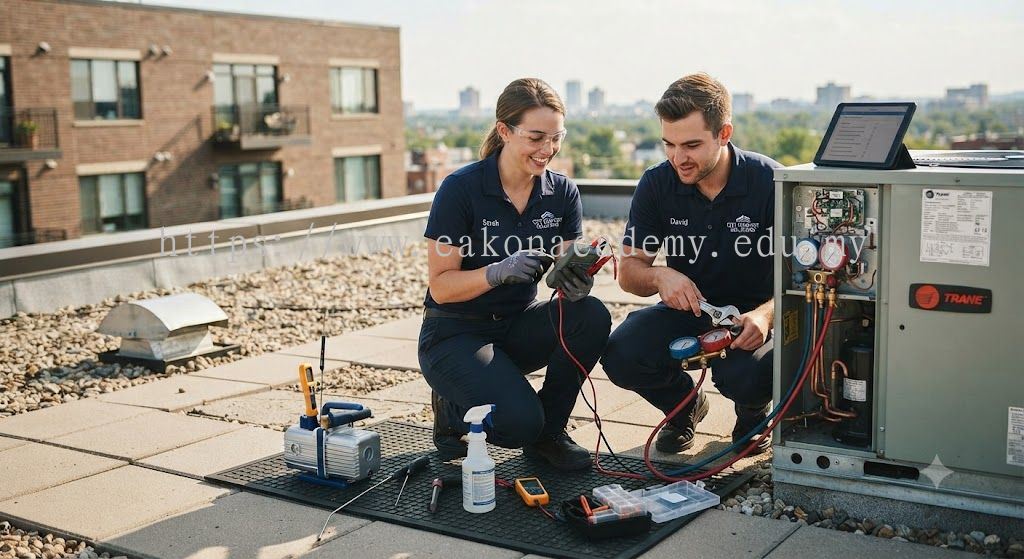
Hands-on practical learning is a key strength of the HVAC training programmes at Eakon Academy. Participants gain direct experience working with real HVAC equipment and professional diagnostic tools, including manifold gauge sets, vacuum pumps, refrigerant recovery machines, leak detectors, multimeters, clamp meters, digital thermometers, pressure gauges, and airflow measurement devices. Practical exercises allow learners to apply servicing techniques in realistic workplace situations, improving their technical confidence and problem-solving abilities.
Safety is an essential part of every HVAC servicing procedure. Professional technicians must understand electrical hazards, refrigerant safety, pressure testing precautions, chemical handling requirements, and proper tool operation. Training includes personal protective equipment (PPE), electrical isolation procedures, lockout and tagout practices, safe refrigerant handling, ladder safety, and workplace hazard awareness. These safety practices help technicians perform servicing tasks responsibly while protecting themselves, customers, and HVAC equipment.
With the continuous development of HVAC technology, technicians must remain updated with advanced systems such as inverter air conditioners, variable refrigerant flow (VRF) systems, smart HVAC controls, building automation systems, energy-efficient equipment, and environmentally friendly refrigerants. Eakon Academy continuously updates its HVAC training programmes to reflect current industry trends and employer expectations, ensuring participants develop relevant skills for today's competitive HVAC market.
Mastering HVAC system servicing techniques provides valuable career opportunities in HVAC maintenance, air conditioning servicing, refrigeration services, facilities management, commercial building maintenance, mechanical engineering support, and technical contracting. Employers highly value professionals who possess strong diagnostic abilities, practical servicing experience, technical knowledge, and safety awareness. By joining the specialised HVAC training programmes at Eakon Academy, participants gain the practical skills, industry knowledge, and professional confidence required to deliver efficient, reliable, and high-quality HVAC servicing solutions. Visit eakonacadem.edu.my to explore comprehensive HVAC training programmes designed to develop skilled technicians capable of maintaining modern HVAC systems with accuracy, efficiency, and professional excellence.
更多 EAKON ACADEMY SDN BHD 相关资料 Malaysia