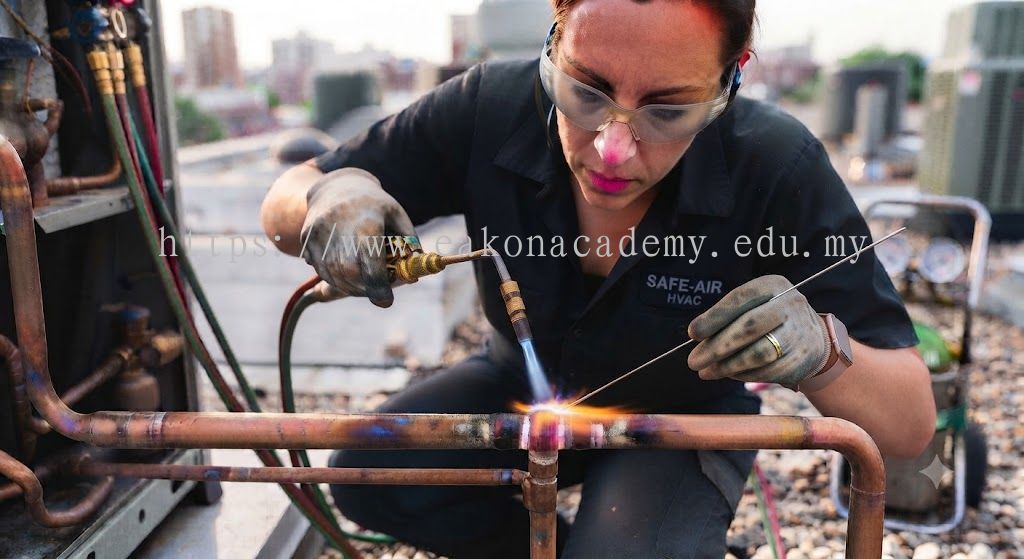
HVAC BRAZING TORCH FLAME CONTROL TECHNIQUES FOR PROFESSIONAL COPPER PIPE INSTALLATION AND REFRIGERATION SYSTEM RELIABILITY
HVAC brazing torch flame control techniques are essential skills in the heating, ventilation, air conditioning, and refrigeration (HVAC-R) industry, focusing on the precise regulation of torch flame intensity, heat distribution, and combustion balance during copper pipe brazing. Proper flame control is critical for producing strong, leak-free, and durable joints in refrigeration and air conditioning systems. In modern HVAC applications, where system efficiency, safety, and long-term performance are top priorities, mastering flame control techniques ensures high-quality brazing results and reduces the risk of system failure.
At Eakon Academy, HVAC brazing torch flame control techniques are taught through structured, hands-on training programs designed to develop both technical understanding and practical field skills. Trainees are introduced to the fundamentals of flame chemistry, including the balance between oxygen and fuel, flame temperature zones, and heat transfer behavior. Understanding these principles allows technicians to adjust torch settings accurately and maintain stable combustion during brazing operations.
A core aspect of HVAC brazing torch flame control techniques is achieving and maintaining a neutral flame. A neutral flame provides the ideal balance of oxygen and fuel, producing consistent heat without causing oxidation on copper surfaces. Oxidation inside refrigeration lines can lead to contamination, reduced system efficiency, and long-term mechanical failure. Trainees learn how to visually identify flame characteristics, adjust gas flow rates, and maintain proper flame stability for precise and controlled brazing results.
Heat regulation is another important element of flame control techniques. Technicians must learn how to adjust flame intensity based on pipe diameter, wall thickness, and joint configuration. Proper heat regulation ensures that copper tubing reaches the correct brazing temperature evenly, allowing filler materials to flow smoothly into the joint through capillary action. Excessive heat can damage copper structure, while insufficient heat can result in weak or incomplete joints, both of which compromise HVAC system performance.
Torch positioning and movement also play a vital role in HVAC brazing torch flame control techniques. Trainees are trained to maintain correct torch angles, typically between 30 and 45 degrees, and to use controlled circular or sweeping motions to distribute heat evenly around the joint. This technique prevents localized overheating and ensures uniform bonding strength across the entire brazed connection. Proper torch movement is essential for achieving professional-grade results in refrigeration system installation and repair.
Filler rod application is closely linked to flame control mastery. The correct flame setting ensures that filler rods melt at the right temperature and flow evenly into the joint without overheating or underheating the base material. Trainees learn to observe visual indicators such as copper color changes and filler flow patterns to determine optimal brazing conditions. This precision ensures strong, clean, and durable joints suitable for high-pressure HVAC systems.
Safety is a critical part of HVAC brazing torch flame control techniques training. Technicians are instructed in safe torch operation, gas pressure regulation, fire prevention practices, and proper ventilation in the workspace. Effective flame control not only improves brazing quality but also reduces safety risks associated with overheating and improper gas usage. Maintaining a safe and controlled working environment is essential in all HVAC-R applications.
By mastering HVAC brazing torch flame control techniques, technicians can significantly enhance the quality, efficiency, and durability of refrigeration and air conditioning systems. Proper flame management helps prevent refrigerant leaks, reduces system breakdowns, and improves overall energy performance. These skills are highly valued in the HVAC industry and are essential for professional growth in installation, servicing, maintenance, and system diagnostics.
Institutions like Eakon Academy play a vital role in developing industry-ready HVAC professionals by offering comprehensive training programs that combine theoretical knowledge with hands-on practical experience, ensuring learners gain the confidence and technical expertise needed to excel in real-world HVAC brazing applications.
更多 EAKON ACADEMY SDN BHD 相关资料 Malaysia