ADVANCED HVAC BRAZING TORCH TECHNIQUES GUIDE FOR PROFESSIONAL REFRIGERATION SYSTEM INSTALLATION AND REPAIR
Advanced HVAC brazing torch techniques play a critical role in ensuring high-quality, durable, and leak-free refrigeration and air conditioning systems. In modern HVAC-R (Heating, Ventilation, Air Conditioning, and Refrigeration) industries, precision brazing is essential for copper pipe joining, system integrity, and long-term operational efficiency. Understanding and mastering brazing torch control, flame adjustment, heat distribution, and proper filler rod application can significantly improve installation quality and reduce system failure rates. This makes “advanced HVAC brazing torch techniques guide” an essential topic for technicians, trainees, and professionals seeking to strengthen their hands-on skills and technical knowledge.
At Eakon Academy, advanced training in HVAC brazing focuses on real-world application and industry-standard practices. Proper torch handling techniques begin with selecting the correct flame type, typically a neutral flame, to ensure clean and controlled heating of copper joints. Overheating or uneven heat distribution can lead to oxidation, weak joints, or internal system contamination, which may affect refrigeration performance. Therefore, technicians must learn how to maintain consistent torch movement, adjust flame intensity, and monitor copper color changes during brazing to achieve optimal results.
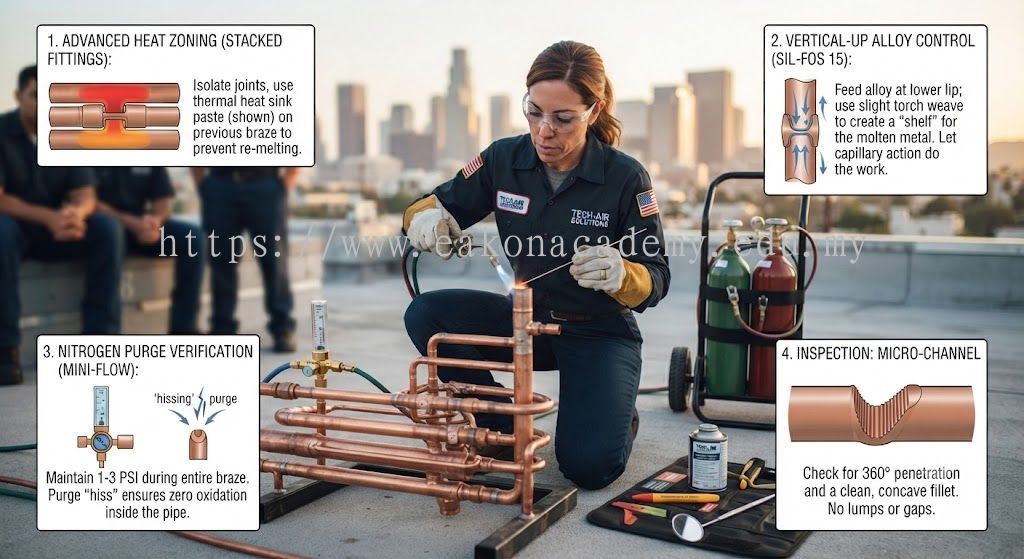
Another important aspect of advanced HVAC brazing torch techniques is joint preparation. Before heating, copper pipes must be cleaned thoroughly using abrasive pads or brushes to remove oxidation and contaminants. Proper fit-up and alignment of pipes ensure that capillary action effectively draws the filler material into the joint. In addition, nitrogen purging during brazing is a highly recommended practice to prevent internal oxidation and maintain clean refrigerant pathways, especially in high-efficiency HVAC systems.
Filler rod selection also plays a vital role in brazing performance. Depending on system requirements, technicians may use silver-based alloys that offer strong bonding and improved vibration resistance. Controlling the correct temperature range is essential to ensure smooth filler flow without overheating the base material. Skilled technicians learn to recognize visual cues such as cherry-red copper color and molten filler flow behavior to determine optimal brazing conditions.
Heat control and torch positioning are core skills in advanced HVAC brazing. Instead of applying direct heat to the joint only, professionals are trained to distribute heat evenly around the pipe to avoid stress concentration. Proper torch angle, typically between 30 to 45 degrees, helps achieve uniform heating and reduces the risk of damaging surrounding components. These refined techniques ensure long-lasting joints that can withstand high pressure and temperature variations in refrigeration systems.
Safety is another critical component of advanced brazing training. Technicians must use proper personal protective equipment (PPE), including gloves, goggles, and fire-resistant clothing. Awareness of fire hazards, gas handling, and workspace ventilation is essential to maintain a safe working environment during brazing operations.
By mastering advanced HVAC brazing torch techniques, technicians can significantly enhance system reliability, reduce maintenance costs, and improve overall installation quality. Whether working on commercial air conditioning systems or industrial refrigeration units, these skills are fundamental for career growth in the HVAC-R industry. Institutions like Eakon Academy provide structured training programs designed to build strong technical foundations and practical expertise in brazing and refrigeration system installation.
更多 EAKON ACADEMY SDN BHD 相关资料 Malaysia