HVAC Copper Brazing Filler Rod Guide: Complete Technical Reference for Strong, Leak-Free Refrigeration Piping Systems
The HVAC copper brazing filler rod guide is an essential technical resource for HVAC technicians, engineers, and students who want to achieve high-quality, durable, and reliable brazed joints in refrigeration and air conditioning systems. Copper brazing is a fundamental process in HVAC installation and maintenance, used to join copper pipes and fittings that must withstand high pressure, temperature changes, and continuous system operation. Selecting the correct copper brazing filler rod is critical for ensuring leak-free performance, system efficiency, and long-term reliability. At eakonacadem.edu.my, we provide structured HVAC training that helps learners understand and apply proper brazing techniques using industry-standard copper filler rods.
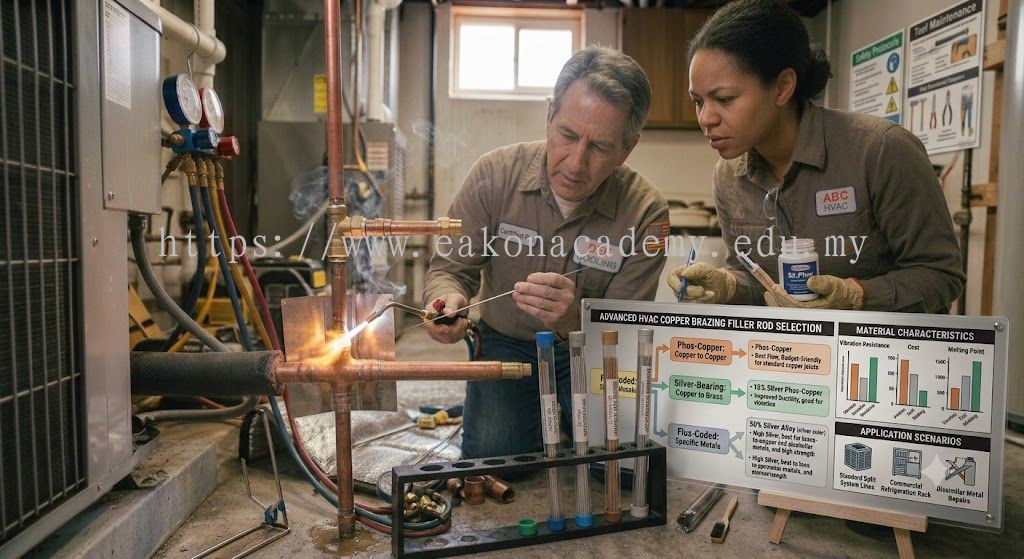
A complete HVAC copper brazing filler rod guide begins with understanding the types of filler materials used in copper piping systems. The most common copper brazing filler rods include phosphorus-copper alloys and silver-based alloys. Phosphorus-copper rods are widely used for copper-to-copper joints because they offer excellent flow characteristics and self-fluxing properties, eliminating the need for additional flux in most cases. These rods are cost-effective and ideal for standard refrigeration and air conditioning piping systems. However, they are limited in application when dealing with dissimilar metals.
Silver-based brazing rods are another important category covered in the HVAC copper brazing filler rod guide. These rods contain varying percentages of silver, which enhance strength, ductility, and vibration resistance. Higher silver content provides superior joint flexibility and durability, making them suitable for commercial HVAC systems, industrial refrigeration, and high-pressure applications. Silver brazing rods are commonly used when joining copper to brass, steel, or other dissimilar metals where stronger bonding is required.
One of the most critical aspects of the HVAC copper brazing filler rod guide is temperature control and melting range compatibility. Each brazing rod has a specific melting temperature that determines how it flows and bonds with copper tubing. Proper temperature selection ensures smooth capillary action, allowing the filler metal to penetrate the joint evenly and form a strong metallurgical bond. If the temperature is too low, the filler rod will not flow properly, resulting in weak joints. If it is too high, it can cause oxidation, pipe damage, or reduced joint integrity.
Another key consideration is mechanical strength and system performance. HVAC copper piping systems are exposed to pressure fluctuations, vibration, and thermal expansion during operation. The HVAC copper brazing filler rod guide emphasizes selecting rods that provide sufficient tensile strength and flexibility to withstand these stresses. Proper selection ensures long-term reliability and reduces the risk of refrigerant leaks, system failure, and costly repairs.
Corrosion resistance is also an important factor in copper brazing applications. HVAC systems often operate in environments exposed to humidity, chemicals, and outdoor conditions. Choosing the correct brazing filler rod helps protect joints from corrosion and oxidation, extending the lifespan of the entire system. High-quality brazing rods ensure that copper joints remain stable and efficient over time, even in demanding conditions.
In addition to material selection, the HVAC copper brazing filler rod guide also highlights the importance of proper brazing techniques. These include pipe cleaning, correct joint fitting, controlled heat application, and nitrogen purging during brazing. Nitrogen purging is especially important as it prevents internal oxidation and contamination inside the piping system, protecting critical HVAC components such as compressors and expansion valves.
Safety is another essential part of copper brazing practices. Technicians must use appropriate personal protective equipment, ensure proper ventilation, and handle brazing materials safely to avoid burns and exposure to harmful fumes. Following safety standards ensures not only worker protection but also consistent and high-quality brazing results.
At eakonacadem.edu.my, our HVAC training programs provide in-depth instruction on copper brazing techniques, filler rod selection, temperature control, and system installation procedures. Students gain hands-on experience working with different copper brazing rods, allowing them to apply theoretical knowledge in real-world HVAC applications. This practical training ensures that graduates are fully prepared for professional installation, maintenance, and troubleshooting tasks.
Mastering the HVAC copper brazing filler rod guide is essential for anyone pursuing a career in refrigeration and air conditioning. Proper understanding and application of copper brazing techniques result in stronger joints, improved system efficiency, reduced failure rates, and longer equipment lifespan, making it a fundamental skill in the HVAC industry.
更多 EAKON ACADEMY SDN BHD 相关资料 Malaysia