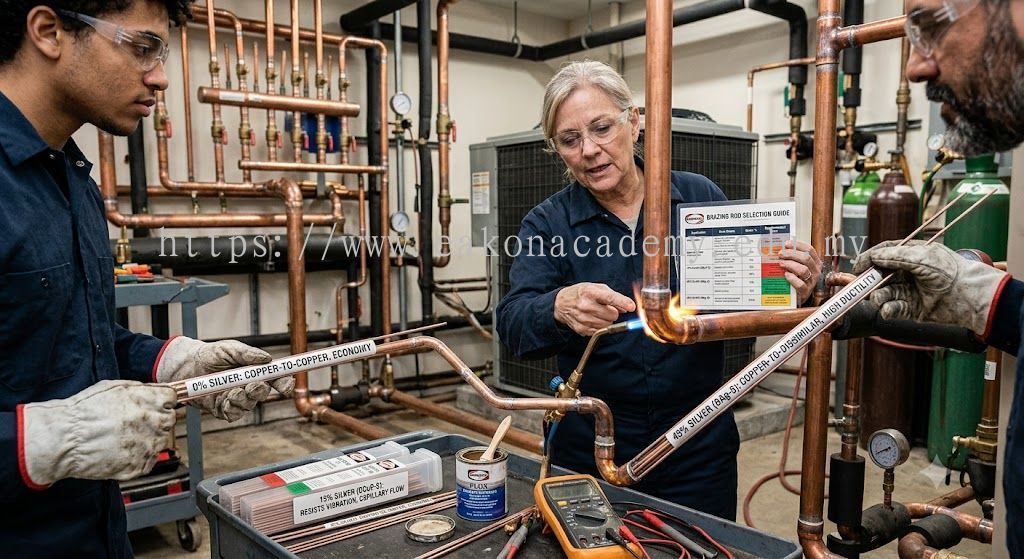
HVAC Brazing Rod Selection Standards: Industry Guidelines for Safe, Strong, and Reliable Refrigeration Joints
The HVAC brazing rod selection standards play a vital role in ensuring the quality, safety, and long-term performance of refrigeration and air conditioning systems. In modern HVAC installations, brazed joints must withstand high pressure, thermal expansion, vibration, and continuous operation under demanding environmental conditions. For this reason, selecting the correct brazing rod according to recognized industry standards is essential for achieving leak-free, durable, and efficient system performance. At eakonacadem.edu.my, we focus on providing technical education and hands-on training that aligns with these standards, helping learners develop professional-level skills in HVAC brazing practices.
Understanding HVAC brazing rod selection standards begins with recognizing that different HVAC applications require different brazing filler materials. Industry standards typically classify brazing rods based on composition, mechanical strength, melting range, and compatibility with base metals. Common categories include phosphorus-copper alloys for copper-to-copper joints and silver-based alloys for copper-to-brass, copper-to-steel, and other dissimilar metal connections. These classifications ensure that technicians choose the correct brazing rod for each application, reducing the risk of joint failure and improving system reliability.
One of the key principles in HVAC brazing rod selection standards is mechanical strength and pressure resistance. HVAC systems operate under varying pressure levels depending on refrigerant type and system design. Brazed joints must be capable of withstanding these pressures without cracking or leaking over time. Silver brazing rods, for example, are often recommended for high-stress applications due to their superior ductility and vibration resistance. Phosphorus-copper rods, while cost-effective and efficient for copper-to-copper joints, are limited in use and must be applied according to strict guidelines to ensure safety and performance.
Another important aspect of these standards is temperature compatibility. Each brazing rod has a specific melting range that must align with the base metals being joined. Improper temperature selection can lead to weak joints, overheating damage, or internal oxidation of copper tubing. The HVAC brazing rod selection standards emphasize the importance of matching filler rod melting points with proper heat control techniques to achieve optimal capillary flow and strong metallurgical bonding. This ensures that the brazed joint remains stable under both thermal cycling and continuous system operation.
Corrosion resistance is also a critical factor in brazing rod selection standards. HVAC systems are often exposed to humid environments, chemical contaminants, and outdoor conditions that can accelerate corrosion if improper materials are used. High-quality brazing rods that comply with industry standards are designed to resist corrosion and extend the lifespan of HVAC systems. This is particularly important in commercial refrigeration, industrial cooling systems, and coastal installations where environmental conditions are more aggressive.
In addition to material properties, HVAC brazing rod selection standards also include proper application procedures. This involves correct joint preparation, pipe cleaning, gap spacing, flux usage (when required), and nitrogen purging during brazing. Even when the correct brazing rod is selected, failure to follow proper procedures can result in poor joint quality. Therefore, industry standards emphasize both material selection and execution techniques to ensure consistent and reliable results.
Safety is another core element of these standards. Technicians must use certified brazing rods that comply with international HVAC and refrigeration regulations. Proper handling, storage, and usage of brazing materials help prevent contamination and ensure consistent performance. In addition, safety procedures such as using personal protective equipment, maintaining proper ventilation, and controlling flame exposure are essential for reducing workplace hazards during brazing operations.
At eakonacadem.edu.my, our HVAC training programs are designed to align with HVAC brazing rod selection standards, providing students with both theoretical knowledge and practical experience. Learners are trained to identify different brazing rods, understand their properties, and apply them correctly in real-world HVAC systems. This hands-on approach ensures that graduates are well-prepared to meet industry expectations and perform professional-grade installations and maintenance work.
Mastering HVAC brazing rod selection standards is essential for any HVAC technician aiming to achieve high-quality, reliable, and efficient refrigeration systems. Proper adherence to these standards results in stronger joints, improved system performance, reduced maintenance costs, and longer equipment lifespan, making it a fundamental requirement for success in the HVAC industry.
更多 EAKON ACADEMY SDN BHD 相关资料 Malaysia