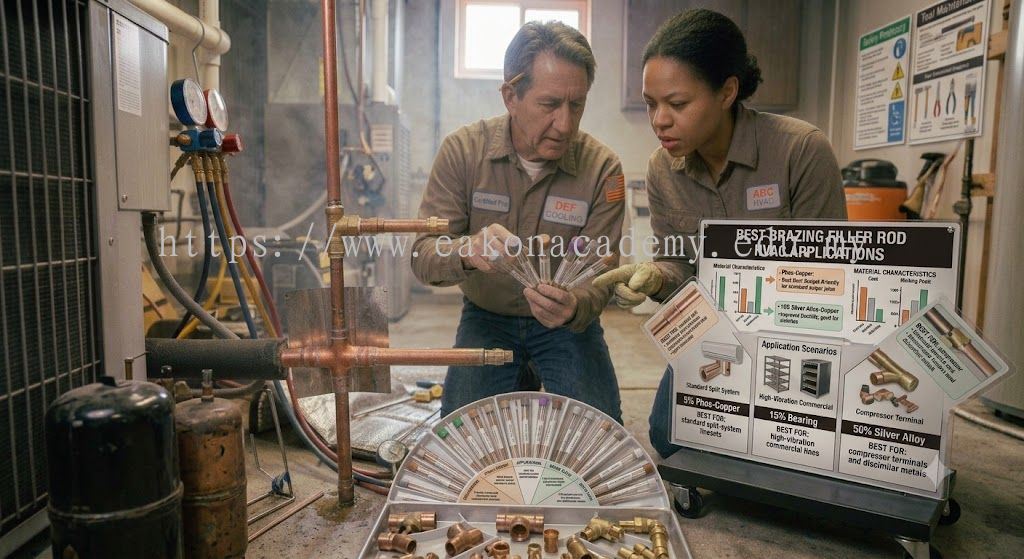
HVAC Brazing Filler Material Selection: A Complete Guide for Reliable Refrigeration and Air Conditioning System Performance
Selecting the correct HVAC brazing filler material is one of the most important factors in ensuring durable, leak-free, and high-performance refrigeration and air conditioning systems. Whether working on residential air conditioners, commercial HVAC installations, industrial refrigeration plants, or heat pump systems, the proper HVAC brazing filler material selection directly affects joint strength, corrosion resistance, pressure integrity, and the overall lifespan of the system. HVAC technicians, refrigeration engineers, installers, and maintenance professionals must understand how different brazing filler materials perform under various operating conditions to produce safe, reliable, and industry-compliant pipe connections. At eakonacadem.edu.my, students and HVAC professionals gain practical knowledge and hands-on training to confidently select the right filler materials for every brazing application.
Brazing is a precision joining process that permanently connects copper tubing and other compatible metals using a filler alloy that melts above 450°C while leaving the base metals intact. The selection of an appropriate filler material depends on several factors, including the base metal composition, operating temperature, refrigerant type, pressure rating, vibration levels, and environmental conditions. Choosing the wrong filler material may result in weak joints, refrigerant leaks, oxidation, premature equipment failure, and expensive repair costs. Therefore, understanding HVAC brazing filler material selection is an essential competency for every refrigeration and air conditioning technician.
Different HVAC applications require different brazing filler alloys. Copper-to-copper joints commonly utilize phosphorus-containing copper brazing alloys because they provide excellent flow characteristics without requiring additional flux under most conditions. However, when joining copper to brass, steel, or other dissimilar metals, silver-based brazing alloys combined with the appropriate flux offer improved wettability, flexibility, and mechanical strength. Understanding these material differences allows technicians to select filler metals that maximize durability while meeting manufacturer specifications and industry standards.
Modern HVAC systems operate using a wide variety of refrigerants, including environmentally friendly refrigerants that often require higher operating pressures. This makes proper HVAC brazing filler material selection even more critical. High-pressure refrigerants demand brazed joints capable of maintaining long-term strength under continuous thermal expansion, vibration, and pressure cycling. Using high-quality brazing filler materials reduces the likelihood of refrigerant leakage, improves energy efficiency, and supports long-term equipment reliability. Proper material selection also contributes to reduced maintenance costs and enhanced customer satisfaction throughout the system's service life.
In addition to selecting the correct filler alloy, HVAC technicians must also understand the relationship between brazing temperature, torch flame adjustment, joint clearance, capillary action, filler flow, and nitrogen purging. During brazing, introducing nitrogen into the refrigeration piping prevents internal oxidation and carbon scale formation. Internal contamination can damage compressors, expansion valves, electronic expansion devices, and other sensitive refrigeration components. Combining correct filler material selection with proper nitrogen purging practices results in cleaner, stronger, and more reliable brazed joints that comply with professional HVAC installation standards.
Safety also plays an essential role during brazing operations. Technicians should wear appropriate personal protective equipment, inspect gas regulators and hoses before use, maintain proper ventilation, and follow safe handling procedures for filler metals and fluxes. Selecting certified brazing filler materials from reputable manufacturers further improves installation quality while reducing the risk of joint failure during system operation. Proper storage of brazing rods and maintaining clean pipe surfaces before brazing are equally important practices that contribute to successful brazed connections.
Professional HVAC training emphasizes not only brazing techniques but also material science. Students learn how silver content affects joint flexibility, how phosphorus alloys interact with different metals, how filler materials respond to thermal cycling, and how to identify suitable brazing rods for specific HVAC applications. Hands-on practical exercises enable learners to gain confidence in producing consistent, leak-free joints that meet industry expectations. This comprehensive understanding enhances technician competency and prepares graduates for real-world refrigeration installation, servicing, troubleshooting, and preventive maintenance work.
At eakonacadem.edu.my, our HVAC and refrigeration training programs provide extensive practical instruction on HVAC brazing filler material selection, copper pipe preparation, nitrogen purging procedures, oxy-acetylene torch operation, refrigerant piping installation, leak prevention techniques, and quality inspection methods. Our industry-focused courses are designed to equip students with the technical knowledge and practical experience required by today's refrigeration and air conditioning sector. Through hands-on learning, participants develop the confidence to perform professional brazing work that meets safety requirements, manufacturer recommendations, and industry best practices.
Whether you are beginning your HVAC career or seeking to upgrade your technical expertise, mastering HVAC brazing filler material selection is an essential step toward becoming a skilled refrigeration professional. Proper filler material selection ensures stronger joints, improved system efficiency, enhanced refrigerant containment, reduced maintenance requirements, and longer equipment lifespan. By learning the latest brazing techniques and industry standards through eakonacadem.edu.my, technicians can improve installation quality, support sustainable HVAC practices, and build rewarding careers in the growing refrigeration and air conditioning industry.
更多 EAKON ACADEMY SDN BHD 相关资料 Malaysia