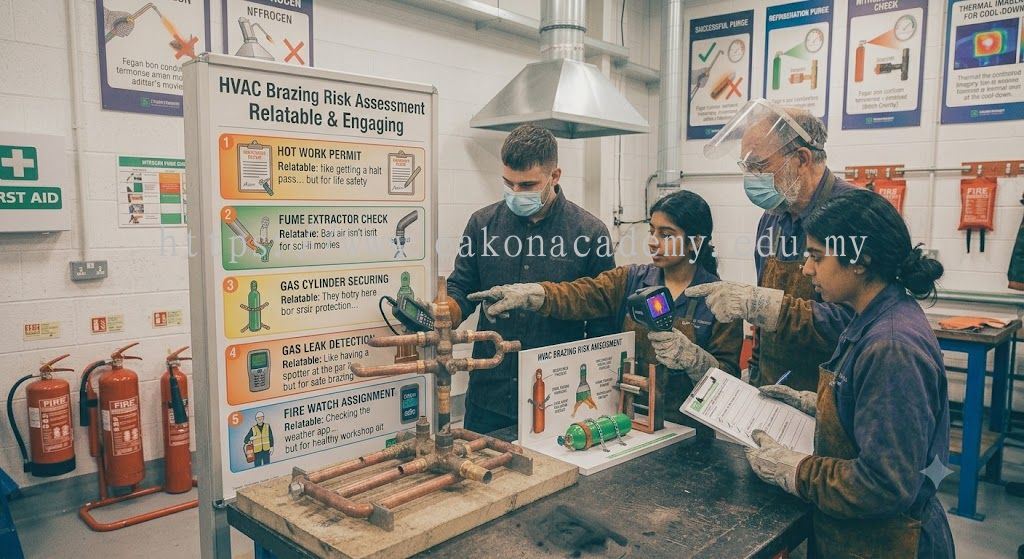
HVAC BRAZING RISK ASSESSMENT PROCEDURES
HVAC brazing risk assessment procedures are a critical component of professional refrigeration and air conditioning training, designed to ensure that technicians can identify, evaluate, and control potential hazards before performing high-temperature copper pipe brazing operations. In HVAC systems, brazing is widely used to create strong, leak-proof joints that can withstand high pressure and temperature fluctuations. However, the process involves significant risks such as fire hazards, gas leaks, burns, toxic fumes, and equipment failure if proper safety measures are not followed. At Eakon Academy, this topic is structured as a comprehensive training module that combines theoretical understanding with practical application to develop highly competent and safety-conscious HVAC technicians.
The foundation of HVAC brazing risk assessment procedures begins with pre-worksite evaluation and hazard identification. Before any brazing work starts, technicians must carefully inspect the surrounding environment to identify potential risks such as flammable materials, electrical wiring, gas lines, poor ventilation, or confined spaces. A clear understanding of the work environment allows technicians to implement appropriate control measures before starting operations. The workspace must be organized, clean, and properly ventilated to reduce exposure to hazardous conditions. At Eakon Academy, learners are trained to conduct systematic risk assessments as part of standard HVAC installation and maintenance procedures.
Another important aspect of HVAC brazing risk assessment procedures is evaluating equipment safety before use. Oxy-acetylene systems, including gas cylinders, regulators, hoses, and torch assemblies, must be thoroughly inspected for leaks, damage, or pressure irregularities. Any faulty equipment must be repaired or replaced before operation. Proper cylinder storage is also essential, with tanks kept upright and secured to prevent tipping or accidental impact. Safe ignition and flame control procedures are emphasized to minimize risks such as flashback incidents, uncontrolled flames, and gas-related accidents.
Personal protective equipment (PPE) plays a vital role in reducing risks identified during HVAC brazing operations. Technicians must wear heat-resistant gloves, flame-retardant clothing, safety goggles or face shields, and safety boots to protect against burns, sparks, and molten metal exposure. PPE serves as the first line of defense and must be included as part of every risk assessment plan. At Eakon Academy, consistent PPE usage is reinforced through hands-on training and practical assessments to build strong safety discipline among learners.
Pipe preparation is also an important part of risk assessment procedures. Copper pipes must be properly measured, cut, deburred, cleaned, and aligned to ensure secure joints. Poor preparation increases the likelihood of leaks, weak joints, and potential system failure during operation. Ensuring proper alignment also helps distribute heat evenly, reducing the risk of overheating and material damage during brazing.
Nitrogen purging is another essential factor included in HVAC brazing risk assessment procedures. By introducing nitrogen into the system during brazing, technicians prevent internal oxidation and scale formation inside copper pipes. This improves system efficiency, reduces contamination risks, and enhances long-term reliability. Proper regulation of nitrogen flow and pressure must be considered during the risk assessment phase to ensure safe application.
From an SEO perspective, optimizing content around HVAC brazing risk assessment procedures helps improve search engine rankings and increases visibility for HVAC training-related searches. At Eakon Academy, integrating keywords such as “HVAC safety risk assessment training,” “copper pipe brazing hazard evaluation,” “air conditioning installation safety procedures,” and “refrigeration risk management guide” strengthens organic SEO performance. This helps attract targeted audiences including students, technicians, and industry professionals seeking specialized HVAC education.
Post-brazing inspection is also part of the risk assessment process. Technicians must carefully examine all joints for cracks, leaks, or improper filler flow. Pressure testing and system validation ensure that installations meet safety and performance standards before commissioning, reducing long-term operational risks and system failures.
In conclusion, HVAC brazing risk assessment procedures at Eakon Academy provide a structured framework that integrates hazard identification, equipment safety, and practical training. By combining technical HVAC knowledge, safety discipline, and SEO-optimized educational content, this topic strengthens both industry safety awareness and digital visibility, helping develop highly skilled and responsible HVAC professionals.
更多 EAKON ACADEMY SDN BHD 相关资料 Malaysia