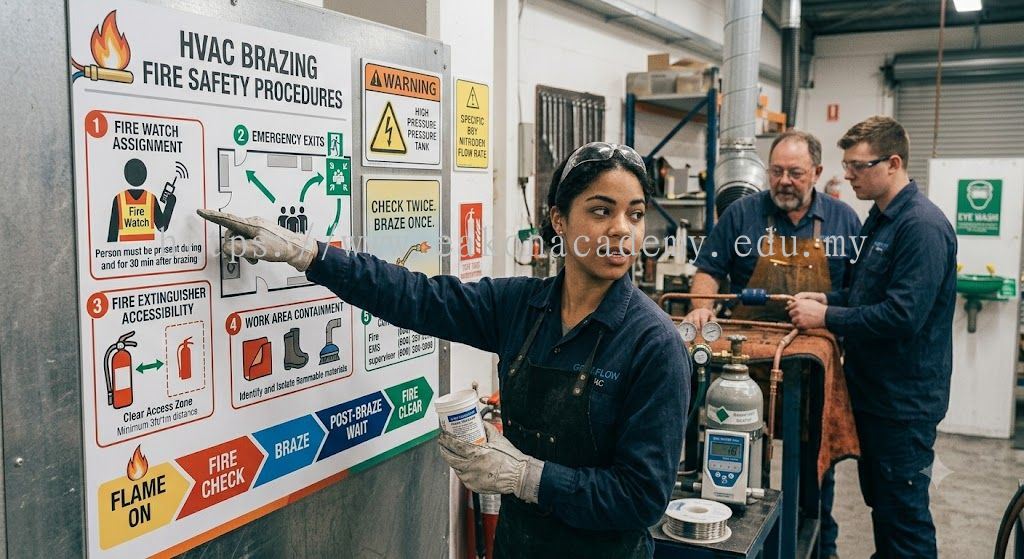
HVAC BRAZING FIRE SAFETY PROCEDURES
HVAC brazing fire safety procedures are a critical part of professional refrigeration and air conditioning training, ensuring that technicians can perform high-temperature copper pipe joining operations while minimizing fire risks and maintaining a safe working environment. In HVAC systems, brazing involves the use of open flames, oxy-acetylene equipment, and flammable gases, which makes fire safety one of the most important aspects of the entire installation process. Without proper fire safety procedures, brazing activities can lead to serious accidents, property damage, system failure, and personal injury. At Eakon Academy, this subject is taught as a structured safety module that combines theoretical knowledge with hands-on practical training to prepare HVAC technicians for real-world working conditions.
The foundation of HVAC brazing fire safety procedures begins with proper workspace preparation and hazard identification. Before any brazing operation starts, technicians must ensure that the surrounding environment is free from flammable materials such as paper, oil, gas leaks, and chemical substances. The work area must be well-ventilated and organized to reduce fire risks and allow safe movement during operations. Fire extinguishers and emergency response equipment must always be readily available at the job site. At Eakon Academy, students are trained to conduct thorough site inspections and risk assessments before beginning any HVAC brazing work.
Another important aspect of HVAC brazing fire safety procedures is the correct handling of oxy-acetylene equipment. Gas cylinders must be properly inspected for leaks, stored in an upright position, and secured to prevent tipping or impact damage. Hoses and regulators must be checked for wear, cracks, or gas leakage before ignition. Proper flame control is essential to avoid excessive heat exposure that could ignite surrounding materials. Technicians are trained to follow strict ignition and shutdown protocols to ensure safe operation of brazing equipment at all times.
Personal protective equipment (PPE) plays a vital role in fire safety during HVAC brazing operations. Technicians must wear flame-resistant clothing, heat-resistant gloves, safety goggles or face shields, and protective footwear. These safety measures help reduce the risk of burns and protect against sparks or molten metal splashes. At Eakon Academy, consistent PPE usage is strongly emphasized to build safe working habits among HVAC learners and professionals.
Fire prevention also includes proper control of heat sources during brazing. Technicians must ensure that the flame is directed only at the joint area and not at surrounding components or combustible materials. Heat shields or fire blankets should be used when working near sensitive equipment or flammable surfaces. Maintaining control of torch movement and flame intensity is essential to prevent accidental ignition of nearby materials.
Nitrogen purging is another important safety-related procedure in HVAC brazing work. While primarily used to prevent oxidation inside copper pipes, nitrogen purging also contributes indirectly to fire safety by reducing internal contamination and ensuring stable brazing conditions. Proper gas flow control must be maintained throughout the process to ensure consistent results and safe operation.
From an SEO perspective, optimizing content around HVAC brazing fire safety procedures helps improve search engine rankings and attract targeted traffic from HVAC students, technicians, and industry professionals. At Eakon Academy, integrating keywords such as “HVAC fire safety training,” “copper pipe brazing safety guide,” “air conditioning installation fire prevention,” and “refrigeration safety procedures” strengthens organic search visibility. This strategy enhances website authority and positions the platform as a trusted source of HVAC education in Malaysia.
Post-brazing inspection is also part of fire safety procedures. Technicians must ensure that no smoldering materials, gas leaks, or residual heat sources remain after completing brazing work. Proper shutdown of equipment and site cleanup are essential to prevent delayed fire hazards.
In conclusion, HVAC brazing fire safety procedures at Eakon Academy provide a comprehensive framework that integrates technical training with strict fire prevention practices. By combining hands-on HVAC education, safety discipline, and SEO-optimized content, this topic strengthens both industry safety standards and online visibility, helping develop highly skilled and safety-conscious HVAC professionals.
更多 EAKON ACADEMY SDN BHD 相关资料 Malaysia