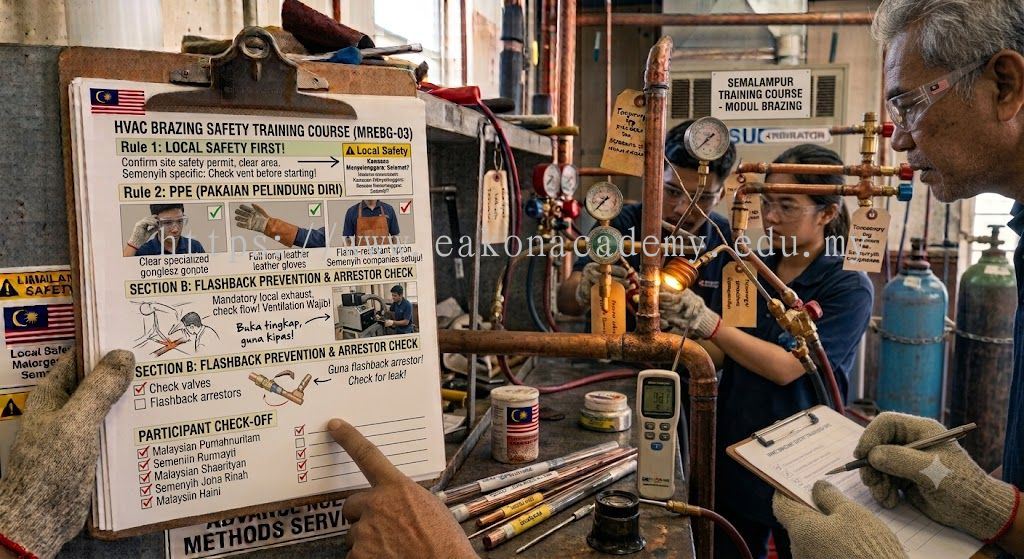
COPPER PIPE BRAZING HVAC SAFETY STEPS
Copper pipe brazing HVAC safety steps are a fundamental part of professional refrigeration and air conditioning training, ensuring that technicians can perform strong, leak-proof pipe joining while maintaining the highest level of workplace safety. In HVAC systems, copper pipe brazing is widely used because it creates durable metallic bonds capable of withstanding high pressure, temperature changes, and long-term system operation. However, the process involves intense heat, flammable gases, and precision handling, which makes safety procedures absolutely essential. At Eakon Academy, this topic is developed as a structured training module designed to strengthen both technical skills and safety awareness for HVAC learners and working technicians.
The first step in copper pipe brazing HVAC safety steps is proper worksite preparation and hazard identification. Before any brazing activity begins, technicians must ensure the workspace is clean, well-ventilated, and free from flammable materials. Electrical cables, gas lines, and combustible objects must be kept at a safe distance from the brazing area. Proper lighting and stable working surfaces are also important to reduce operational risks. At Eakon Academy, students are trained to evaluate job sites carefully before starting any HVAC installation or maintenance work, ensuring safety is prioritized from the beginning.
The second important step in copper pipe brazing HVAC safety steps is proper pipe preparation. Copper pipes must be accurately measured, cut, deburred, and cleaned before joining. Any dirt, oil, or oxidation must be removed to ensure a strong brazed joint. Proper fitting alignment is essential to avoid gaps or weak connections during heating. This preparation phase directly impacts both safety and system performance, as poorly prepared joints can lead to leaks, pressure loss, and system failure.
The third step involves safe handling of oxy-acetylene equipment. Technicians must inspect gas cylinders, regulators, hoses, and torch tips before use. Leak testing is essential to ensure there are no gas escapes that could lead to fire hazards. Cylinders must always be stored upright and secured properly to prevent tipping or damage. Correct ignition and flame adjustment techniques are also critical to prevent flashback incidents and uncontrolled flame exposure. At Eakon Academy, learners are trained to follow strict gas handling protocols in all HVAC practical sessions.
Personal protective equipment (PPE) is another essential component of copper pipe brazing HVAC safety steps. Technicians must wear heat-resistant gloves, safety goggles or face shields, flame-retardant clothing, and safety boots. These protective measures reduce the risk of burns, eye injuries, and exposure to hot metal or sparks. Consistent use of PPE is strongly emphasized in all training environments to build long-term safety discipline among HVAC professionals.
Another key safety step is nitrogen purging during brazing operations. Nitrogen is used to prevent oxidation inside copper pipes, ensuring clean internal surfaces and preventing scale formation. Proper control of nitrogen flow and pressure ensures consistent protection throughout the brazing process. This step improves both system safety and long-term efficiency, reducing the risk of internal blockages and compressor damage.
From an SEO perspective, optimizing content around copper pipe brazing HVAC safety steps helps improve search engine visibility and attract targeted traffic from HVAC learners and industry professionals. At Eakon Academy, integrating keywords such as “HVAC brazing safety guide,” “copper pipe installation safety training,” “air conditioning brazing techniques,” and “refrigeration safety procedures” strengthens organic search rankings. This strategy enhances website authority and positions the platform as a trusted source of HVAC education in Malaysia.
Post-brazing inspection is the final safety step in the process. Technicians must carefully inspect joints for cracks, leaks, or improper filler flow. Pressure testing and leak detection are performed to verify system integrity before commissioning. These final checks ensure that every brazed joint meets industry safety and performance standards, reducing the risk of future system failures.
In conclusion, copper pipe brazing HVAC safety steps at Eakon Academy provide a comprehensive framework that integrates technical precision with strict safety practices. By combining structured procedures, hands-on training, and SEO-optimized educational content, this topic strengthens both HVAC industry safety awareness and online visibility, helping develop highly skilled and safety-conscious HVAC technicians.
更多 EAKON ACADEMY SDN BHD 相关资料 Malaysia