BRAZING COPPER PIPES HVAC SAFETY STANDARDS
Brazing copper pipes HVAC safety standards are a fundamental part of professional refrigeration and air conditioning installation practices, ensuring that every joint in a system is strong, reliable, and safe for long-term operation. In HVAC systems, copper pipe brazing is widely used because it provides high-strength, leak-proof connections that can withstand extreme pressure and temperature variations. However, without strict adherence to safety standards, brazing work can pose significant risks such as fire hazards, gas leaks, equipment damage, and operator injury. At Eakon Academy, this topic is developed into a structured learning framework to help technicians understand both the technical precision and safety discipline required in modern HVAC industry practices.
The foundation of brazing copper pipes HVAC safety standards begins with proper preparation and site assessment. Technicians must ensure that the work area is well-ventilated, free from flammable materials, and equipped with appropriate fire protection measures. Before any brazing activity begins, all copper pipes must be properly cleaned, cut, and fitted to ensure tight joints. Proper alignment reduces the risk of weak connections and ensures uniform heat distribution during the brazing process. At Eakon Academy, learners are trained to follow systematic procedures that meet both industry safety regulations and practical installation requirements.
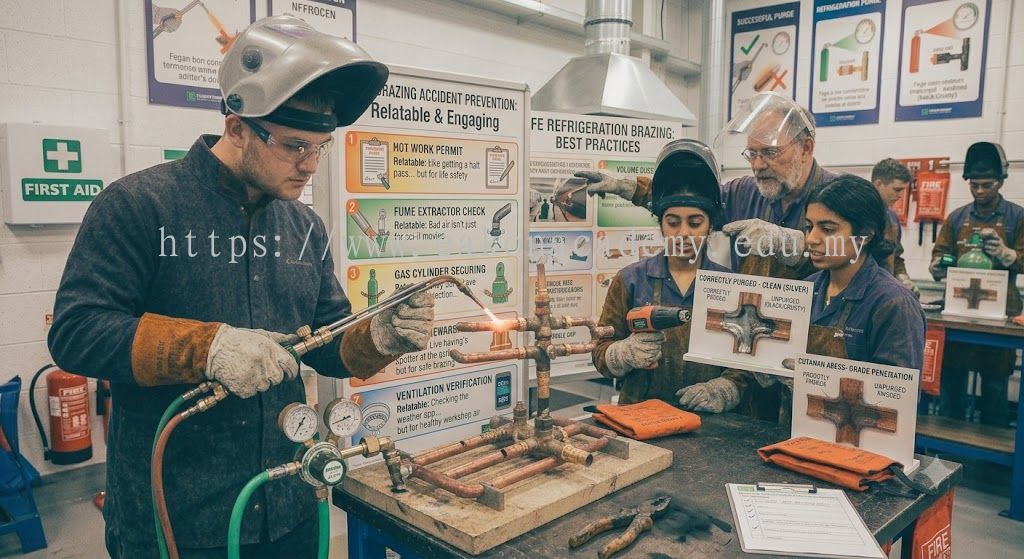
A critical component of brazing copper pipes HVAC safety standards is the correct handling of oxy-acetylene equipment. Technicians must be trained in safe cylinder storage, regulator installation, leak testing, and controlled ignition procedures. Improper handling of gas equipment can lead to serious accidents, making safety awareness an essential part of every HVAC technician’s skill set. Flame control is also emphasized, as overheating copper pipes can weaken structural integrity and compromise system performance. Proper flame adjustment ensures that heat is evenly distributed across the joint without damaging surrounding components.
Another important safety requirement covered under brazing copper pipes HVAC safety standards is the use of personal protective equipment (PPE). Technicians must wear heat-resistant gloves, protective goggles, flame-retardant clothing, and safety footwear to minimize exposure to sparks, molten filler materials, and high-temperature surfaces. In addition, maintaining a clean and organized workspace is essential to reduce trip hazards and prevent accidental fire incidents during brazing operations. At Eakon Academy, safety training is integrated into hands-on practice sessions to reinforce real-world application of these standards.
Nitrogen purging is another essential safety and quality control procedure in HVAC brazing work. It prevents oxidation inside copper pipes, which can lead to internal scaling, blockages, and reduced system efficiency. By maintaining a controlled nitrogen flow during brazing, technicians ensure that the internal surfaces of the pipes remain clean and free from contamination. This directly improves system reliability and extends the lifespan of refrigeration and air conditioning equipment.
From an SEO perspective, optimizing content around “brazing copper pipes HVAC safety standards” significantly improves search engine visibility for technical training institutions. At Eakon Academy, incorporating related keywords such as “HVAC copper brazing safety guide,” “air conditioning pipe brazing standards,” “refrigeration installation safety procedures,” and “HVAC welding safety training” strengthens organic search rankings and attracts targeted traffic from students, technicians, and industry professionals seeking certified HVAC knowledge. This keyword strategy enhances the website’s authority and supports long-term digital growth.
Post-brazing inspection and testing are also critical components of HVAC safety standards. Technicians must carefully inspect each joint for cracks, leaks, or improper filler flow. Pressure testing and leak detection procedures are performed to ensure that the system is fully sealed and operational before commissioning. These final quality checks help prevent system failures and ensure compliance with industry performance standards.
In conclusion, brazing copper pipes HVAC safety standards at Eakon Academy provide a comprehensive framework that combines technical excellence with strict safety practices. This ensures that HVAC technicians are fully prepared to perform high-quality installations while maintaining a safe working environment. By integrating safety, skill development, and SEO-optimized content, this topic strengthens both professional training outcomes and online visibility for the academy, positioning it as a trusted leader in HVAC education in Malaysia.
更多 EAKON ACADEMY SDN BHD 相关资料 Malaysia