HVAC Brazing vs Soldering Standards Guide – Industry Compliance and Best Practices for Copper Pipe Joining in Refrigeration Systems
Understanding the HVAC brazing vs soldering standards guide is essential for HVAC technicians, refrigeration engineers, and professionals involved in air conditioning installation, maintenance, and system repair. Industry standards for copper pipe joining determine how safe, reliable, and efficient an HVAC system will perform over its lifetime. Eakon Academy provides professional HVAC training programs designed to equip technicians with hands-on skills, technical knowledge, and a strong understanding of international standards for brazing, soldering, and refrigeration system installation practices.
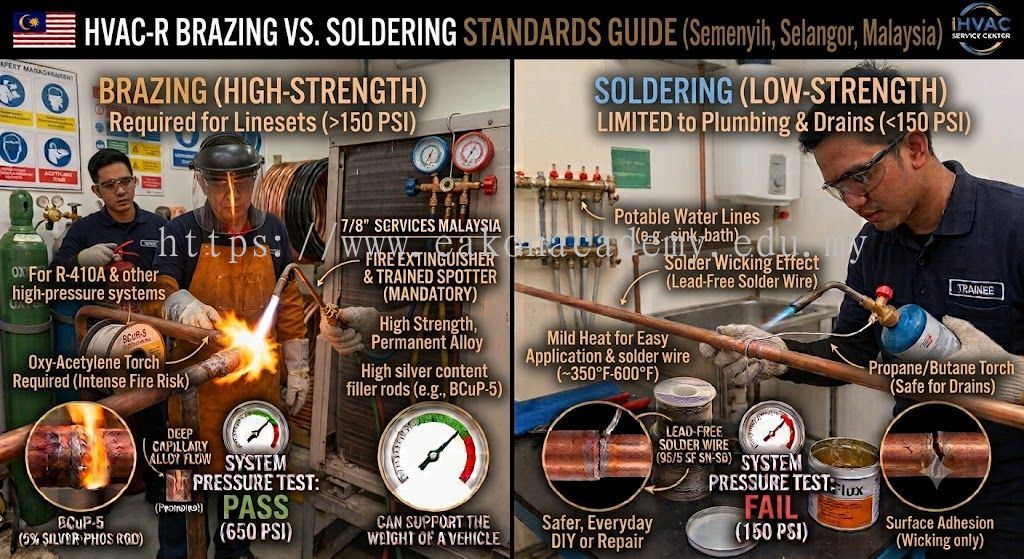
In any HVAC brazing vs soldering standards guide, brazing is recognized as the primary industry-standard method for joining copper pipes in refrigeration and air conditioning systems. HVAC systems operate under high pressure and are exposed to constant vibration, temperature fluctuations, and long operating cycles. Because of these demanding conditions, copper pipe joints must meet strict strength, durability, and leak-prevention requirements defined by HVAC industry standards. Brazing fulfills these requirements and is widely accepted as the professional standard for modern HVAC installations.
HVAC brazing standards require the use of filler metals with melting temperatures above 450°C to ensure strong metallurgical bonding between copper pipes. Industry guidelines emphasize proper pipe preparation, including cutting, cleaning, deburring, and precise fitting alignment before heating. Controlled flame application is essential to avoid overheating or damaging the copper material. One of the most important requirements in HVAC standards is nitrogen purging during brazing, which prevents internal oxidation and ensures system cleanliness. Brazed joints must be capable of handling high-pressure refrigerants, thermal expansion, and long-term operational stress, making them suitable for split air conditioning systems, VRF and VRV systems, chillers, and commercial refrigeration equipment.
In contrast, HVAC soldering standards apply to lower-temperature joining methods using filler materials that melt below 450°C. These standards are generally limited to low-pressure applications such as plumbing systems or secondary piping connections. While soldering is easier to perform and requires less specialized equipment, it does not meet the mechanical strength or pressure resistance requirements of modern refrigeration systems. Because of this, HVAC standards typically restrict soldering from use in primary refrigerant lines where safety and reliability are critical.
The key difference in HVAC brazing vs soldering standards guide is compliance with pressure ratings, system safety requirements, and long-term performance expectations. Brazing meets strict HVAC industry standards due to its superior joint strength, vibration resistance, and ability to maintain leak-free performance under demanding conditions. Soldering, while acceptable in limited low-pressure scenarios, does not comply with most refrigeration system standards and is therefore not recommended for professional HVAC applications.
Proper training is essential for meeting HVAC brazing standards. Technicians must learn correct copper pipe preparation, heating techniques, flame control, and filler application procedures. Improper brazing can lead to system leaks, reduced efficiency, or failure to meet industry compliance requirements. Professional HVAC training also emphasizes safety standards, including proper handling of torches, protective equipment usage, and nitrogen purging procedures to ensure clean and reliable installations.
Another important aspect of the HVAC brazing vs soldering standards guide is system efficiency and regulatory compliance. Properly brazed joints help ensure HVAC systems meet energy efficiency requirements, reduce refrigerant leakage, and extend equipment lifespan. Poor soldering practices may result in non-compliant installations, higher maintenance costs, and reduced system performance over time.
Eakon Academy offers professional HVAC and refrigeration training programs designed to align with industry standards and certification requirements. Our courses provide hands-on experience in copper pipe brazing, air conditioning installation, refrigeration servicing, refrigerant handling, and system diagnostics, ensuring technicians are fully prepared for real-world HVAC applications.
For individuals searching for HVAC brazing certification courses, refrigeration standards training, copper pipe joining techniques, or professional HVAC technician programs, understanding the HVAC brazing vs soldering standards guide is essential. Proper training ensures compliance with industry regulations, improves installation quality, and enhances HVAC system reliability.
Visit eakonacadem.edu.my to explore professional HVAC training programs and advance your expertise in modern air conditioning and refrigeration technology. Mastering the HVAC brazing vs soldering standards guide helps technicians meet industry compliance, build safer systems, and achieve long-term success in the HVAC field.
更多 EAKON ACADEMY SDN BHD 相关资料 Malaysia